Lisa Mariana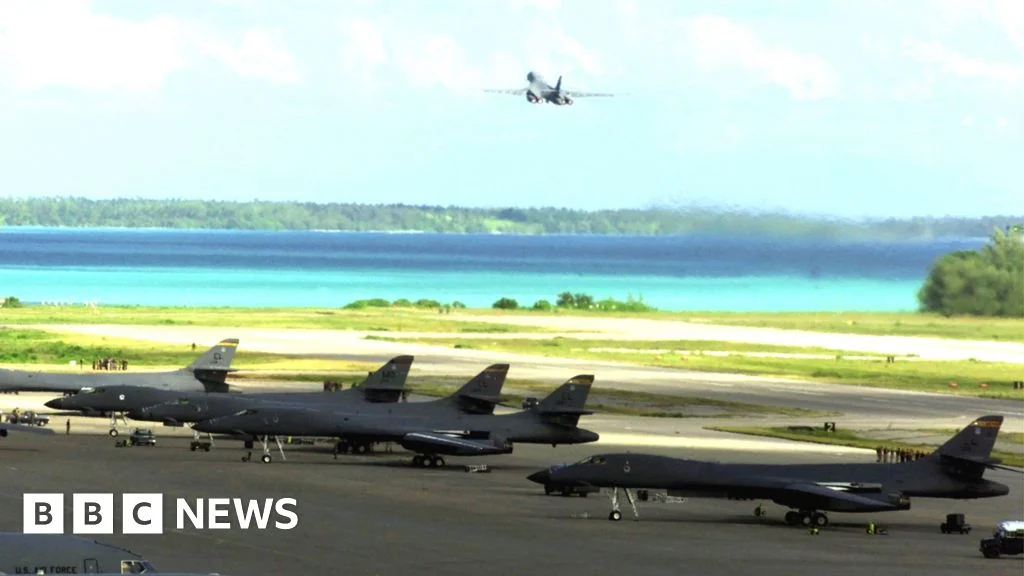
The United Kingdom’s Foreign Secretary has issued a strong condemnation of what she termed "reckless Iranian threats," affirming London’s commitment to bolstering defensive capabilities while steadfastly refusing to be drawn into a broader regional conflagration following an unprecedented missile attack attempt on the joint US-UK military facility on Diego Garcia. This audacious act, which involved two ballistic missiles reportedly launched by Tehran towards the remote Chagos Islands outpost, signifies a concerning escalation in the volatile Middle Eastern landscape, challenging established strategic boundaries and prompting a re-evaluation of regional power dynamics.
The incident, which saw both projectiles reportedly fail to reach their intended target – one experiencing an in-flight malfunction and the other successfully intercepted by a US naval asset – has reverberated through international security circles. While specific timelines for the attempted strike remain unconfirmed, the consensus among Western intelligence sources, corroborated by initial reports from reputable US media outlets like The Wall Street Journal and CNN citing anonymous American officials, points to a deliberate Iranian action. This event has ignited intense scrutiny over Iran’s rapidly evolving ballistic missile capabilities and the broader implications for international maritime security and the stability of critical global chokepoints.
The Strategic Imperative of Diego Garcia
Diego Garcia, a secluded atoll nestled within the vast expanse of the Indian Ocean, represents a linchpin in Anglo-American strategic defense architecture, particularly for operations spanning the Middle East, Africa, and parts of Asia. Its unparalleled isolation, combined with a deep-water port and an exceptionally long runway capable of accommodating heavy bombers, has cemented its status as an indispensable forward operating base. For decades, this discreet outpost has served as a critical launchpad for various military operations, offering unmatched logistical and operational reach far from densely populated areas or politically sensitive landmasses. Its utility in projecting power and conducting surveillance across a vast geographic area cannot be overstated, making it a high-value, albeit remote, target.
The United Kingdom’s historical stewardship of the Chagos Archipelago, a British Overseas Territory since 1814, has been foundational to the establishment and continued operation of the Diego Garcia facility. Administered from Mauritius until 1965, the islands were strategically detached before Mauritian independence, a move accompanied by a £3 million compensatory grant. More recently, London has navigated complex diplomatic waters by agreeing to cede sovereignty of the Chagos Islands to Mauritius, while crucially securing a long-term lease agreement for the continued operation of the military base on Diego Garcia. This intricate diplomatic maneuver, championed by figures like Prime Minister Sir Keir Starmer, was deemed essential to safeguard the base’s operational continuity amidst ongoing international legal challenges to British sovereignty. The long-term implications of this sovereignty transfer, even with the lease agreement in place, for the strategic flexibility and political calculus surrounding the base, remain an area of keen analytical interest.
Unraveling Iran’s Missile Ambitions
The attempted strike on Diego Garcia poses significant questions regarding the true extent of Iran’s long-range ballistic missile capabilities. The island is approximately 2,350 miles (3,780 km) from Iranian territory, a distance that considerably exceeds the previously estimated maximum range of Tehran’s known intermediate-range ballistic missiles, which analysts typically place between 1,250 miles (2,000 km) and 1,800 miles (2,900 km). While some military experts, notably those affiliated with Israel’s Alma Research and Education Center, have suggested that Iran’s Khorramshahr missile variant might possess a range approaching 1,800 miles, successfully targeting Diego Garcia would imply a substantial leap in Tehran’s technological prowess, potentially signaling the development or deployment of a new class of longer-range systems.
A failed launch, or an interception, does not diminish the strategic intent behind such an attempt. It serves as a potent, albeit unverified, demonstration of intent and a potential warning shot, indicating a willingness to challenge the geographical limits of regional conflict. The technical complexities involved in designing, testing, and deploying ballistic missiles capable of precision strikes over such vast distances are immense, encompassing advanced propulsion systems, guidance mechanisms, and payload considerations. Western intelligence agencies will undoubtedly be scrutinizing these developments with heightened vigilance, seeking to ascertain whether this incident represents a genuine, albeit nascent, long-range capability or an aspirational, albeit failed, endeavor intended primarily for psychological impact.
The UK’s Delicately Balanced Regional Stance
Foreign Secretary Yvette Cooper underscored the UK’s commitment to providing "defensive support" against what she characterized as "reckless Iranian threats," while simultaneously reiterating a firm resolve to avoid entanglement in a broader Middle Eastern conflict. This nuanced position reflects London’s delicate balancing act between safeguarding its strategic interests and those of its allies, particularly its Gulf partners, and preventing an uncontrollable escalation of hostilities. The UK’s approach emphasizes defensive measures, including the deployment of naval assets like HMS Dragon, a Type 45 destroyer, to bolster regional security and protect assets like RAF Akrotiri in Cyprus, which recently sustained minimal damage from an Iranian drone strike.
The expansion of the UK’s "collective self-defence" justification to include Iranian sites posing threats to international shipping in the Strait of Hormuz represents a significant policy shift. This critical waterway, through which a fifth of the world’s oil transits, is vital for global energy security. The decision to broaden the scope of permissible defensive actions underscores the profound economic and strategic importance attached to maintaining freedom of navigation in this crucial chokepoint. This policy evolution has not been without its critics, both domestically and internationally. US President Donald Trump, for instance, has publicly chastised the UK and other NATO allies for perceived inaction, labeling them "cowards" for their reluctance to commit warships to safeguard the Strait and temper soaring oil prices, arguing for a more robust and immediate response.
Regional Instability and Global Ramifications
The attempted strike on Diego Garcia is part of a broader pattern of escalating Iranian actions across the Middle East. Tehran has intensified its campaign of strikes against nations hosting US facilities, as well as against Israel, which has in turn conducted its own counter-strikes. This intricate web of retaliatory actions and proxy conflicts has plunged the region into a dangerous cycle of escalation, with profound implications for international peace and security. The deployment of unmanned drones against RAF Akrotiri in Cyprus earlier this month, causing minor damage to its runway, further highlights the pervasive nature of these threats and raises critical questions about the preparedness of Western assets in the face of evolving asymmetric warfare tactics.
The economic ramifications of this heightened instability are substantial. The International Energy Agency (IEA) has already warned that disruptions to oil supplies stemming from the conflict are likely to ripple through wider energy markets, potentially leading to increased global energy prices and contributing to inflationary pressures. Prime Minister Sir Keir Starmer’s decision to convene a Cobra meeting to address the potential rise in the cost of living underscores the domestic policy challenges directly linked to geopolitical tensions. The interconnectedness of global energy markets means that regional conflicts can swiftly translate into tangible economic hardships for households worldwide.
Domestic Political Undercurrents and Future Outlook
Within the United Kingdom, the government’s approach to the escalating conflict has sparked a vigorous domestic political debate. The Liberal Democrats and the Green Party have called for a parliamentary vote on the use of UK bases by the United States, advocating for greater democratic oversight of foreign policy decisions that carry significant geopolitical risk. Meanwhile, Conservative leader Kemi Badenoch has criticized the government’s policy adjustments, labeling them the "mother of all U-turns," implying a perceived reversal of previous positions or a reactive shift in strategy. These domestic political pressures reflect a broader public concern about the potential for mission creep and the entanglement of British forces in a protracted regional conflict.
Looking ahead, the trajectory of the Middle East remains fraught with uncertainty. The attempted strike on Diego Garcia, regardless of its operational success, serves as a stark reminder of Iran’s willingness to push strategic boundaries and challenge the status quo. The international community faces a complex challenge: deterring further escalation while preserving crucial diplomatic channels and seeking pathways for de-escalation. The balancing act for the UK and its allies involves reinforcing defensive capabilities, maintaining robust intelligence gathering, and pursuing concerted diplomatic efforts to contain the conflict. The long-term implications for global energy security, international shipping, and the broader geopolitical landscape hinge on the ability of regional and international actors to navigate these treacherous waters without succumbing to the gravitational pull of a full-scale regional war. The incident underscores the critical need for a coherent, multilateral strategy to address the multifaceted challenges posed by Iran’s evolving military capabilities and its regional ambitions.




 Aura Kasih
 Safa Marwah
 Ayu Aulia