Lisa Mariana
South Korea’s capital, Seoul, recently became the epicenter of a global cultural event as the iconic music group BTS staged their highly anticipated comeback performance, drawing an immense crowd to the historic Gwanghwamun Square and captivating millions more worldwide. This landmark concert marked the septet’s first collective appearance in nearly two years, coinciding with the release of their new album, "Arirang," and signaling a powerful resurgence for the global K-pop titans. The event transcended mere entertainment, serving as a profound statement on South Korea’s burgeoning soft power and the unparalleled economic and cultural influence wielded by its most prominent musical ambassadors.
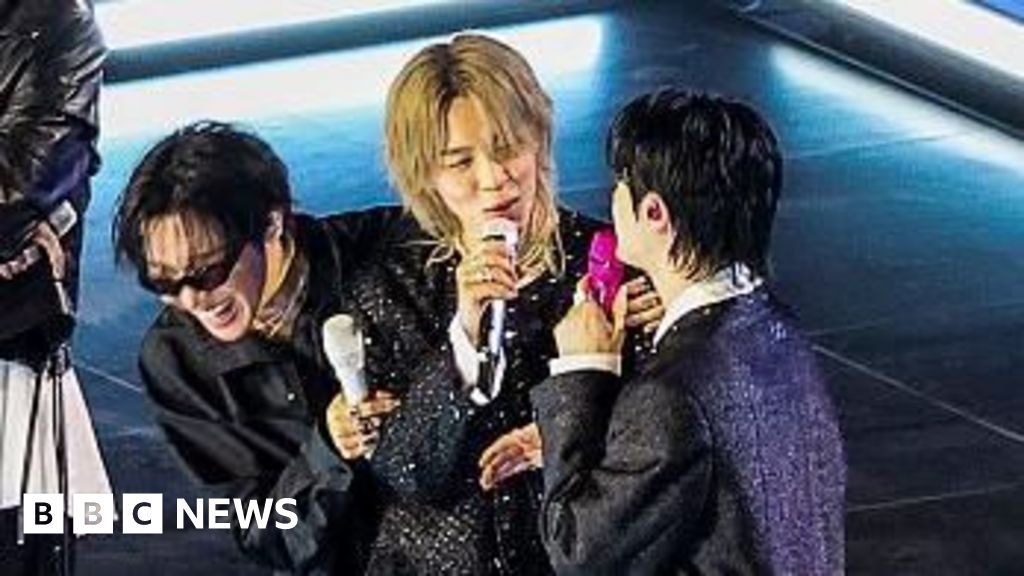
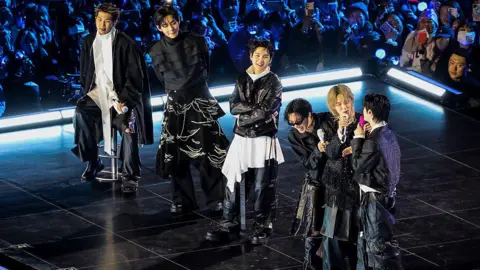
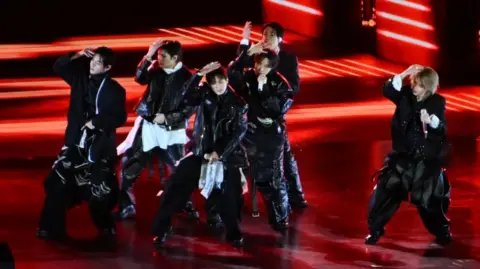
On a momentous Saturday, an estimated 104,000 devotees converged upon Gwanghwamun Square, transforming the venerable public space into a vibrant sea of purple, the signature hue associated with the band and its fervent fanbase, known as the "Army." The grand stage, strategically positioned before the majestic 14th-century Gyeongbokgung Palace gate, resembled a contemporary triumphal arch, symbolizing the group’s monumental achievements and their status as global cultural icons. The hour-long spectacle featured tracks from their newly released album, "Arirang," an offering that has already shattered sales records and reignited the collective enthusiasm of their global following. This free concert, a rare and significant gesture, represented the culmination of years of anticipation since the members, RM, Jin, Suga, J-Hope, Jimin, V, and Jung Kook, began their mandatory military service in 2022.
The album’s title, "Arirang," carries deep resonance within Korean culture, referencing the nation’s most cherished folk song—an emotive melody traditionally expressing themes of separation, longing, and resilience, often culminating in hope. The band’s decision to title their comeback album after this national anthem is a poignant nod to their role in disseminating Korean heritage across international borders. A promotional video for the album underscored this connection, depicting the members listening to the first known recording of "Arirang," made in the United States in 1896 by a group of seven Korean men at Howard University. This narrative skillfully positions BTS as modern-day cultural emissaries, echoing historical precedents while projecting Korean artistry onto the world stage, 130 years later. The commercial success of this cultural endeavor was immediately evident, with Bit Hit Music, the group’s label, announcing that "Arirang" sold an astounding 3.98 million copies on its inaugural day, a testament to the band’s enduring appeal and market dominance.
The economic implications of BTS’s return are staggering. Projections from the Korea Culture & Tourism Institute previously estimated that a single performance by the group could inject up to $842 million into the economy, encompassing ticket and merchandise sales, accommodation, tourism, and various ancillary spending. The Gwanghwamun concert, and the impending 82-date world tour spanning over 30 cities from Singapore to Los Angeles, are expected to generate revenues exceeding $1 billion. This financial impact extends far beyond direct concert earnings, catalyzing growth in tourism, hospitality, and related industries. Hotels in Seoul reported full bookings and increased prices weeks in advance, while local businesses, like a nearby seafood restaurant owner, proactively prepared multilingual menus and adorned establishments in purple to welcome the influx of international fans. The government itself acknowledges that the group’s contribution to South Korea’s global standing far surpasses mere monetary value, solidifying its reputation as a cultural powerhouse.
The logistical undertaking to host an event of this magnitude in Seoul’s central historic district was immense. Authorities implemented unprecedented security measures, deploying approximately 7,000 police officers, including specialized SWAT units equipped with anti-drone systems, to manage the colossal crowds. The capital’s central district was effectively transformed into an open-air arena, necessitating restricted access to dozens of buildings, the closure of three nearby subway stations, and stringent controls at 31 entry points to Gwanghwamun Square, each fitted with metal detectors. In a highly unusual move, civilians were temporarily barred from retrieving firearms, underscoring the heightened security posture. These extensive preparations, while ensuring safety, inevitably led to significant disruptions for Seoul residents. For instance, a lawyer scheduled to hold her wedding near Gwanghwamun Square on the same day faced considerable uncertainty regarding guest access, with police offering the contingency of bus transport if subway lines were closed.
The allocation of such extensive public resources and the ensuing urban disruption sparked a nuanced debate within South Korea. While a Seoul city official affirmed that authorities provided venue support, crowd management, and safety measures without direct financial contribution to the concert, public discourse emerged concerning the balance between national pride and urban functionality. Critics, such as pop music critic Jung Min-jae, voiced concerns about setting a precedent, questioning the criteria by which the Seoul Metropolitan Government would approve or reject similar requests from other artists in the future if an event of this scale, effectively paralyzing parts of the city center, was permitted. Conversely, many citizens expressed a willingness to tolerate the inconveniences, emphasizing the immense global prestige and cultural elevation BTS has brought to Korea, often without substantial government backing. This sentiment reflects a deep-seated appreciation for the band’s role as cultural ambassadors, viewed as a worthwhile exchange for temporary disruptions.
For the dedicated "Army," securing tickets to the Gwanghwamun concert was a fiercely competitive endeavor. The initial release of 13,000 free tickets was claimed instantaneously, with over 100,000 individuals queued online. A subsequent release of 7,000 tickets also vanished within minutes. This intense demand led to concerns among fans about opportunistic resales and "no-shows," prompting fan-led campaigns to ensure genuine devotees had access. The global appeal was palpable, with international fans traveling thousands of miles. Ami Ostrovskaia, a 23-year-old Russian student who moved to Seoul specifically due to her admiration for BTS, described the emotional rollercoaster of initially missing out on tickets and then securing one, calling it profoundly meaningful. Similarly, Margarita Perez, a 58-year-old architect from Germany, despite failing to obtain a ticket, positioned herself near the venue to "stay nearby," demonstrating the powerful draw of the live experience. Jacqueline, a 29-year-old teacher from Mexico City, echoed the sentiment of many, highlighting the collective joy of seeing the group perform together again after their solo endeavors, remarking, "They’re more amazing when they’re together."

Beyond the physical attendance, the concert’s global reach was amplified through an exclusive live-streaming deal with Netflix. This strategic partnership allowed millions of fans worldwide to witness the performance, simultaneously serving as a significant marketing triumph for Netflix, which has heavily invested in Korean entertainment content. The deal also includes a documentary on the band’s reunion, further cementing their narrative and providing exclusive content for the streaming giant. This collaboration underscores the evolving landscape of global entertainment, where digital platforms play a crucial role in connecting artists with their international audience and capitalizing on existing fan bases.
BTS’s return comes at a pivotal moment for the K-pop industry, which has grown increasingly competitive during their hiatus. The stakes are undeniably high, as the group re-enters a dynamic environment with numerous emerging acts vying for global attention. However, their proven track record of consistently exceeding expectations provides a strong foundation. As one student fan, Park Joo-young, noted, "They’ve always exceeded my expectations. They might feel the pressure, but I believe they’ll do their best." This unwavering confidence from their fanbase is a critical asset. The full-group comeback is not merely a reunion; it is a reassertion of their global dominance and an opportunity to redefine the parameters of success in the international music scene. Their impending world tour will serve as a crucial test of their renewed collective power and ability to innovate within a rapidly evolving industry, ultimately shaping their enduring legacy and the future trajectory of the Hallyu wave.



 Aura Kasih
 Safa Marwah
 Ayu Aulia