Lisa Mariana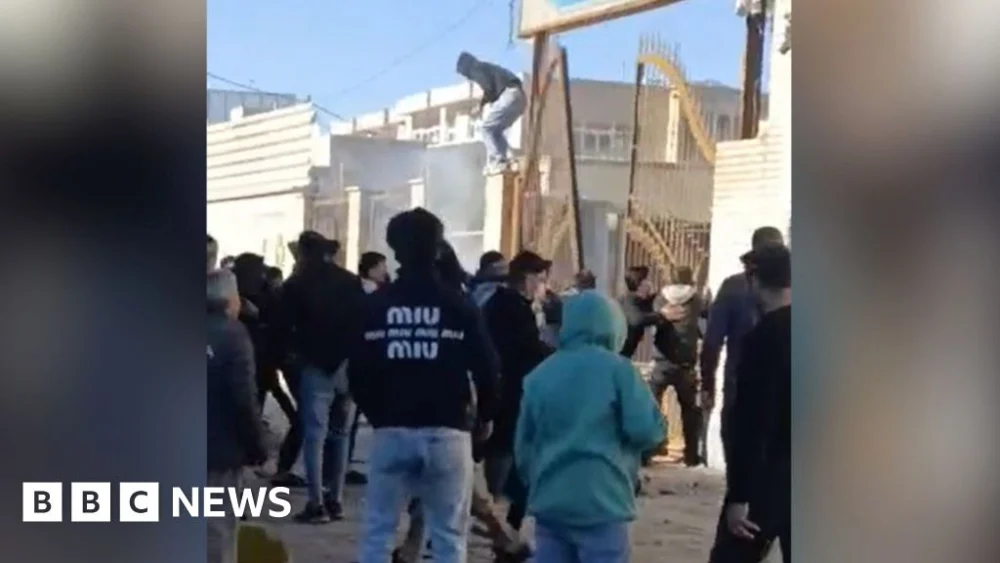
A wave of civil unrest is engulfing various regions of Iran, marking its fourth consecutive day, as citizens increasingly express profound dissatisfaction with the nation’s deteriorating economic conditions, particularly the precipitous decline in the national currency’s value. This burgeoning discontent recently escalated to direct confrontation, with reports indicating an attempted breach of a local government administrative building in the southern province of Fars, signaling a deepening crisis for the ruling establishment.
The immediate catalyst for the current surge in public anger is the precipitous depreciation of the Iranian Rial, which has seen its value plummet against major international currencies, most notably the U.S. dollar, on the open market. This latest economic shock follows a prolonged period of inflationary pressures and currency instability, severely eroding the purchasing power of ordinary Iranians and exacerbating an already challenging cost of living crisis. For weeks, the Rial has been on a downward trajectory, but recent days have witnessed an accelerated freefall, pushing many small businesses and households to the brink. Shopkeepers, who often operate on thin margins and rely on stable exchange rates for inventory, were among the first to voice their outrage, initiating protests in key commercial districts of Tehran.
The ramifications of such severe currency devaluation are multifaceted and pervasive. For the average Iranian citizen, the collapse of the Rial translates directly into skyrocketing prices for essential goods, including food, medicine, and imported necessities. Savings are decimated, and the prospect of economic stability appears increasingly distant. Businesses struggle with import costs, supply chain disruptions, and a shrinking consumer base, leading to closures and job losses. The underlying economic fragility, compounded by decades of international sanctions, systemic corruption, and perceived government mismanagement, has created a fertile ground for widespread frustration, culminating in the public demonstrations now observed across multiple cities.
The unrest, which originated in the capital on Sunday with protests primarily from the merchant class, swiftly broadened in scope and geographical reach. By Tuesday, university students, a historically potent force in Iranian protest movements, had joined the demonstrations, adding a layer of ideological and political grievance to the economic demands. Reports from various cities detail protestors chanting slogans that directly challenge the legitimacy and governance of the clerical establishment, moving beyond purely economic complaints to broader calls for political reform and accountability. This shift from specific economic grievances to more generalized anti-establishment sentiment is a critical indicator of the deep-seated nature of the current dissatisfaction.
One of the most significant confrontations occurred in Fasa, a city in the southern province of Fars, where a large crowd of protestors attempted to storm the local governor’s office. Visual evidence circulated on social media, subsequently verified, depicted protestors forcefully breaching the large yellow gates of the administrative building. The confrontation reportedly resulted in injuries to three police officers and the arrest of four individuals, underscoring the escalating tension and the direct challenge to state authority. Similar clashes and gatherings have been reported in the western provinces of Hamedan and Lorestan, indicating that the unrest is not isolated to a single region but represents a more diffuse expression of public discontent. The spatial spread of these protests, particularly beyond major urban centers, suggests a broad and generalized disillusionment with the current state of affairs.
In a move widely interpreted as an attempt to diffuse the escalating tensions, authorities in Tehran declared Wednesday a nationwide public holiday. The official justification cited unusually cold weather and the need to conserve energy. However, this explanation was met with skepticism by many Iranians and international observers, who viewed the sudden closure of schools, universities, and public institutions as a thinly veiled effort to prevent large gatherings and quell the burgeoning protests. This tactic, while ostensibly aimed at de-escalation, often fuels public mistrust and can be perceived as an admission of vulnerability by the state.
The current wave of protests, while significant, is being closely watched for its potential trajectory relative to past periods of unrest. Analysts are drawing comparisons, particularly to the widespread demonstrations of 2022 following the death in custody of Mahsa Amini, a young woman arrested by morality police for allegedly violating dress codes. The Mahsa Amini protests, primarily driven by social and human rights grievances, saw unprecedented participation across all segments of society and presented one of the most significant challenges to the Islamic Republic in decades. While the current economic protests have not yet reached the same scale or sustained intensity, their rapid spread and the direct targeting of government buildings indicate a severe level of frustration. The 2022 protests demonstrated the capacity for broad mobilization, and authorities are acutely aware of the potential for any new unrest to escalate rapidly, especially when fueled by fundamental economic hardship. Previous economic protests, such as those in 2017-18 and 2019 (triggered by fuel price hikes), also highlight the recurring vulnerability of the regime to public anger over living standards.
The government’s response to the escalating crisis has been characterized by a dual approach: a conciliatory rhetoric from some quarters alongside stern warnings of decisive action against any perceived threats to stability. President Masoud Pezeshkian, who recently assumed office, has publicly stated his administration’s commitment to listening to the "legitimate demands" of the protestors. Such statements aim to project an image of responsiveness and empathy, potentially seeking to de-escalate tensions through dialogue. However, this softer stance is juxtaposed with the uncompromising rhetoric of judicial and security officials. Prosecutor General Mohammad Movahedi-Azad, for instance, issued a stark warning, asserting that any attempts to destabilize the nation would be met with a "decisive response." This duality reflects the regime’s internal balancing act: attempting to address public grievances while simultaneously signaling its unwavering resolve to maintain order and suppress dissent.
Security forces have been deployed in significant numbers, particularly in areas of Tehran where the initial protests began, including the Grand Bazaar and university campuses. Reports suggest a heightened security presence, with plainclothes officers and riot police patrolling key urban centers. This robust security posture aims to deter further large-scale gatherings and swiftly disperse any emerging demonstrations, leveraging the state’s established capacity for crowd control and surveillance. The use of tear gas and, in some instances, live ammunition (as reportedly seen in Fasa) underscores the potential for violent clashes if the protests persist or escalate. Information control, including potential internet disruptions or filtering of social media platforms, is also a common tactic employed by Iranian authorities to limit the spread of protest-related content and hinder coordination among demonstrators.
The underlying causes of Iran’s persistent economic woes are deeply entrenched and complex. Decades of international sanctions, particularly those re-imposed by the United States following its withdrawal from the Joint Comprehensive Plan of Action (JCPOA), have severely crippled Iran’s oil exports and access to the global financial system. This external pressure is compounded by internal challenges, including pervasive corruption, inefficient state-run enterprises, and a significant portion of the economy controlled by powerful semi-governmental entities linked to the Revolutionary Guard. Mismanagement of national resources, a lack of transparency, and persistent budget deficits further exacerbate the economic strain. The allocation of substantial resources to regional proxy conflicts and military programs is also a frequent point of contention for a populace grappling with declining living standards. These structural issues mean that even if the immediate currency crisis were to stabilize, the fundamental vulnerabilities of the Iranian economy would remain, setting the stage for future cycles of discontent.
The implications of this renewed wave of unrest are significant for both the domestic political landscape and Iran’s regional standing. Internally, the protests pose a direct challenge to the legitimacy of the government, particularly for the new administration tasked with navigating a deeply disgruntled populace. The ability of President Pezeshkian to deliver on his promise to address "legitimate demands" will be crucial for his political capital and for restoring any measure of public trust. Failure to do so could lead to further erosion of public confidence in the political system. For the broader region, a domestically unstable Iran could either become more inward-looking or, conversely, double down on its assertive foreign policy as a distraction or a means to consolidate internal support. Internationally, the events are being closely monitored, with many nations expressing concern over human rights and the potential for further violence. The international community faces a dilemma of how to respond, balancing humanitarian concerns with the complexities of diplomatic engagement with Tehran.
Looking ahead, several scenarios are plausible. The protests could gradually dissipate under the weight of state repression, exhaustion, or a lack of sustained organizational leadership, a pattern observed in previous Iranian protest movements. Alternatively, if economic conditions continue to worsen and grievances deepen, the demonstrations could escalate in scale and intensity, potentially drawing in more diverse segments of society and posing a more profound challenge to the state’s authority. The government may opt for superficial economic concessions or increased social freedoms to appease the populace, but without addressing the root causes of economic mismanagement and corruption, such measures are unlikely to provide long-term stability. The current unrest serves as a stark reminder of the fragile equilibrium within Iran, where economic hardship frequently converges with political dissatisfaction, creating a volatile environment for both the citizenry and the ruling establishment.

 Aura Kasih
 Safa Marwah
 Ayu Aulia