Lisa Mariana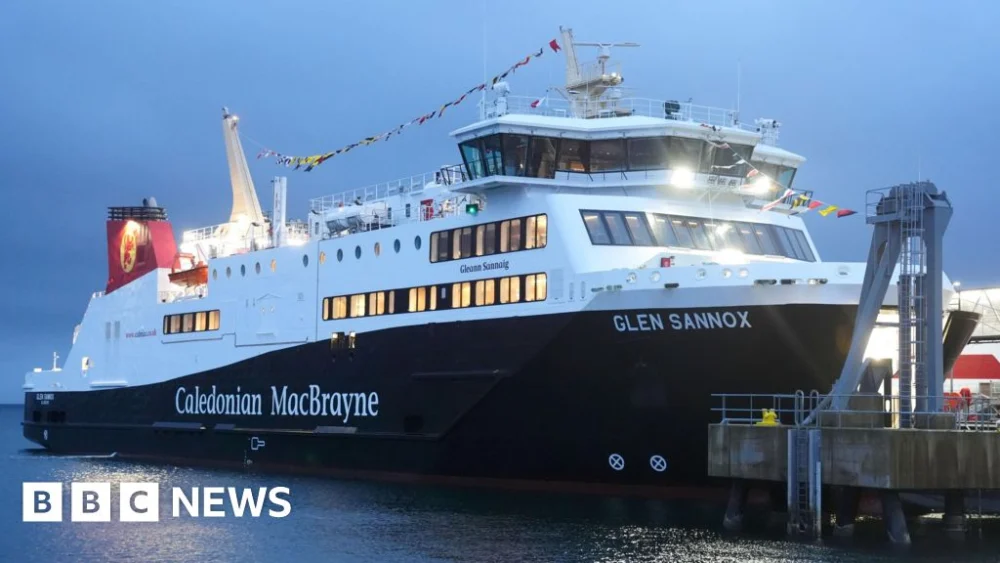
Scotland’s recently commissioned ferry, the MV Glen Sannox, has been identified as needing an extensive £3.2 million repair program, including the replacement of its propellers, merely a year into its operational life, shedding light on persistent design challenges and procurement complexities within the nation’s vital maritime transport infrastructure. This significant expenditure follows the discovery of structural weaknesses and necessitates a fundamental redesign of key propulsion components, raising fresh concerns about the vessel’s long-term reliability and the broader management of Scotland’s ferry fleet renewal initiatives.
During recent testimony before a Holyrood parliamentary committee, executives from Ferguson Marine, the shipyard responsible for the vessel’s construction, outlined the urgent requirement for these substantial repairs. A hairline crack detected in the ferry’s hull prompted an in-depth investigation, revealing a more systemic issue rooted in the original design and performance of its propulsion system. While initial remedial measures involved reinforcing the affected hull section with additional steel, industry experts and shipyard management have concluded that a more comprehensive intervention is indispensable. Graeme Thomson, the chief executive of Ferguson Marine, underscored that the fundamental resolution to the recurring hull stress lies in the installation of entirely new propellers, stating that this represents a critical "opportunity to improve the design." This declaration implies a recognition that the existing propeller configuration is inherently flawed for the vessel’s operational profile, contributing to the structural fatigue observed.
The underlying technical challenge has been attributed to a phenomenon known as cavitation. This occurs when pressure changes around a rapidly rotating propeller cause vapor bubbles to form and then rapidly collapse, generating powerful shockwaves and vibrations. In the case of the Glen Sannox, these damaging vibrations were particularly pronounced when the vessel operated in reverse, directly leading to the fatigue cracking in a weld seam near the hull’s waterline. The committee was informed that addressing this "root cause" through a redesigned propeller system is paramount to prevent future structural damage and ensure the vessel’s long-term integrity and safety. This diagnosis highlights a significant engineering oversight in the vessel’s initial design and testing phases, given the critical importance of astern maneuvers in ferry operations, particularly when docking in varied port conditions.

The MV Glen Sannox, a substantial vessel measuring 336 feet (102 meters) in length with capacity for 127 vehicles and 852 passengers, commenced its service to the Isle of Arran in January of the previous year. Its deployment marked a milestone as the first major addition to Scotland’s west coast ferry fleet in a decade. However, this long-awaited inauguration occurred seven years behind its original schedule and at a cost that had inflated fourfold beyond initial projections, turning its procurement into a symbol of public sector project mismanagement. The vessel’s operational history has already been marred by disruptions; it was briefly withdrawn from service last year for initial repairs to the hull crack and subsequently underwent annual maintenance in November at Cammell Laird’s shipyard on Merseyside. The need for such significant, unplanned repairs so soon after commissioning further exacerbates the concerns surrounding the project’s financial prudence and technical execution.
Adding to the complexity and financial burden, Ferguson Marine has confirmed that the Glen Sannox’s sister ship, the MV Glen Rosa, which is still under construction, will also require similar propeller modifications and hull strengthening work. This pre-emptive action, while prudent from an engineering standpoint to avoid a repeat of the issues, signifies a further unanticipated cost and potential for delays in the second vessel’s delivery. The shared design flaw points to a fundamental issue in the original specifications or the execution of the shipbuilding contract, impacting both vessels intended to serve critical island communities.
A key contributing factor to these design challenges appears to stem from the vessels’ controversial original specification. The ferries were conceived with a dual-purpose operational capability, intended to serve both the relatively calmer Arran route and the more exposed, higher-speed "Uig triangle" route connecting Skye to North Uist and Harris in the Outer Hebrides. This ambitious design brief, aimed at maximizing fleet flexibility, may have introduced compromises that ultimately led to the current propulsion system inadequacies. Balancing the diverse demands of different maritime environments with a single vessel design presents significant engineering hurdles, and it now appears that the initial design did not adequately account for the specific hydrodynamic stresses encountered, particularly those related to propulsion and maneuvering.
Technologically, the Glen Sannox represented an innovative step forward as the first UK ferry capable of operating on dual fuels: liquified natural gas (LNG) and marine gas oil (MGO), a low-sulphur diesel variant. This commitment to greener maritime transport, while commendable, has unfortunately been overshadowed by the operational and financial controversies. The complexity of integrating such advanced propulsion systems into a multi-role vessel further underscores the intricate engineering challenges that may have been underestimated during the design and build phases.
The procurement saga surrounding the Glen Sannox and Glen Rosa has evolved into a prominent industrial and political scandal, significantly eroding public trust and damaging the reputation of the Scottish National Party (SNP) government in Edinburgh. It has also cast a shadow over its ferry procurement agency, Caledonian Maritime Assets Ltd (CMAL), and the state-owned ferry operator, Caledonian MacBrayne (CalMac). The scandal reached a symbolic nadir in 2017 when then-First Minister Nicola Sturgeon presided over a ceremonial launch of the Glen Sannox, an event later revealed to be largely performative, featuring a vessel that was far from seaworthy, complete with a makeshift funnel and painted-on windows. The subsequent nationalization of the struggling Ferguson Marine shipyard in Port Glasgow, where both vessels were being constructed, further highlighted the depth of the crisis and the government’s direct intervention to salvage the project and protect jobs.
The Glen Rosa is now anticipated to be handed over in the fourth quarter of 2026, with an estimated operational commencement on the Troon-Brodick (Arran) route sometime in 2027. This timeline, however, is met with cautious optimism rather than firm guarantees. During the parliamentary committee session, Ferguson Marine bosses articulated "high confidence" in meeting the revised schedule and budget for the Glen Rosa, yet conceded that an absolute guarantee could not be provided, acknowledging the inherent complexities of such projects. This nuanced stance was met with understandable skepticism from committee convener Edward Mountain, a Scottish Conservative MSP, who expressed profound frustration with the decade-long saga, likening the constantly shifting timelines and cost projections to "quicksand." Such comments reflect a widespread sentiment of exasperation over the persistent uncertainties and escalating expenditures associated with these vital infrastructure projects.
In response to the ongoing challenges and to bolster the future of Scottish shipbuilding, Deputy First Minister and Economy Secretary Kate Forbes announced that additional contracts would unlock up to £14.2 million in funding for the modernization of the Ferguson Marine yard. Forbes emphasized the government’s commitment to "strengthening ferry resilience and connectivity for communities that rely on dependable services." On a subsequent visit to the shipyard, she sought to reassure the public, stating that the Glen Sannox’s challenges were now "in the past" and that the planned propeller work would not immediately disrupt sailings to Arran. She defended the necessity of these checks as "right and proper" and expressed optimism that islanders on Arran would eventually experience "a fantastically new experience of accessing the mainland." While these statements aim to project confidence, the substantial new repair costs and the historical context of delays and overruns suggest that public scrutiny will remain intense.
The Ferguson Marine shipyard itself, employing approximately 300 individuals, including 50 apprentices, holds significant economic and cultural importance for a region with a deep-rooted shipbuilding legacy. It remains the last operational yard on the lower Clyde, a historic industrial heartland. Approximately half of CalMac’s current operational fleet was constructed at this facility, which has been active since 1903. The government’s investment and intervention in the shipyard are not merely about completing two ferries but also about preserving critical industrial skills and employment in a deprived area. However, the ongoing issues surrounding the Glen Sannox and Glen Rosa underscore the formidable challenges of managing large-scale public procurement projects, particularly in a complex industry like shipbuilding. The saga serves as a critical case study in the difficulties of balancing innovation, cost control, timely delivery, and political accountability in the realm of essential public infrastructure. The financial implications of these latest repairs, combined with the historical cost overruns, will undoubtedly be a continuing point of contention and a key metric by which the success of Scotland’s ferry strategy is judged.




 Aura Kasih
 Safa Marwah
 Ayu Aulia