Aura Kasih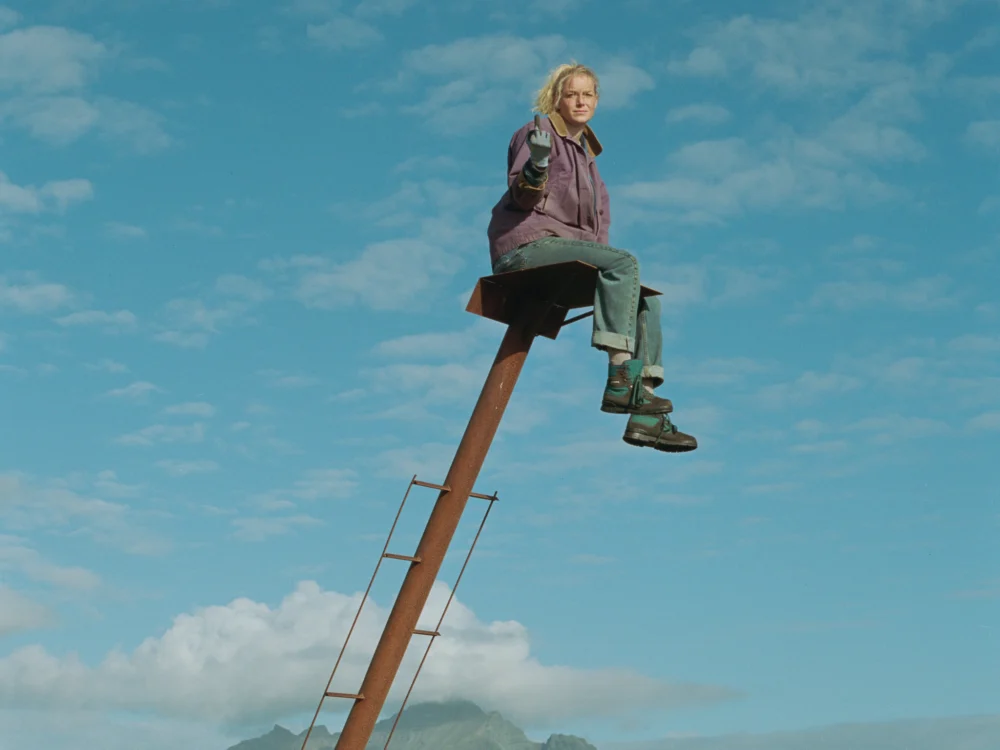
Icelandic director Hlynur Pálmason’s latest cinematic offering, The Love That Remains, delves into the profound complexities of familial dissolution, presenting a narrative that, while grounded in the quotidian struggles of a separating couple, Anna and Magnus, ultimately probes the deeper existential questions that permeate the human experience. The film commences at the precipice of their separation, a moment of profound disruption for their established life, which was once defined by the comforting rhythm of a shared home, three children, and a loyal canine companion. As the realities of divorce begin to unfold, the couple is compelled to navigate an uncertain future, one irrevocably altered by the unravelling of their union.
Pálmason, renowned for the striking visual eloquence he demonstrated in his previous works, Godland, a richly textured period piece, and A White, White Day, a poignant contemporary drama, continues to refine his distinctive aesthetic in The Love That Remains. While the thematic underpinnings of this new film are undeniably weighty, the overall tone is notably more accessible and, in certain moments, even imbued with a surprising lightness. This is perhaps most amusingly exemplified by the family dog, Panda, a character who garnered significant attention and even a prestigious accolade – the Palm Dog Award at Cannes. This award, a genuine and highly regarded recognition within the film festival circuit, underscores the film’s ability to find charm and poignancy even in the most unexpected corners of its narrative.
On its surface, The Love That Remains portrays the lives of ordinary individuals grappling with relatable challenges. The film unflinchingly depicts the Herculean effort required to maintain a semblance of normalcy for children amidst the seismic shifts of divorce. The narrative takes a particularly dramatic turn when one of the children, portrayed by Pálmason’s own offspring – a recurring practice for the director that injects a unique layer of authenticity – accidentally shoots another sibling with a bow and arrow. While the injured child makes a full recovery, the incident serves as a stark, albeit darkly humorous, illustration of the unpredictable and often dramatic events that can punctuate family life, particularly during periods of upheaval.

Beneath this veneer of domestic drama, however, lies a profound philosophical inquiry. Director Pálmason articulated this sentiment during a recent discussion, stating, "Often I think about what is the meaning of all this? When you go through life, you have moments of doubt about just life and things and what’s the meaning of all of it. It’s so silly, all of it.” This admission reveals the film’s core ambition: to explore the inherent absurdity and profound beauty of existence, and to question the enduring significance of human connection in the face of inevitable change and loss. The film implicitly suggests that while life’s grand narratives may seem chaotic or nonsensical, it is within these very moments of confusion and transition that the true essence of our relationships and our own resilience are revealed. As the audience journeys alongside Anna and Magnus through the changing seasons of their lives, the film meticulously unravels what truly endures between them.
The creative process behind The Love That Remains is as fascinating as its narrative. Pálmason shared insights into the unique challenges and rewards of directing his own children, a practice he has consistently employed throughout his filmography, beginning with his early short films and continuing through his feature work. This consistent collaboration with his family has fostered a distinctive creative environment, one characterized by a profound sense of trust and shared understanding. The director emphasized that this approach is not one of imposition, but rather a natural extension of their familial bond, enriched by a mutual appreciation for the filmmaking process. While his children are compensated for their contributions, their genuine enthusiasm for being part of what he describes as a "filmmaker family"—a close-knit group of collaborators—is a testament to the unique atmosphere he cultivates on set.
A significant aspect of Pálmason’s filmmaking methodology involves a deliberate stretching of time and resources, a necessity driven by both financial considerations and a desire to fully immerse himself in each project. This approach has led him to develop and shoot multiple projects in parallel, a strategy that allows for a more fluid and organic creative evolution. The Love That Remains, for instance, has been in development for an extended period, with its initial footage captured as early as 2017. This prolonged gestation period has allowed the film to mature and deepen, reflecting a patient and deliberate artistic vision. The director candidly admitted to the unusual practice of shooting scenes for both Godland and The Love That Remains within the same week, a testament to the demanding yet rewarding nature of his creative workflow.
This seemingly chaotic method of working on multiple projects simultaneously is, for Pálmason, a source of creative synergy. He posits that the intermingling of different projects can be invigorating, prompting introspection and pushing each endeavor toward greater artistic merit. Rather than viewing this overlap as a dilution of focus, he sees it as an opportunity for cross-pollination of ideas, where the breakthroughs and challenges encountered in one film can inform and elevate another. This philosophy is also deeply rooted in pragmatism. He acknowledges that a singular focus on one project at a time would severely limit his output, potentially resulting in only a handful of films over his entire career, necessitating reliance on other forms of employment.

The titular phrase, "The Love That Remains," functions as an evocative question, prompting contemplation on the enduring nature of affection in the face of separation and change. Pálmason’s exploration of this theme is deeply personal, stemming from his own reflections on the meaning of life and relationships. He muses on the inherent "silliness" of human endeavors, particularly in the context of romantic relationships and the inevitable shifts in connection that life often brings. Yet, this contemplation is balanced by a profound appreciation for the preciousness of time and the deliberate choices we make in how we spend it and with whom. The film, much like Godland, places a significant emphasis on the passage of time, highlighting its fleeting nature and the importance of cherishing moments with loved ones.
The opening sequence of The Love That Remains immediately establishes this thematic duality. The initial framing of the family—a seemingly idyllic portrait captured around a dinner table—evokes the warmth and familiarity often associated with sitcoms. However, this initial impression is subtly subverted by the unconventional musical score, which eschews conventional cheerfulness for something more introspective, hinting at the underlying complexities. Pálmason revealed that the very first image captured for the film, the dramatic visual of a roof being ripped from an old studio, was the genesis of this narrative. This striking image, imprinted upon him even though he was not in an optimal emotional state during its filming, provided the crucial impetus for the film’s eventual structure and opening. It was this singular visual that illuminated the path forward, allowing him to envision the subsequent scenes and the film’s overarching trajectory.
This process of discovery, where an initial image or sound ignites the creative spark, is characteristic of Pálmason’s directorial approach. He often finds clarity and direction not through pre-conceived notions, but through the act of creation itself. The image of the dislodged roof, in particular, served as a powerful metaphor for the impending disintegration of the family unit. It prompted him to conceptualize an opening that would introduce each family member with a sense of warmth and normalcy, a deliberate contrast to the underlying reality of their fractured state. He confessed that while he often possesses a clear understanding of what he does not want a film to be, the precise articulation of its ultimate form often emerges organically during the filmmaking process.
The film navigates a delicate balance between humor and sincerity, a tightrope walk that Pálmason consciously maintains. He expressed a conscious effort to avoid sentimentality, a stylistic choice he reserves for filmmakers like David Lynch, whose work he admires for its embrace of the maudlin. Instead, Pálmason aims for a more nuanced emotional resonance, a finely tuned calibration that ensures the film’s emotional impact is earned rather than imposed. This careful consideration of tone is crucial in a film that deals with such sensitive subject matter, ensuring that the audience remains engaged with the characters’ emotional journeys without feeling manipulated.

The integration of Pálmason’s children into the cast is not merely a practical choice but a deliberate artistic decision that enriches the film’s authenticity. Their presence on set, coupled with the director’s commitment to a relaxed and unhurried production schedule—one devoid of the typical pressures of assistant directors and rigid time constraints—creates an environment conducive to genuine performance. The sets themselves are characterized by a stark simplicity, eschewing the elaborate trappings of traditional film productions in favor of a more intimate and focused atmosphere. This minimalist approach underscores the film’s thematic focus on essential human connections and the core of familial relationships, stripped bare of superficial distractions.
The Love That Remains stands as a testament to the enduring power of human connection, even in the face of profound loss and separation. Through its intimate portrayal of Anna and Magnus’s journey, the film transcends the confines of a simple divorce narrative to explore universal questions about love, time, and the indelible echoes that remain long after the initial bonds have frayed. Pálmason’s masterful direction, coupled with his profound understanding of the human condition, delivers a cinematic experience that is both deeply personal and universally resonant, inviting audiences to contemplate the enduring significance of love in its myriad forms.




 Lisa Mariana
 Safa Marwah
 Ayu Aulia