Lisa Mariana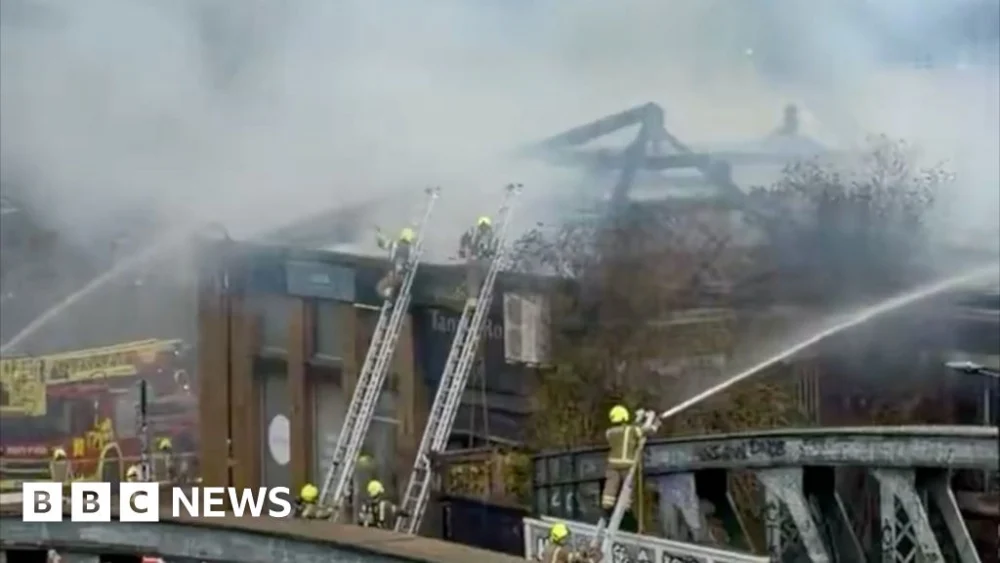
A substantial fire at a commercial premises in Chalk Farm, north London, has precipitated profound and extensive disruption across the West Coast Main Line, effectively halting all railway services operating from London Euston station and generating significant travel impediments across a crucial segment of the national rail network. This critical incident, which commenced in the mid-morning hours, has necessitated a massive emergency response and has consequently severed vital rail links connecting the capital to major urban centres in the Midlands, North West England, and Scotland, underscoring the delicate interplay between urban infrastructure and national transportation arteries.
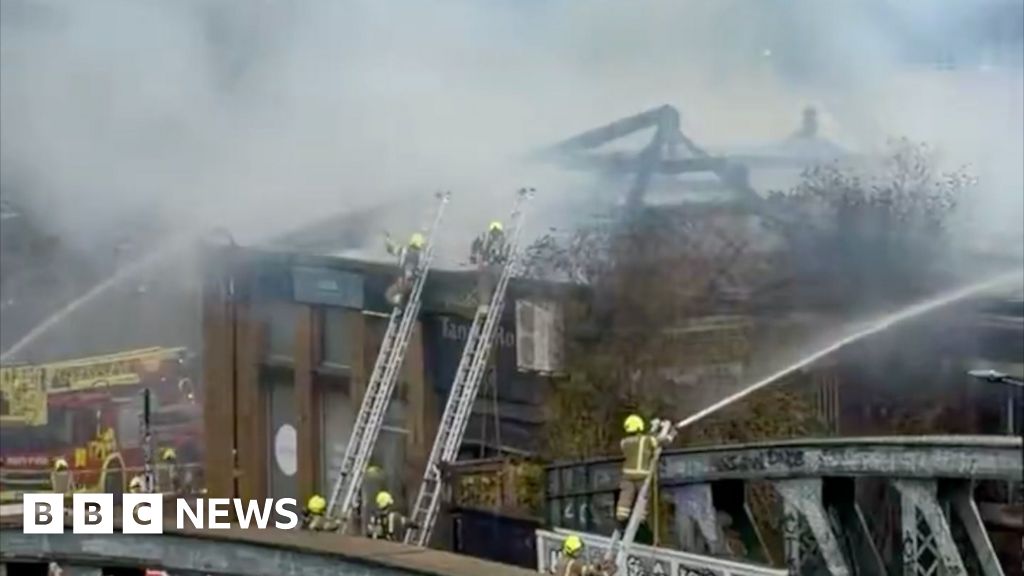
The conflagration, first reported around 09:30 GMT, erupted within a single-storey commercial establishment situated on Regent’s Park Road in Chalk Farm. The immediate proximity of this location to critical railway infrastructure amplified the severity of the incident, leading to a swift and comprehensive operational shutdown of train movements. The London Fire Brigade (LFB) promptly mobilised a significant contingent of resources, deploying approximately seventy firefighters, supported by advanced equipment including a 32-meter turntable ladder, to combat the rapidly escalating blaze. Eyewitness accounts and aerial observations confirmed the substantial nature of the fire, with plumes of dense smoke visible from considerable distances across the London skyline, including vantage points as far as the Royal Free Hospital, the London Eye, and the iconic BT Tower.
The strategic importance of the West Coast Main Line (WCML) cannot be overstated in the context of the United Kingdom’s transportation network. It stands as one of the busiest mixed-use railway lines in Europe, accommodating both high-speed passenger services and crucial freight operations. This arterial route connects London Euston with key economic hubs such as Birmingham, Manchester, Liverpool, and Glasgow, serving millions of passengers annually and facilitating significant commercial logistics. The abrupt cessation of services from Euston, therefore, represents not merely a localised inconvenience but a systemic shock to national connectivity, with cascading effects on regional economies and daily life.
Operational managers at National Rail issued an advisory forecasting major delays to persist until at least 15:00 GMT, indicating a minimum six-hour period of severe interruption. This timeframe reflects the complexity involved in not only extinguishing the fire but also ensuring the structural integrity and operational safety of the adjacent railway lines and associated infrastructure. Train operating companies, including Avanti West Coast and London Northwestern Railway, bore the brunt of the immediate impact, with all their services departing from Euston completely suspended. Avanti West Coast, a primary long-distance operator on the WCML, quickly advised its passengers to seek alternative travel arrangements, including the option to utilise tickets with other rail operators where possible – a common contingency measure during widespread disruption.
Beyond the core WCML operators, the incident’s ripple effect extended to other interconnected networks. Southern train services experienced suspensions between Clapham Junction and Watford Junction, a segment that, while not directly on the WCML, is operationally intertwined through shared corridors and connecting lines. Furthermore, London Overground services, crucial for intra-London and commuter travel, faced potential disruptions on routes between Richmond/Clapham Junction and Stratford, as well as from Gospel Oak to Barking. This broad spectrum of affected services highlights the intricate web of rail operations in the Greater London area and how a single incident can propagate widely through the system.
The closure of Adelaide Road, a significant local thoroughfare connecting Winchester Road and Haverstock Hill, further compounded the local disruption, affecting vehicular traffic and pedestrian movement around the incident site. This perimeter closure was deemed essential to ensure the safety of both the public and emergency personnel engaged in the firefighting efforts, allowing unobstructed access for fire engines and other emergency vehicles. The dual impact on both road and rail infrastructure within a densely populated urban area presented a multifaceted challenge for local authorities and transport planners.
From an analytical perspective, this incident underscores several critical vulnerabilities inherent in modern urban infrastructure. The proximity of commercial buildings to vital transport corridors, while often economically expedient, introduces inherent risks. Fires in such locations, regardless of their origin, possess the potential to cause widespread disruption due to their direct impact on sensitive equipment, overhead lines, and track infrastructure, or simply by creating an unsafe environment for operations. The unknown cause of the Chalk Farm fire at the time of reporting adds another layer of concern, necessitating a thorough investigation to determine whether it was accidental, electrical, or potentially malicious, each scenario carrying different implications for future preventative measures.
The economic ramifications of such a prolonged shutdown on a major national railway line are substantial. Beyond the immediate costs associated with emergency response and property damage, there are significant losses incurred by train operating companies due to cancelled services, passenger compensation, and the logistical nightmare of re-routing or accommodating stranded travellers. Businesses relying on the WCML for freight transport face delays in supply chains, potentially impacting manufacturing, retail, and other sectors dependent on timely deliveries. For individual commuters and business travellers, the lost time and missed appointments translate into tangible economic costs and productivity losses.
Crisis communication and passenger management are paramount during such events. Rail operators and National Rail’s central command centres become focal points for disseminating real-time information, often through digital platforms, social media, and station announcements. The efficacy of these communication channels in providing accurate, timely, and actionable advice directly influences passenger satisfaction and helps mitigate chaotic scenes. The advice for passengers to use tickets with other operators, while a standard protocol, requires robust coordination between different rail companies to ensure seamless acceptance and minimise further confusion.
Looking ahead, the recovery phase following such an incident is complex. Once the fire is fully extinguished and the site declared safe, extensive inspections of the railway infrastructure will be required. This includes detailed checks of tracks, signalling systems, overhead power lines, and any adjacent structures that might have been compromised by heat or smoke. Only after these rigorous safety assessments are completed can services gradually resume, often with initial speed restrictions or reduced frequencies to ensure ongoing safety. The full restoration of normal service levels can take many hours, or even days, depending on the extent of any damage discovered.
This Chalk Farm incident also prompts broader discussions on infrastructure resilience and urban planning. It highlights the continuous need for stringent fire safety regulations for buildings adjacent to critical transport networks and the importance of regularly reviewing emergency response protocols. Furthermore, it may catalyse renewed consideration of how to build greater redundancy into national rail networks to minimise the impact of localised disruptions, or how to enhance protective measures for infrastructure in high-risk urban environments. As cities grow and infrastructure becomes more interconnected, the lessons learned from events like the Chalk Farm fire will be crucial in shaping future strategies for maintaining operational continuity and safeguarding public safety. The investigation into the fire’s origin will be pivotal in informing these long-term preventative and resilience-building efforts, ensuring that such disruptions, while perhaps inevitable in some form, can be better mitigated and managed in the future.




 Aura Kasih
 Safa Marwah
 Ayu Aulia