Aura Kasih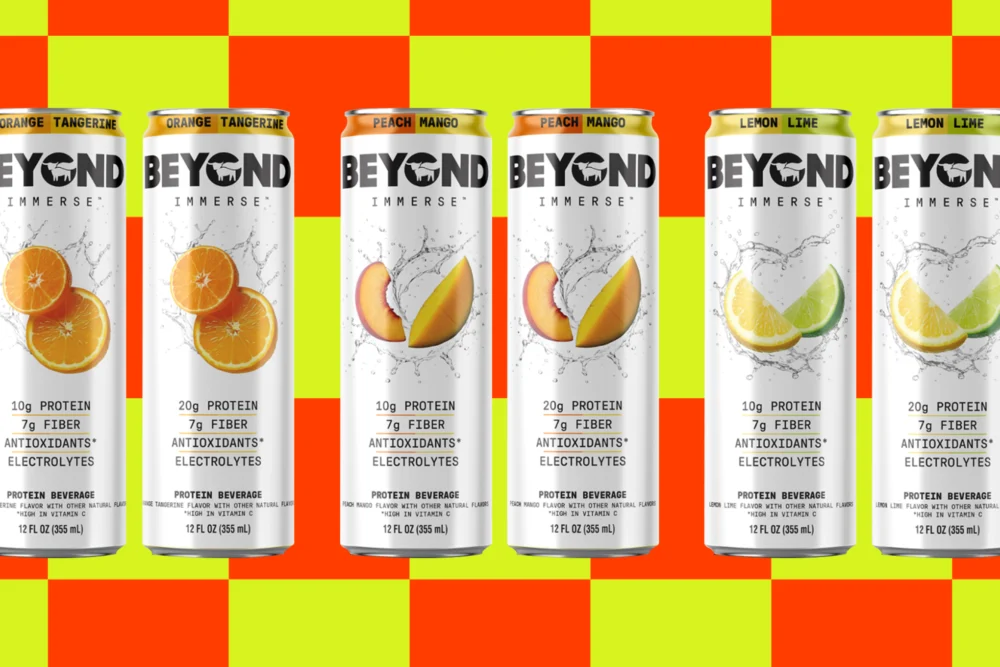
In a strategic pivot that signals a significant departure from its core identity, Beyond Meat has unveiled a novel beverage, "Beyond Immerse," a plant-based protein soda. This new offering marks a distinct shift away from the company’s long-standing mission to replicate meat products, venturing into entirely new territory. While seemingly abrupt, this move is deeply rooted in the formidable challenges confronting Beyond Meat’s flagship plant-based burger business, a sector that has failed to deliver consistent profitability. For a company that has yet to achieve annual profits, this foray into the broader protein beverage market represents a high-stakes gamble, an attempt to tap into a potentially lucrative segment that could offer a lifeline.
Beyond Immerse distinguishes itself within the crowded functional beverage landscape. Eschewing the often-chalky texture associated with many protein drinks, Immerse is marketed as a "crisp and refreshing" alternative. It is available in three fruit-forward flavors: Peach Mango, Lemon Lime, and Orange Tangerine. Each flavor offers a choice between two protein concentrations, delivering either 10 grams or 20 grams of protein per 12-ounce can. Complementing its protein content, the beverage provides 7 grams of fiber, with calorie counts ranging from 60 to 100 calories, depending on the protein variant.
True to Beyond Meat’s brand ethos, Immerse is entirely plant-derived. The protein source is pea protein, augmented by tapioca for fiber. Sweetening is achieved through stevia, complemented by "natural flavors," juice concentrates, and food colorings. The company further emphasizes its health-conscious positioning by touting the beverage’s inclusion of antioxidants and electrolytes, aligning with contemporary consumer preferences for functional beverages that offer more than mere hydration.
The macronutrient profile of Immerse presents a compelling proposition, particularly when contrasted with conventional protein powders. For instance, a typical 100-calorie serving of many protein powders might yield approximately 19 grams of protein with negligible fiber, often accompanied by a less-than-ideal texture. Immerse’s ability to deliver a comparable or superior protein-to-calorie ratio alongside significant fiber content, all within a purportedly refreshing beverage format, suggests a potentially disruptive offering. Early indicators of consumer interest are evident on the Beyond Test Kitchen website, where the initial limited release of Immerse sold out rapidly across all available flavors, underscoring a palpable demand for such an innovative product.

The broader market for protein-enhanced and functional beverages is experiencing robust expansion. The United States market for ready-to-drink protein shakes alone witnessed a substantial 71% growth between 2021 and 2025, now representing an $8 billion industry. While dairy-based whey protein has historically dominated this space, plant-based protein alternatives are steadily gaining traction. The Good Food Institute reports that sales of both plant-based protein drinks and powders saw an 11% increase from 2023 to 2024, establishing a $450 million market segment. These figures, however, are dwarfed by the colossal "functional drinks" market, encompassing categories such as prebiotics, probiotics, fiber, protein, electrolytes, and more, which was valued at over $200 billion in 2024 and is projected for continued growth. The proliferation of specialized beverages in retail environments, from kombucha to electrolyte-rich recovery drinks, highlights a significant consumer shift towards beverages perceived to offer tangible health benefits. The acquisition of Poppi, a prebiotic soda brand, by Pepsi for $1.95 billion in 2025, despite facing regulatory scrutiny for its health claims, underscores the immense commercial potential within this sector.
Beyond Meat’s strategic entry into this market is underpinned by its established brand recognition and expertise in plant-based ingredient innovation. As founder and CEO Ethan Brown articulated, the company possesses "pioneering expertise in unlocking the power of plants." In a landscape where profitability remains elusive for Beyond Meat, the beverage sector offers a more immediate avenue to generate revenue and demonstrate financial viability to its investors.
Founded in 2009, Beyond Meat quickly garnered attention for its ambitious vision of transforming the food system. The company’s initial public offering (IPO) in 2019 was a landmark event, with shares soaring on their debut and reaching a peak valuation exceeding $14 billion. Securing distribution agreements with major retailers like Walmart, Target, and Kroger, alongside high-profile partnerships with fast-food giants such as McDonald’s, KFC, and Subway, cemented Beyond Meat’s position as a nascent leader in the plant-based meat industry.
However, the initial euphoria surrounding Beyond Meat proved unsustainable. The company has consistently reported net losses since its IPO. While growth is a key metric for investors, Beyond Meat’s annual revenue has experienced a steady decline since its 2021 peak, falling to $326 million in 2024. The anticipated long-term success of its fast-food collaborations failed to materialize into permanent menu fixtures in the U.S. market. Consequently, Beyond Meat’s stock price has entered a prolonged downturn, trading below one dollar per share and facing the risk of delisting from the Nasdaq stock exchange. This financial precariousness is further compounded by a class-action lawsuit filed by shareholders alleging the concealment of a significant write-down of aging assets.
The challenges confronting Beyond Meat are symptomatic of a broader market contraction within the plant-based meat sector. The Good Food Institute reported a 7% decrease in U.S. plant-based meat sales from 2023 to 2024, marking the third consecutive year of decline. Peter McGuinness, CEO of Impossible Foods, Beyond Meat’s primary competitor, has openly acknowledged the sector’s difficulties, stating that the plant-based meat category is "smaller today than it was two years ago, four years ago, five years ago." Both Beyond Meat and Impossible Foods, despite their survival, are navigating a challenging environment. Impossible Foods has postponed its own IPO plans, likely influenced by Beyond Meat’s public market struggles, and has undertaken multiple rounds of layoffs.

Several macro-economic and consumer-driven trends are contributing to the headwinds faced by plant-based meat companies. Firstly, traditional meat consumption is experiencing a resurgence. The Food Industry Association reported a nearly 5% increase in meat sales during the same period, reaching a record $105 billion. Concurrently, the number of individuals identifying as vegetarian or vegan has declined. Gallup’s 2023 Consumption Habits poll indicated that only 1% of the U.S. population identifies as vegan and 4% as vegetarian, a decrease from 2018 figures. Beyond Meat’s initial strategy was not solely reliant on catering to existing vegetarians but aimed to persuade a broader segment of the population to reduce meat consumption. While this trend showed promise, with nearly half of U.S. restaurants offering vegan options by 2023, consumer interest in actively reducing meat intake appears to be waning. By 2025, only 22% of Americans reported trying to reduce their meat consumption, a notable decrease from 37% just three years prior.
Secondly, the growing consumer skepticism towards ultra-processed foods (UPFs) presents another significant obstacle for companies like Beyond Meat. Their plant-based meat products, often comprising a complex blend of pea protein isolates, oils, starches, and flavorings engineered to mimic meat’s texture and appearance, fall squarely into the UPF category. Mounting scientific research has linked UPFs to a wide array of adverse health outcomes, leading to their designation as a global health threat by prestigious medical journals. Regulatory bodies and public health advocates are increasingly scrutinizing these products. The shift towards a greater emphasis on whole foods, simpler ingredient lists, and a more balanced approach to protein sources, which may include a measured increase in meat consumption alongside a reduction in highly processed alternatives, further marginalizes traditional plant-based meat products.
This confluence of factors—declining interest in plant-based meat, a resurgence in traditional meat consumption, and the growing aversion to ultra-processed foods—explains Beyond Meat’s strategic pivot towards beverages, specifically functional drinks like protein sodas. The "wellness drink" aisle is replete with products that, while often heavily processed, are perceived by consumers as healthy. This paradox, where processed beverages are more readily accepted than processed solid foods, creates an opportunity for Beyond Meat. The company’s established expertise in plant-based ingredients, coupled with the market’s acceptance of processed beverages, positions Immerse as a potentially viable, albeit unconventional, revenue stream.
While Beyond Immerse, by itself, may not be a panacea for Beyond Meat’s financial woes, it represents a crucial strategic maneuver. The immediate objective is to buy the company time. Time to regain investor confidence, to stabilize its stock price, and to potentially capitalize on future shifts in dietary trends or consumer preferences that might once again favor plant-based meat alternatives. The success of Immerse will hinge on its ability to resonate with consumers seeking convenient, plant-based protein options that deviate from the traditional, and increasingly scrutinized, meat substitute category. It signifies a bold, perhaps last-ditch, effort to diversify and find a profitable niche in a challenging market, betting that the future of plant-based innovation lies not just in replicating meat, but in reimagining entirely new categories of functional foods and beverages.




 Lisa Mariana
 Safa Marwah
 Ayu Aulia