Aura Kasih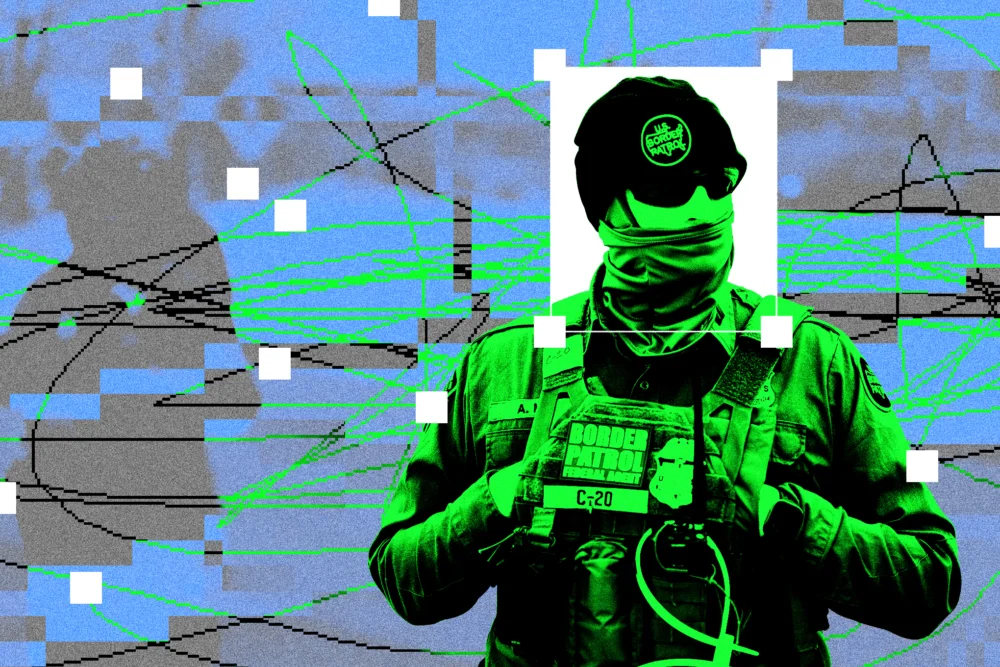
A wave of public unease and legislative action is challenging the controversial practice of federal immigration agents operating with obscured identities, raising fundamental questions about accountability, transparency, and the very nature of law enforcement in a democratic society.
The increasing use of facial coverings, such as gaiters, by U.S. Immigration and Customs Enforcement (ICE) and other Department of Homeland Security (DHS) personnel has ignited widespread public disapproval and spurred a burgeoning movement at the state and local levels to mandate clear identification for all law enforcement officers. This shift in operational tactics, often employed during civil immigration enforcement actions, is perceived by many as a deliberate obfuscation of authority, eroding public trust and creating an environment ripe for fear and suspicion. The core of the controversy lies in the fundamental principle that those wielding the power of the state should be readily identifiable, allowing for accountability and fostering confidence in the impartial administration of justice.
The public’s aversion to masked law enforcement is not a nascent phenomenon; it is rooted in deeply held principles of transparency and accountability that are cornerstones of democratic governance. The ability to identify an officer is not merely a matter of convenience but a critical safeguard against the abuse of power and a vital component in maintaining public confidence in the rule of law. When individuals are confronted by agents whose faces are hidden, the line between legitimate state action and the actions of clandestine or even illicit actors blurs, fostering a climate of uncertainty and vulnerability. The chilling effect of such anonymity can be profound, discouraging citizens from asserting their rights or even from engaging with law enforcement when necessary, for fear of reprisal or mistreatment at the hands of an unrecognized authority.
The implications of this practice extend beyond public perception. The lack of clear identification can create dangerous ambiguities, potentially leading to misidentification or escalating confrontations. In extreme scenarios, the inability to distinguish between legitimate law enforcement and individuals posing as authority figures can have dire consequences. The chilling precedent set by incidents where individuals have been subjected to forceful apprehension without clear identification, leading to allegations of warrantless searches and other abuses, underscores the urgency of this issue. The specter of being forcibly removed from one’s home in a state of undress by an unknown entity, whether it be a federal agent or a criminal element, highlights the inherent dangers of obscured official identities.
In response to these concerns, California enacted landmark legislation, the No Secret Police Act, aimed at curtailing the use of face coverings by federal law enforcement officers and mandating identification. This was complemented by the No Vigilantes Act, which requires all law enforcement to display some form of identification. However, the Department of Homeland Security swiftly challenged the constitutionality of these measures, initiating legal proceedings to block their enforcement. The outcome of this legal battle remains pending, with a judge yet to rule on the preliminary injunction sought by DHS. This legal challenge underscores the significant federal-state tensions arising from the debate over law enforcement transparency.
The legislative momentum against masked federal agents has not been confined to California. Numerous states have introduced similar anti-masking bills, reflecting a growing consensus that this practice is incompatible with democratic policing. While federal legislative efforts, such as the proposed No Secret Police Act in the House and the VISIBLE Act in the Senate, have faced significant political hurdles, particularly in a divided Congress, states have continued to press forward. Even in the face of federal legal challenges, state legislatures across the nation are actively considering and introducing their own measures to ensure that federal agents operating within their borders are identifiable.
This burgeoning state-level activism is a testament to the widespread public unease. In recent months, states like Maryland, Vermont, Washington, and Georgia have introduced new legislation targeting masked federal law enforcement. Beyond state capitals, municipalities are also taking action. Los Angeles has passed a city ordinance addressing the issue, and St. Paul, Minnesota, is currently considering similar measures. The ongoing legislative session in Minnesota is expected to see the introduction of a new bill specifically aimed at banning ICE agents from wearing face coverings. As of early 2026, at least fifteen state legislatures have pending bills addressing this contentious issue, indicating a national trend towards demanding greater transparency from federal agencies.
The Department of Homeland Security, however, has remained steadfast in its defense of the practice, often citing concerns over officer safety and the alleged increase in threats against federal agents. In public statements and legal filings, DHS officials have pointed to a significant rise in death threats and assaults against ICE agents as justification for operational measures that include facial concealment. Secretary Kristi Noem, in a notable television interview, defended the use of masks by federal agents, arguing that disclosing the identity of an agent involved in a shooting incident could exacerbate threats against law enforcement. She characterized such disclosures as "doxxing" and expressed concern over an alleged 8,000 percent increase in death threats against federal officers.
The Department of Justice, in its lawsuit against California’s No Secret Police Act, echoed these concerns, asserting that "threats to federal officers are serious and potentially deadly." The lawsuit cites "taunting" and "online doxxing" as examples of the risks faced by agents. DHS has further supported these claims with public statements detailing a purported 8,000 percent increase in death threats and a 1,300 percent rise in assaults against ICE agents. These claims are often accompanied by visual evidence, such as blurry screenshots of online posts and photographs of minor injuries, intended to demonstrate the heightened risks faced by agents.
However, the presented evidence has been met with skepticism from critics and legal experts. The claimed increase in assaults, illustrated by injuries akin to those sustained in minor accidents, is often viewed as insufficient justification for a practice that fundamentally undermines transparency. The argument that agents must operate anonymously to protect themselves from online harassment and threats, while acknowledging the real dangers faced by law enforcement, has been challenged as a disproportionate response that sacrifices core democratic principles. The assertion that the disclosure of an agent’s identity constitutes "doxxing" that warrants extreme operational secrecy has been questioned, particularly when juxtaposed with the public’s right to know who is exercising state power.
The legal viability of state-level bans on masked federal law enforcement faces significant constitutional challenges, primarily rooted in the Supremacy Clause of the U.S. Constitution. This clause generally establishes federal law as supreme to state law when the two conflict. Consequently, states have limited authority to dictate the operational methods of federal agencies. Legal scholars hold divergent views on the ultimate outcome of these legal battles. Some argue that state laws targeting federal law enforcement practices, especially those concerning identification and operational conduct, are likely to be deemed constitutionally invalid. They posit that federal agencies have broad latitude in determining their own internal procedures, particularly when asserting federal authority.
Conversely, other legal analysts suggest that the issue is not as definitively settled, with the permissibility of mask bans on federal agents remaining an open question under existing precedent. Nevertheless, the very fact that states are compelled to defend their efforts to mandate transparency in federal law enforcement underscores a significant departure from established norms. The notion that it might be constitutionally permissible, or even legally mandated, for federal agents to operate anonymously is seen by many as a troubling development that strains the foundational principles of American governance.
Public opinion surveys consistently indicate a strong majority of Americans oppose the practice of federal agents wearing masks. Data suggests that a significant percentage of the population views ICE agents unfavorably and supports major reforms, including mandates for clear identification. Even among political demographics that tend to show higher approval for ICE, such as Republicans, a substantial portion believes agents should be in uniform and clearly identifiable. This widespread public disapproval suggests that the current operational tactics of federal immigration enforcement are out of step with the will of the people.
Judicial perspectives have also shed light on the controversial nature of masked federal agents. In one notable instance, a federal judge appointed during the Reagan administration described the justifications offered for the practice as "disingenuous, squalid and dishonorable," opining that ICE agents mask themselves "for a single reason – to terrorize Americans into quiescence." This judicial sentiment suggests a deep concern among some members of the judiciary regarding the coercive implications of anonymous law enforcement. Judges, by the nature of their roles, are accustomed to making decisions that may displease powerful individuals or groups, and the argument that they must operate anonymously to avoid repercussions is often viewed as inconsistent with the principles of judicial independence and the role of law enforcement in a free society.
Furthermore, even within the broader law enforcement community, there are reservations about the practice of masked federal agents. The International Association of Chiefs of Police (IACP) has issued resolutions expressing concerns about the use of face masks by law enforcement, warning of a "slippery slope" that can undermine police legitimacy. The IACP has argued that in a democratic society, officers should generally be identifiable, as transparency is crucial for maintaining public trust. This sentiment from a leading organization representing law enforcement executives suggests that the push for identifiable federal agents is not solely an external critique but also resonates within the profession itself.
California, in its legal defense, has argued that prior to the recent shift towards masked operations by federal immigration enforcement, agents typically wore visible insignia, badges, and identification numbers. The state contends that DHS has failed to provide sufficient evidence demonstrating that masking or refusing to wear identification actually mitigates the risks of harassment or doxxing. This assertion highlights the argument that the current practices are a departure from established norms of federal law enforcement transparency, introduced relatively recently without a clear and compelling justification that outweighs the public’s right to know.
The current situation, where states are forced to litigate in court to mandate basic transparency from federal agencies, suggests a systemic breakdown in the relationship between the executive branch and the public’s expectations of accountability. In an ideal democratic framework, federal agencies would proactively adhere to principles of transparency, and legislative bodies would establish clear guidelines for law enforcement conduct that align with public sentiment. The fact that California’s No Secret Police Act is considered a "backup generator" in response to a perceived collapse of normal constitutional operations speaks volumes about the current state of affairs.
The reliance on masked officials, coupled with justifications centered on perceived threats and online harassment, presents a stark contrast to the fundamental ideals of American governance. The assertion that law enforcement must operate in anonymity to protect its agents from the consequences of their actions, while simultaneously claiming to uphold the law, creates a profound dissonance. This disconnect between the stated purpose of law enforcement and the methods employed raises serious questions about the direction of federal authority and its relationship with the citizenry.
Ultimately, the debate over masked federal agents is not merely about personal preference or inconvenience; it is about the foundational principles of a democratic society. The ability to identify those who wield state power is essential for accountability, trust, and the preservation of civil liberties. While the legal landscape remains uncertain, the widespread public opposition and the growing legislative resistance suggest a powerful societal demand for a return to transparent and accountable law enforcement practices. The long-term implications of failing to address these concerns could further erode public trust and strain the delicate balance of power that underpins American democracy. The survival of initiatives like California’s No Secret Police Act, and the broader movement they represent, will be a critical indicator of the nation’s commitment to these core democratic values.


 Safa Marwah
 Ayu Aulia
 Lisa Mariana