Aura Kasih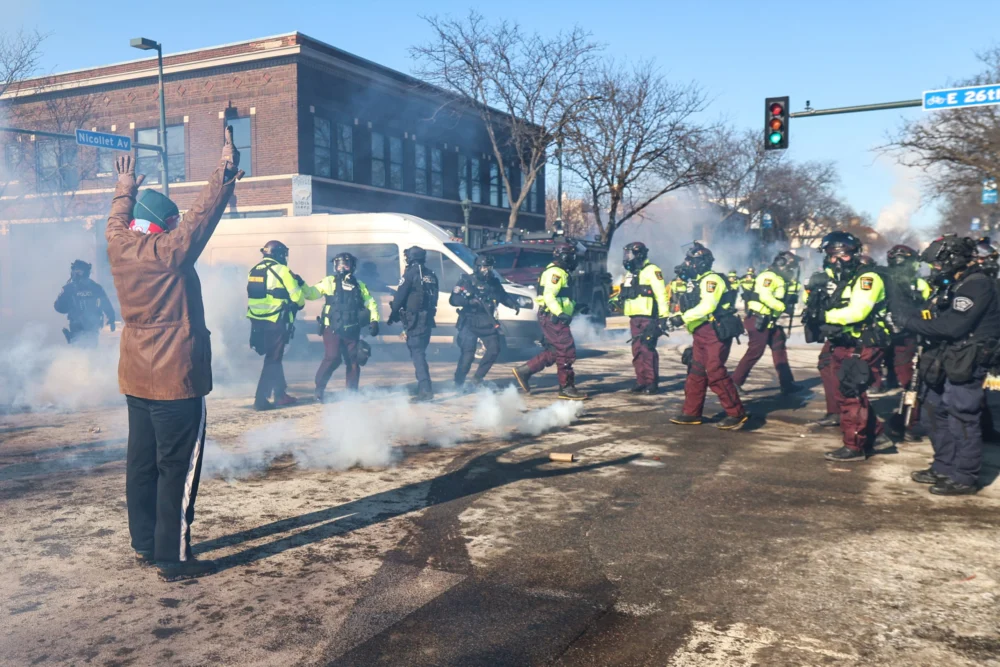
South Minneapolis found itself once again engulfed in the raw, agonizing aftermath of a life extinguished by federal law enforcement, a devastating event that shattered the community’s fragile peace and reignited a familiar storm of protest and grief. The shooting death of 37-year-old Alex Pretti by federal officers, an incident captured by the lens of photographer Steven Garcia, served as a stark reminder of the volatile relationship between local communities and federal intervention, forcing a deep introspection into accountability, the use of force, and the very fabric of justice.

The chilling events unfolded with a speed that belied their profound impact. Garcia, initially on assignment for a local pond hockey event, received an urgent alert about the shooting, a summons that pulled him away from the icy tranquility and towards the escalating tension in the city’s heart. Upon arrival, the scene was already a complex tableau of law enforcement presence. Federal agents, including the FBI, had departed, leaving behind a cordon of state and local authorities – the Minneapolis Police Department, their SWAT team, the Hennepin County Sheriff’s Office, and the Minnesota State Patrol – tasked with managing the unfolding situation and the inevitable public outcry.

The intersection, a place now forever marked by tragedy, was a scene of stark contrasts. Protesters, many of whom bore the visible preparedness honed by previous unrest, had transformed the streets into makeshift barricades of trash cans and dumpsters. Mattresses were strategically placed, testament to a community ready to hold its ground. The air, already thick with the biting cold of a Minnesota winter, soon became charged with a different kind of intensity as law enforcement initiated a forceful dispersal of the assembled crowds.

Garcia’s firsthand account paints a visceral picture of this escalation. As law enforcement vehicles advanced, they “drove their trucks over the mattresses as they left,” a symbolic act of forceful removal that underscored the widening chasm between the authorities and the demonstrators. The subsequent deployment of tear gas was not a singular event but a barrage. “Dozens of canisters were going off,” Garcia recalled, describing the explosive reports that punctuated the night. “Even initially, there were four, five, six canisters at a time that they were throwing.” The impact of this chemical agent was immediate and severe, forcing Garcia to seek refuge, his protective mask offering only partial respite from the burning sensation in his eyes and mouth. The experience, he noted, was deeply disorienting, causing nausea and skin irritation for many.

This prepared response from the community is not an accident of circumstance but a learned behavior. The echoes of the 2020 protests, sparked by the murder of George Floyd, reverberated through the current events. As Garcia observed, many individuals arrived equipped with respirators and safety gear, a grim testament to the foresight developed through prior confrontations with law enforcement. “A lot of people I’ve talked to have said, ‘I had my respirator ready from 2020,’” he noted, highlighting the proactive measures taken to safeguard against the recurrent use of crowd-control agents. This preparedness extended beyond individual readiness, encompassing a communal support network. “At all the events I’ve been to, people will set up a table to hand out food and water and hand warmers,” Garcia added, emphasizing the resilience and mutual aid that characterize these gatherings.

The shooting of Alex Pretti, at the age of 37, represents a tragic addition to a growing list of incidents that have strained the relationship between federal agencies and urban communities. While the specific circumstances of Pretti’s encounter with federal officers remain under intense scrutiny, the immediate aftermath mirrored patterns observed in other instances of federal intervention in domestic policing matters. These interventions, often characterized by a rapid deployment of specialized units with distinct operational protocols, can create friction points with local law enforcement and the communities they serve. The presence of federal agents, particularly those involved in immigration enforcement or specialized task forces, can be perceived by some as an overreach, while others view them as a necessary component of national security and law enforcement.

The tactical decisions leading to the dispersal of protesters, including the use of tear gas, raise critical questions about proportionality and de-escalation. While law enforcement agencies often cite the need to maintain public order and ensure the safety of officers and the public, the aggressive deployment of chemical agents in densely populated areas can have unintended consequences, disproportionately affecting vulnerable populations and exacerbating existing community tensions. The long-term health impacts of repeated exposure to these agents are also a growing concern, prompting calls for greater transparency and accountability in their use.

As the immediate protests subsided, a somber vigil began to form at the intersection where Pretti lost his life. Community members gathered, transforming the site into a makeshift memorial. “People were spelling his name out with pinecones and starting to leave flowers,” Garcia observed, a poignant visual representation of collective grief and remembrance. This spontaneous act of mourning underscored the deep sense of loss felt by the community and served as a powerful statement of solidarity with Pretti’s family.

The broader implications of this incident extend beyond the immediate South Minneapolis neighborhood. The recurring use of federal forces in domestic situations, coupled with aggressive crowd-control tactics, fuels a national debate about the militarization of policing and the appropriate role of federal agencies in civilian law enforcement. It raises fundamental questions about oversight, training, and the accountability mechanisms in place when federal agents engage with the public. The lack of immediate and comprehensive information surrounding the shooting, as is often the case in these complex scenarios, further erodes public trust and fuels speculation.

The future outlook for South Minneapolis, and indeed for many similar communities across the nation, hinges on the ability to foster dialogue, ensure transparency, and implement meaningful reforms. The path forward requires a commitment from all stakeholders – federal agencies, local law enforcement, community leaders, and residents – to address the root causes of unrest, prioritize de-escalation, and cultivate an environment where justice is not only served but is also perceived to be served. The memory of Alex Pretti, and the lessons learned from this tragic day, must serve as a catalyst for change, driving a more just and equitable approach to public safety that honors the dignity and rights of all individuals. The events of this day demand not only a thorough investigation into the specific actions of the federal officers involved but also a critical re-evaluation of the broader policies and practices that led to this devastating loss.




 Lisa Mariana
 Safa Marwah
 Ayu Aulia