Aura Kasih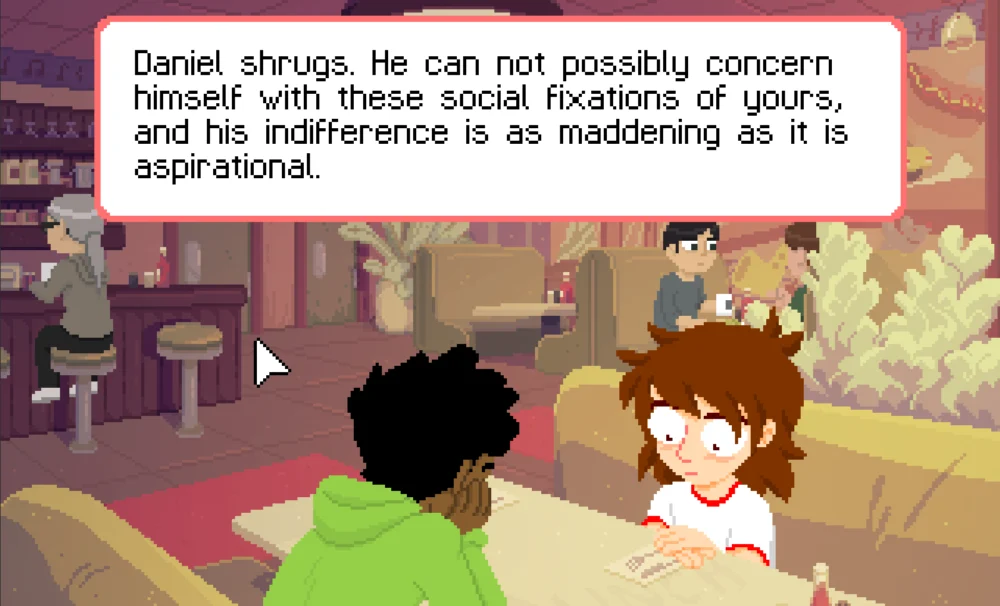
In the vast landscape of interactive storytelling, a recent coming-of-age adventure game has emerged, resonating deeply with players through its nuanced portrayal of adolescent anxieties and the quiet triumphs of self-acceptance. This title, Perfect Tides: Station to Station, offers a compelling exploration of personal growth, skillfully weaving together narrative threads that, for many, feel remarkably, and at times unsettlingly, familiar.
At the heart of Perfect Tides: Station to Station is Mara, a protagonist whose journey into a sprawling metropolis, known simply as "the City," mirrors the experiences of countless individuals navigating the transition from rural isolation to urban immersion. Her avid passion for writing further amplifies this sense of recognition, but it is the game’s exceptional scriptwriting that truly elevates Mara from a mere character to a profoundly realized individual. While many fictional characters grapple with social awkwardness or anxiety, Mara’s depiction is distinguished by its unflinching specificity, capturing the subtle intricacies of her inner world with a precision that can evoke a disquieting sense of being "seen."
The gameplay mechanics of Perfect Tides: Station to Station are deliberately minimalist, focusing primarily on dialogue-driven interactions. The experience is punctuated by a series of well-integrated puzzles, object explorations, and minigames that serve to complement, rather than dominate, the narrative. This understated approach is not a detractor; rather, it allows the game’s true strength – its character development through conversation – to shine. It is within these exchanges that Mara’s personality is meticulously crafted, presenting a portrait so vivid and resonant that players may find themselves actively seeking out points of divergence as a means of psychological self-preservation. The initial impulse might be to identify superficial differences, such as the absence of tumultuous romantic relationships in one’s own life, as a method of maintaining a sense of personal equilibrium relative to the protagonist’s struggles.
The complexities of Mara’s long-distance relationship with an older, controlling partner are rendered with both narrative depth and mechanical ingenuity. A notable example occurs during a particularly challenging conversation, where a health bar materializes, signifying the delicate balance required to navigate the exchange without depleting "hearts." These vital points are not merely granted; they are earned through sustained effort in cultivating other relationships, serving as a powerful metaphor for the interconnectedness of emotional well-being. This, combined with the game’s consistently sharp writing, culminates in moments of profound emotional impact, capable of eliciting visceral reactions from the player.
It was during such a moment that the reviewer found themselves fully invested in the world of Perfect Tides: Station to Station, believing they had grasped the game’s fundamental nature. The relatable Mara, with her intricate and often messy relationships, seemed to offer a comfortable distance, a simplified buffer between the player and the game’s deeper implications. However, the game consistently subverts expectations, refusing to settle for simplistic interpretations.
Beyond its conversational framework, a pivotal mechanic in Perfect Tides: Station to Station is Mara’s writing process. This manifests across various platforms, including academic assignments, blog contributions, and even an intensely detailed forum post during a period of personal vulnerability. The act of creation involves combining thematic elements such as the city, music, and interpersonal relationships, which are developed and leveled up through Mara’s interactions and experiences within the game world. This system effectively simulates the writer’s craft: learning through lived experience and synthesizing disparate ideas into novel and expressive forms.

One particular writing task diverges from this pattern. Mara undertakes a deeply personal story, an allegorical reflection of her own life, which receives critical feedback from an instructor. This critique lingers, a persistent shadow throughout the remainder of the game. Addressing this deeply personal narrative requires more than simply juxtaposing disparate thoughts; it involves a gradual, iterative process of refinement. While avoiding excessive introspection regarding personal writing endeavors, it is sufficient to state that Perfect Tides: Station to Station once again captured a profound truth. The player is encouraged to revisit Mara’s unfinished story whenever opportunities arise, a constant reminder of their own unaddressed creative projects and the requisite patience and trust needed for their slow, deliberate development.
By this juncture in the game, it becomes evident that Mara’s romantic entanglement is not her sole source of difficulty. In fact, nearly all of her interpersonal connections are fraught with challenges. A natural inclination might be to disengage from such individuals entirely. Yet, the game consistently rejects such simplistic solutions. While it unflinchingly presents harmful interpersonal dynamics without excusing negative behaviors, it simultaneously argues against self-imposed isolation as a defense mechanism. To withdraw entirely is to forfeit the richness of human experience – the profound joys, the deep connections, and the boundless potential that arise from engagement with others.
In a moment of clarity, a character offers Mara a piece of advice that encapsulates the game’s central thesis: "You just have to risk it with someone and see." Perfect Tides: Station to Station repeatedly underscores the value of vulnerability and openness, even in the face of potential awkwardness or mistreatment. Mara, with her inherent naiveté and difficulty articulating her desires, does experience pain. However, by embracing openness to experiences and individuals, she cultivates a more vibrant and fulfilling existence. She confronts the repercussions of her choices, learning, growing, and ultimately flourishing. The reviewer’s initial tendency towards avoidance, perceived as a strength, is precisely the point through which Perfect Tides: Station to Station exerts its profound influence. The game’s impact is such that its themes are likely to linger for a considerable period.
The game offers numerous other points of discussion, including its exceptional musical interludes and its comically exaggerated yet remarkably expressive animations. Even minor criticisms, such as incidental environmental puzzles that can temporarily halt narrative progression if overlooked, do not detract from the overall experience. However, what truly distinguishes Perfect Tides: Station to Station and ensures its lasting resonance is its profound emotional honesty, and the reciprocal emotional honesty it elicits from the player.
Following the game’s conclusion, a period of reflection ensued, centering on Mara, the player’s own experiences, and a particularly memorable karaoke interlude. The ultimate realization was that the seemingly crucial task of finishing Mara’s rewrite proved less significant than the shared journey of vulnerability and the acceptance of both positive and negative consequences.
Perfect Tides: Station to Station is more than just a game; it is a meticulously crafted digital narrative that delves into the universal human experience of growth, connection, and self-discovery. Its strength lies in its ability to present complex emotional landscapes with a rare degree of authenticity, prompting introspection and fostering a deeper understanding of oneself and the human condition. The game’s minimalist design amplifies its narrative impact, ensuring that every dialogue choice and every interaction carries weight. The character of Mara, while facing unique challenges, embodies a relatable struggle with navigating social complexities and personal aspirations, making her journey a powerful mirror for the player. The developer’s commitment to portraying these themes with unflinching honesty, without resorting to simplistic resolutions, is a testament to the evolving potential of interactive media as a vehicle for profound storytelling. As players engage with Mara’s world, they are not merely observing; they are participating in a dialogue about resilience, the courage required to form meaningful bonds, and the enduring reward of embracing life’s inherent uncertainties. The game’s subtle yet potent exploration of these themes suggests a future for narrative gaming that prioritizes emotional depth and psychological resonance, offering experiences that linger long after the screen has gone dark.




 Lisa Mariana
 Safa Marwah
 Ayu Aulia