Ayu Aulia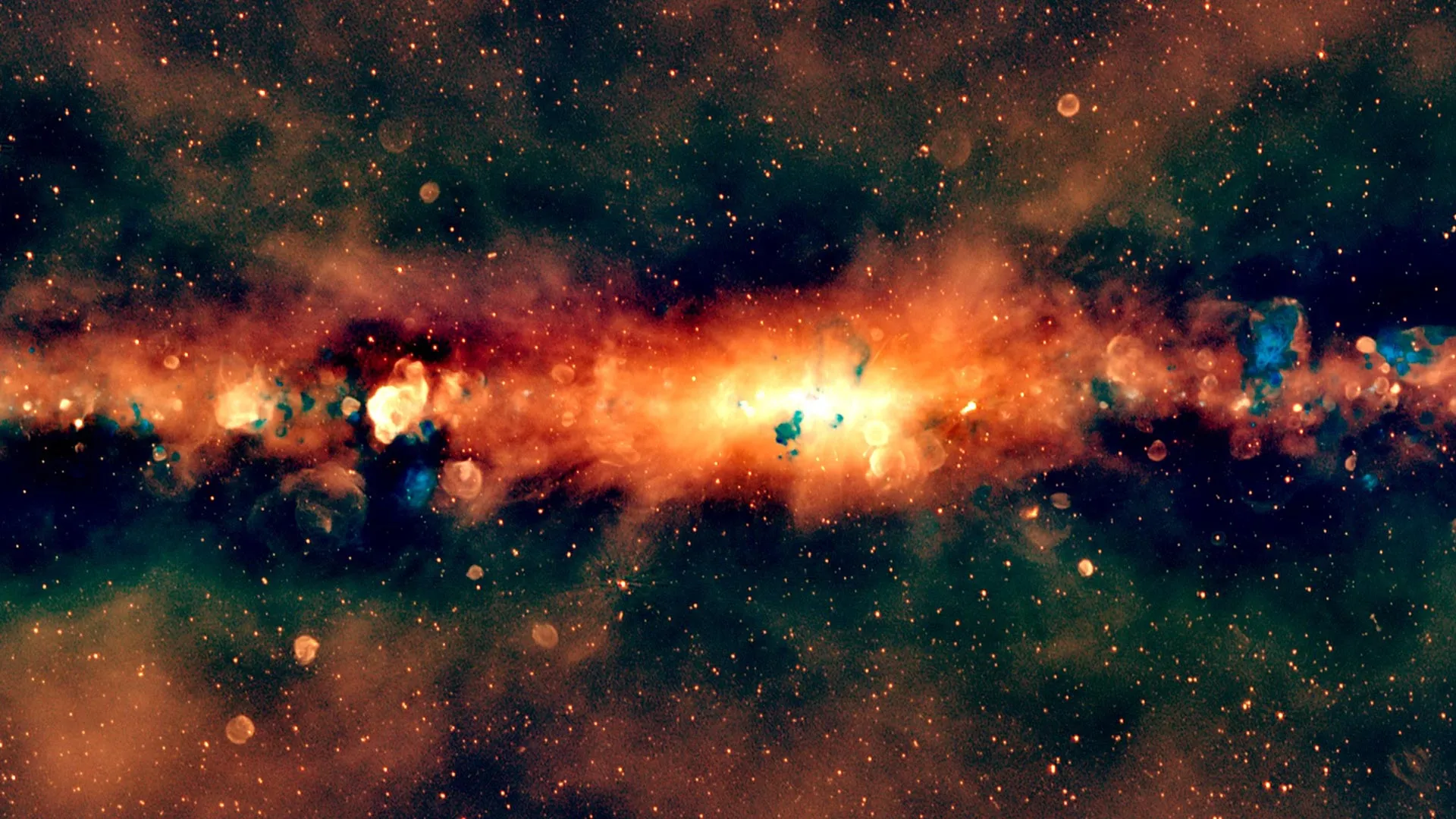
A groundbreaking astronomical endeavor has culminated in the release of an unprecedented low-frequency radio mosaic of the Milky Way, offering scientists an unparalleled vista into the dynamic processes shaping our home galaxy. This monumental achievement, primarily focusing on the Southern Galactic Plane, unveils the intricate tapestry of cosmic phenomena across a spectrum of radio "colors," providing a foundational dataset for understanding stellar lifecycles, galactic evolution, and the enigmatic structures within our cosmic neighborhood.
The Genesis of a Galactic Portrait: Leveraging Radio Astronomy
The human eye perceives a narrow band of electromagnetic radiation, yet the universe broadcasts a symphony across the entire spectrum. Radio astronomy, in particular, offers a unique lens, capable of penetrating the vast veils of dust and gas that obscure optical views of the galactic plane. Low-frequency radio waves, the focus of this new image, are especially adept at detecting non-thermal emission from highly energetic electrons, such as those found in the aftermath of stellar explosions, and thermal emission from vast clouds of ionized hydrogen where new stars are igniting. This new composite image, meticulously assembled by researchers at the International Centre of Radio Astronomy Research (ICRAR), represents the most comprehensive low-frequency radio visualization of the Milky Way produced to date, dramatically enhancing our ability to resolve previously hidden details.
The intricate work behind this galactic revelation was spearheaded by Silvia Mantovanini, a PhD student affiliated with the Curtin University node of ICRAR. Her dedicated effort, spanning 18 months, involved the formidable task of processing and combining colossal volumes of observational data. This computational challenge necessitated the deployment of supercomputing resources, ultimately consuming approximately one million CPU hours at the Pawsey Supercomputing Research Centre, a testament to the sheer scale and complexity inherent in modern radio astronomy.
The Murchison Widefield Array: A Gateway to the Radio Sky
The raw data underpinning this extraordinary image originated from the Murchison Widefield Array (MWA) telescope. Situated at Inyarrimanha Ilgari Bundara, the CSIRO Murchison Radio-Astronomy Observatory, on the ancestral lands of the Wajarri Yamaji people in Western Australia, the MWA is a pioneering low-frequency radio telescope. Unlike traditional dish antennas, the MWA comprises 256 "tiles," each an array of 16 dipole antennas, spread across several kilometers. This unique design allows it to observe vast swathes of the sky simultaneously, making it exceptionally efficient for wide-field surveys. The remote location in Western Australia is critical, as it constitutes one of the planet’s most radio-quiet zones, minimizing terrestrial interference and enabling the detection of incredibly faint cosmic signals.
The data acquisition was systematically carried out through two extensive sky surveys: the GaLactic and Extragalactic All-sky MWA (GLEAM) survey and its subsequent extension, GLEAM-X (GLEAM eXtended). The initial GLEAM survey was conducted over 28 nights between 2013 and 2014, systematically mapping the radio sky. Building upon this foundation, the GLEAM-X project significantly expanded the observational baseline, gathering data across 113 nights from 2018 to 2020. This multi-year, multi-phase approach was crucial for accumulating the necessary depth and coverage to construct such a detailed galactic portrait.
Elevating Resolution and Sensitivity: A Quantum Leap in Detail
Compared to its predecessor, the initial GLEAM image released in 2019, this new iteration represents a substantial advancement in observational capability. The improvements are quantitatively impressive: the image boasts double the resolution, a tenfold increase in sensitivity, and covers twice the extent of the sky. These technical enhancements are not merely statistical achievements; they translate directly into an unprecedented capacity for astronomical inquiry. Higher resolution allows for the discernment of finer structures and the clearer separation of individual cosmic sources, while increased sensitivity enables the detection of much fainter emissions, revealing objects or processes that were previously beyond our observational reach. This leap forward allows researchers to scrutinize the Milky Way with a level of detail previously unattainable at these frequencies, uncovering features that were either obscured or simply too faint to register.
Associate Professor Natasha Hurley-Walker, a key member of the ICRAR team and the principal investigator for the GLEAM-X survey, underscored the transformative nature of this achievement. "This low-frequency image allows us to unveil large astrophysical structures in our Galaxy that are difficult to image at higher frequencies," she stated. The unique ability of low-frequency radio waves to pierce through dense interstellar matter provides a distinct advantage, revealing phenomena that remain hidden to telescopes operating at optical or even higher radio frequencies. This comprehensive mapping of the Southern Galactic Plane in low-frequency radio is indeed a seminal event, marking a significant milestone in the ongoing quest to chart and comprehend the intricate architecture of our galaxy.
Decoding the Radio Colors: Stellar Births and Cosmic Demises
The concept of "radio colors" in this context refers to the variation in radio emission across different frequencies, which astronomers translate into visual colors to highlight specific physical processes. In this vibrant composite, for instance, the "blue regions" typically correspond to thermal emission originating from compact HII regions – dense clouds of ionized hydrogen gas, primarily heated and excited by the intense ultraviolet radiation from newly formed, massive stars. These areas are the energetic nurseries where new generations of stars are actively being forged, representing the very beginning of the stellar lifecycle.
Conversely, the expansive "red circles" visible throughout the image delineate supernova remnants. These are the colossal, expanding shells of gas and energetic particles left behind after a massive star violently concludes its life in a supernova explosion. The emission from these remnants is predominantly non-thermal, characterized by synchrotron radiation produced by electrons spiraling through strong magnetic fields. Supernovae are not merely spectacular endings; they are critical events that enrich the interstellar medium with heavy elements, drive galactic winds, and can even trigger subsequent waves of star formation by compressing nearby gas clouds. Mantovanini’s research specifically focuses on these remnants, seeking to uncover the thousands that are theorized to exist but remain undiscovered. The clarity offered by this new image significantly aids in differentiating the material associated with nascent stars from the remnants of exploded ones, providing a clearer morphological distinction that was previously challenging to achieve.
Illuminating the Enigma of Pulsars and Beyond
Beyond the grand narratives of star birth and death, the enhanced data from this image is poised to yield crucial insights into more exotic celestial objects, notably pulsars. Pulsars are rapidly rotating neutron stars – the ultradense cores left after a supernova of a massive star – that emit beams of electromagnetic radiation, often detectable as periodic pulses in the radio spectrum. By meticulously analyzing the apparent brightness of pulsars across various GLEAM-X frequencies, astronomers can glean information about their emission mechanisms, the physics governing their radio wave production, and their spatial distribution throughout the Milky Way. This offers a powerful probe into the interstellar medium itself, as the pulsar signals are affected by the gas and magnetic fields they traverse.
The surveys underlying this image have led to the cataloging of an astonishing 98,000 distinct radio sources across the observable portion of the Southern Galactic Plane. This vast inventory includes not only pulsars and supernova remnants but also other fascinating cosmic entities. Planetary nebulae, for instance, are observed – these are the expanding shells of gas shed by dying low-to-intermediate mass stars, offering a glimpse into a different, more gentle stellar demise than supernovae. Compact HII regions, as mentioned, signal intense star formation. Crucially, the survey also captures a multitude of distant galaxies lying far beyond the confines of the Milky Way, providing a valuable extragalactic background that helps contextualize our own galaxy within the larger cosmic framework. This diverse catalog represents a treasure trove for future research, enabling statistical studies of source populations and the discovery of entirely new classes of objects.
The Road Ahead: Paving the Way for Next-Generation Astronomy
The release of this unparalleled radio image is not merely an endpoint but a significant stepping stone in the ongoing evolution of radio astronomy. The MWA, while a powerful instrument, is also a precursor and a technology demonstrator for the next generation of radio telescopes. Associate Professor Hurley-Walker emphasized this future outlook, stating that "Only the world’s largest radio telescope, the SKA Observatory’s SKA-Low telescope, set to be completed in the next decade on Wajarri Yamaji Country in Western Australia, will have the capacity to surpass this image in terms of sensitivity and resolution."
The Square Kilometre Array (SKA) project, an international mega-science endeavor, promises to revolutionize our understanding of the universe. The SKA-Low component, planned for construction in the same radio-quiet zone on Wajarri Yamaji Country as the MWA, will operate at even lower frequencies and with an order of magnitude greater sensitivity and resolution. It will comprise hundreds of thousands of individual antennas, forming an aperture equivalent to a dish spanning thousands of kilometers. This colossal instrument is designed to address fundamental questions in astrophysics and cosmology, including the formation and evolution of the first stars and galaxies, the nature of dark energy, and the origins of cosmic magnetism. The meticulous data processing techniques and scientific insights gleaned from projects like GLEAM-X are directly informing the development and operational strategies for the SKA, ensuring that the legacy of this new Milky Way image will continue to resonate through future astronomical discoveries.
In conclusion, this meticulously crafted radio portrait of the Milky Way represents a profound advancement in our ability to visualize and comprehend the intricate physical processes that animate our galaxy. By unlocking the low-frequency radio spectrum, astronomers have gained an unprecedented view of stellar birth, evolution, and death, while simultaneously charting a vast catalog of cosmic sources. This achievement not only deepens our immediate understanding of the Milky Way but also serves as a critical technological and scientific prelude to the next era of discovery, spearheaded by instruments like the SKA, promising an even more expansive and detailed exploration of the universe’s most enduring mysteries.




 Lisa Mariana
 Aura Kasih
 Safa Marwah