Lisa Mariana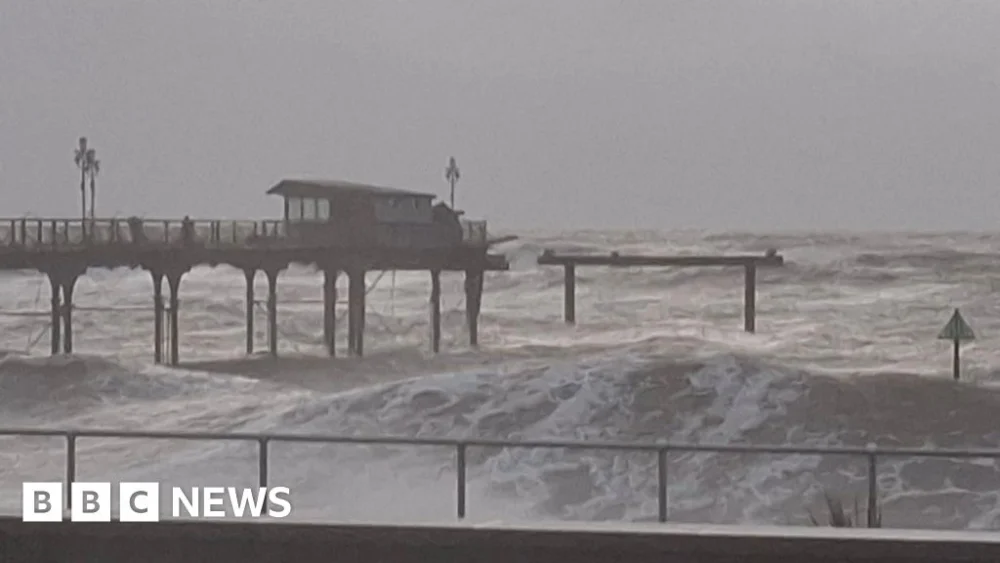
The rugged coastlines of Devon and Cornwall have sustained significant damage following a relentless overnight assault by Storm Ingrid, which unleashed powerful winds and exceptionally high seas, compromising vital infrastructure and iconic seaside structures across the region. This severe meteorological event has led to the partial destruction of Teignmouth Grand Pier, a cherished Victorian landmark, and the critical failure of a section of the sea wall safeguarding the main railway line at Dawlish, disrupting key transport arteries and raising serious concerns about the resilience of coastal communities against intensifying weather patterns.
Storm Ingrid, characterized by its formidable strength and prolonged duration, swept across the South West with unyielding force, particularly impacting exposed coastal areas. Meteorological assessments indicated sustained gale-force winds accompanied by torrential rainfall, culminating in colossal waves that relentlessly pounded the shoreline. The Met Office had issued a yellow warning for rain across the affected counties, which remained active throughout the initial impact period, while the Environment Agency simultaneously activated numerous flood warnings for the vulnerable south Devon and south Cornwall coasts, underscoring the widespread threat posed by the storm’s combined effects.
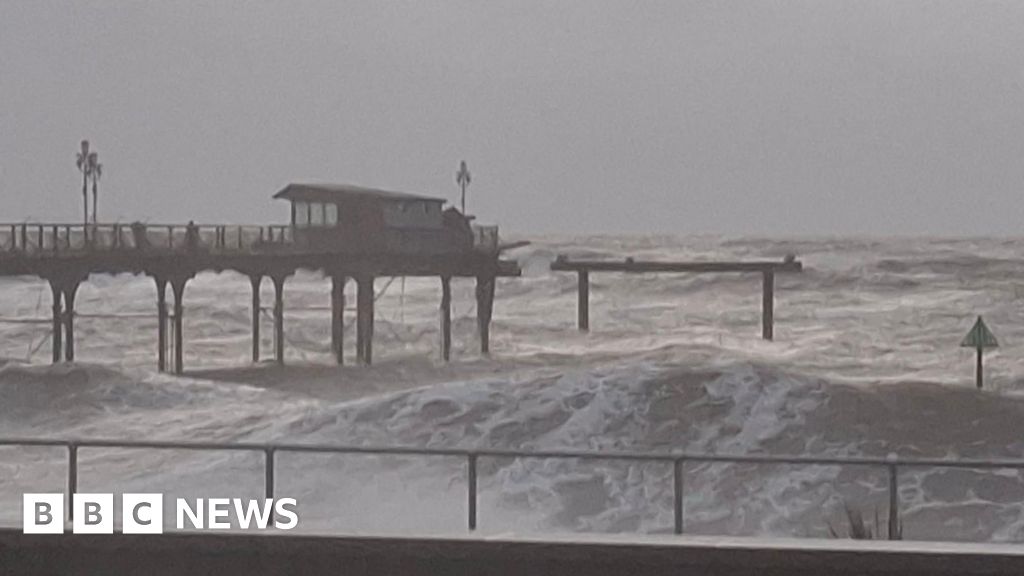
In Teignmouth, the community awoke to a stark landscape of destruction, with the town’s historic Grand Pier bearing the brunt of the tempest. Mayor Cate Williams conveyed the profound impact, describing the town as having endured "a substantial pummeling" during the night. The ferocity of the waves, she noted, was "simply immense," contributing directly to the structural compromise of the pier. Erected in 1867, Teignmouth Grand Pier stands as a testament to Victorian engineering and a cornerstone of the local tourism economy. Its partial collapse represents not merely a physical loss but also a blow to the town’s cultural identity and its appeal as a seaside resort. The mayor further elaborated on the pier’s vulnerability, acknowledging that while it had historically withstood numerous severe weather events and even the exigencies of global conflicts, "the confluence of age, cumulative wear and tear, and the unprecedented power of this storm has undeniably taken its toll." The visual absence of a significant portion of the structure now serves as a poignant reminder of nature’s formidable power.
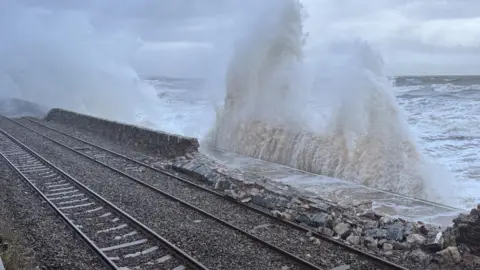
Further along the coast, the critical railway infrastructure at Dawlish experienced a similarly devastating assault. The sea wall, a vital protective barrier for the main rail line connecting Exeter St Davids to Plymouth, suffered a partial collapse. This incident immediately triggered a "black alert" from Network Rail, signifying the highest level of operational warning, a measure invoked only for the most severe disruptions to railway safety and integrity. This marks only the second instance of such an alert being issued since a catastrophic storm in February 2014 obliterated sections of the track at Dawlish, an event that took months and millions of pounds to rectify and highlighted the extreme vulnerability of this particular coastal route. The damage from Storm Ingrid, as observed by local resident Peter Large, was described as "exceptionally dramatic." He reported that the protective wall had "simply disintegrated" across a stretch estimated to be between 80 to 90 feet in length, with waves continuing to surge over the exposed railway line, complicating initial damage assessments and emergency responses.
The immediate consequence for regional transportation has been severe. Great Western Railway (GWR) confirmed the suspension of all services between Exeter St Davids and Plymouth, with initial projections indicating a closure extending until at least 18:00 GMT. Passengers were strongly advised to defer all non-essential rail travel, though existing tickets were validated for use on the subsequent day, Sunday. James Davis, a spokesperson for GWR, elaborated on the operational challenges, noting the "considerable volume of marine debris" that had been deposited onto the tracks by the sea, necessitating extensive clearance operations before any semblance of safe service could resume. He cautioned that while a limited bus replacement service was being deployed, it would be insufficient to accommodate normal passenger volumes, potentially leading to substantial delays for those attempting to travel. Beyond the main line, secondary rail services between Par and Newquay, and Liskeard and Looe, also faced cancellations due to widespread flooding, further isolating communities and disrupting regional connectivity.
The impact of Storm Ingrid extended far beyond major infrastructure. Local businesses and residential areas across both counties reported significant damage and disruption. In Falmouth, Cornwall, Emily Davidson, proprietor of the Castle Beach Cafe, recounted the harrowing experience of battling the storm’s fury. Her premises, a relatively new establishment housed within a converted shipping container, were "violently impacted" by the colossal waves. She described extensive water ingress, comprehensive failure of electrical systems, and the forceful snapping of glass sliding doors. "It’s genuinely disheartening," Ms. Davidson expressed to BBC Radio Cornwall, articulating the frustration of investing substantially in storm-proofing measures only to see them overwhelmed by the sheer power of the elements. This sentiment resonates with many small businesses along the coastline, whose livelihoods are intrinsically linked to the delicate balance of coastal weather.
Beyond direct coastal impacts, the storm’s high winds felled numerous trees across the region. Devon County Council reported one such incident blocking both lanes of the A377 near Lapford, causing immediate traffic disruption. Cornwall Council issued a broader advisory, warning residents that trees might remain weakened or unstable following the preceding Storm Goretti, suggesting a cumulative effect of successive severe weather events on the region’s arboreal landscape and potentially increasing the risk of further falls even after Ingrid had passed. Images from Penzance depicted waves dramatically overtopping the sea wall, illustrating the widespread nature of the coastal battering.
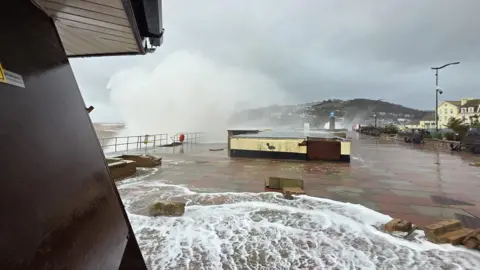
The repeated assaults on critical infrastructure, particularly the Dawlish railway line, underscore a persistent and escalating challenge for the South West. The 2014 destruction spurred significant investment in resilience measures, including new sea wall sections and cliff stabilization projects. However, the current damage suggests that even these enhanced protections are being tested by the increasing frequency and intensity of extreme weather events, which climate scientists link to broader global warming trends. The region’s geography, characterized by its exposed coastline and soft rock cliffs, makes it inherently vulnerable to marine erosion and storm surges.
From an engineering perspective, protecting a railway line that hugs the coastline, such as at Dawlish, presents formidable challenges. Solutions often involve a delicate balance between hard engineering, such as reinforced concrete sea walls and rock armour, and more adaptive approaches that might include managed realignment or the creation of natural buffer zones where feasible. The economic implications of such disruptions are substantial, not only in terms of direct repair costs but also through lost tourism revenue, delayed freight, and the considerable inconvenience to commuters and inter-regional travellers. Each major storm necessitates a rapid and costly response, diverting resources and attention from other essential infrastructure maintenance.

Looking ahead, the long-term outlook for coastal communities and infrastructure in Devon and Cornwall necessitates a multi-faceted strategy. This includes continued investment in robust coastal defences, informed by the latest climate science and hydrological modelling to anticipate future storm intensities and sea-level rise. Furthermore, there is a growing imperative for integrated planning that considers the interplay between natural processes, urban development, and critical infrastructure. Local authorities, emergency services, and national agencies must collaborate closely on preparedness, early warning systems, and swift, coordinated response mechanisms. The resilience of these regions will increasingly depend on their capacity not just to rebuild, but to adapt and innovate in the face of an ever-changing coastal environment. The events wrought by Storm Ingrid serve as a stark reminder of the ongoing battle against the elements and the critical need for sustained vigilance and strategic investment in the protection of the UK’s invaluable coastal assets.




 Aura Kasih
 Safa Marwah
 Ayu Aulia