Ridwan Kamil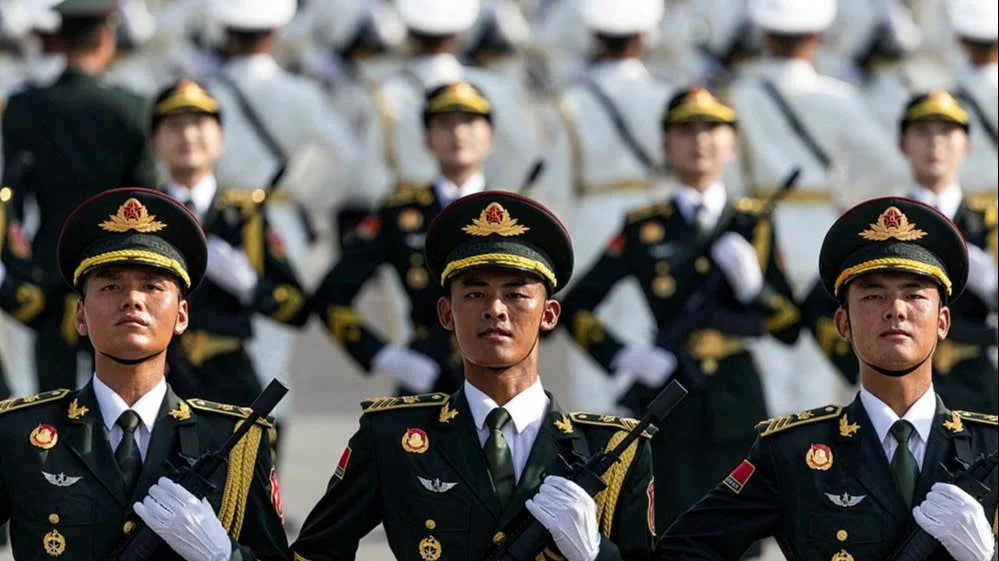
In a significant development within the People’s Liberation Army (PLA), two senior military leaders are reportedly under investigation for alleged corruption, signaling a renewed focus on accountability and anti-graft efforts within the ranks of China’s armed forces. This development underscores the persistent challenges Beijing faces in maintaining integrity within its vast military apparatus, even as it continues its ambitious modernization and expansion.
The precise nature of the allegations against the two unnamed officials remains undisclosed, a common practice in high-profile investigations within China. However, the initiation of probes at this level suggests a serious breach of conduct, potentially involving financial impropriety, abuse of power, or other violations of military discipline and national law. The investigations are being conducted by the PLA’s internal disciplinary bodies, likely in conjunction with civilian anti-corruption agencies, reflecting a coordinated effort to root out malfeasance.
This move comes at a critical juncture for China, which is actively engaged in a comprehensive military overhaul aimed at transforming the PLA into a world-class fighting force capable of projecting power globally. President Xi Jinping, who also chairs the Central Military Commission (CMC), has consistently emphasized the importance of a disciplined and incorruptible military. His anti-corruption campaign, which has swept across various sectors of Chinese society since he came to power, has also targeted the armed forces, recognizing that internal rot can undermine national security and strategic objectives.
A History of Anti-Graft Efforts in the PLA
The PLA has a long history of grappling with corruption. In previous decades, widespread graft was seen as endemic, fueled by a lack of transparency and oversight. This not only weakened military effectiveness but also eroded public trust and contributed to social inequality. The current investigations are part of a broader, more systematic effort to purge corrupt elements that has intensified under Xi Jinping. Previous campaigns have led to the downfall of numerous high-ranking officers, including former CMC Vice-Chairmen Guo Boxiong and Xu Caihou, who were convicted of accepting massive bribes. These high-profile cases sent a clear message that no one, regardless of rank, was above scrutiny.
The scale and scope of the PLA’s anti-corruption drive are indicative of the challenges involved. The military is a colossal organization, deeply intertwined with the Chinese economy and political system. Efforts to ensure clean governance within such an entity are inherently complex, requiring sustained political will and robust institutional mechanisms. The recent investigations suggest that despite previous efforts, corruption remains a persistent threat, necessitating continuous vigilance and action.
Potential Motivations and Implications
Several factors may be driving these latest investigations. Firstly, the ongoing military modernization and expansion require significant financial resources. Ensuring that these funds are used efficiently and ethically is paramount to achieving strategic goals. Corruption can divert critical resources, hinder technological advancement, and compromise operational readiness. By addressing corruption, Beijing aims to ensure that its massive defense spending translates into tangible military capabilities.
Secondly, maintaining the loyalty and political reliability of the armed forces is a cornerstone of the Communist Party’s rule. Corruption can breed discontent and undermine the ideological commitment of officers and soldiers. By prosecuting corrupt officials, the Party seeks to reinforce its authority and ensure that the PLA remains a loyal instrument of its policies. This is particularly important in the current geopolitical climate, where China faces increasing scrutiny and challenges from regional and global powers.
The implications of these investigations are far-reaching. On a strategic level, they could lead to a reshuffling of leadership within key military commands, potentially impacting the pace and direction of ongoing reforms. The focus on accountability may also foster a more professional and disciplined military culture, enhancing its effectiveness in both domestic and international operations. Furthermore, the transparency surrounding these investigations, even with limited details, can serve as a deterrent to future misconduct.
However, these probes also carry potential risks. High-level investigations can create uncertainty and instability within the military hierarchy. The process of replacing investigated officials may also disrupt ongoing projects and initiatives. Moreover, if not handled carefully, such campaigns can be perceived as politically motivated purges, potentially alienating segments of the officer corps.
The Broader Context of Governance and Modernization
The investigations into the two military leaders are not isolated incidents but rather part of a larger pattern of governance reform in China. President Xi Jinping has made the fight against corruption a central theme of his leadership, viewing it as essential for the legitimacy and long-term stability of the Party and the nation. This campaign has extended to state-owned enterprises, government ministries, and other powerful institutions, reflecting a broader effort to strengthen central control and improve administrative efficiency.
In the military sphere, this translates into a drive for greater professionalism, technological advancement, and adherence to Party directives. The PLA is undergoing a significant transformation, moving from a land-centric force to a more integrated, multi-domain military capable of operating across the sea, air, space, and cyberspace. This requires a highly skilled and motivated leadership, as well as robust systems of oversight and accountability.
The current investigations can be seen as a necessary, albeit difficult, step in this ongoing process of reform. By identifying and removing corrupt elements, Beijing aims to build a more effective and trustworthy military that can confidently execute its expanded responsibilities. The success of these efforts will ultimately be judged by their impact on the PLA’s operational capabilities, its adherence to ethical standards, and its unwavering loyalty to the Party.
Future Outlook and Challenges
The long-term impact of these investigations will depend on the thoroughness and fairness of the process, as well as the effectiveness of measures to prevent future corruption. China’s leadership faces the ongoing challenge of balancing the need for strong enforcement with the imperative of maintaining morale and fostering a culture of integrity.
As China continues its rise on the global stage, its military will play an increasingly prominent role. Ensuring that this powerful institution is free from corruption and is guided by ethical principles is not only a domestic concern but also a matter of international significance. The success of these anti-graft efforts will contribute to China’s ability to pursue its strategic objectives while upholding its commitment to good governance and accountability.
The investigations into these two senior military leaders are a clear indication that the anti-corruption drive within the PLA remains a priority. While the specific details of the allegations may not be immediately apparent, the commencement of such probes at the highest levels underscores the Party’s determination to root out malfeasance and ensure the continued integrity and effectiveness of its armed forces. The coming months will likely see further developments as these investigations progress, offering a clearer picture of the extent of the issue and the measures being taken to address it.


 Lisa Mariana
 Aura Kasih
 Safa Marwah
 Ayu Aulia