Lisa Mariana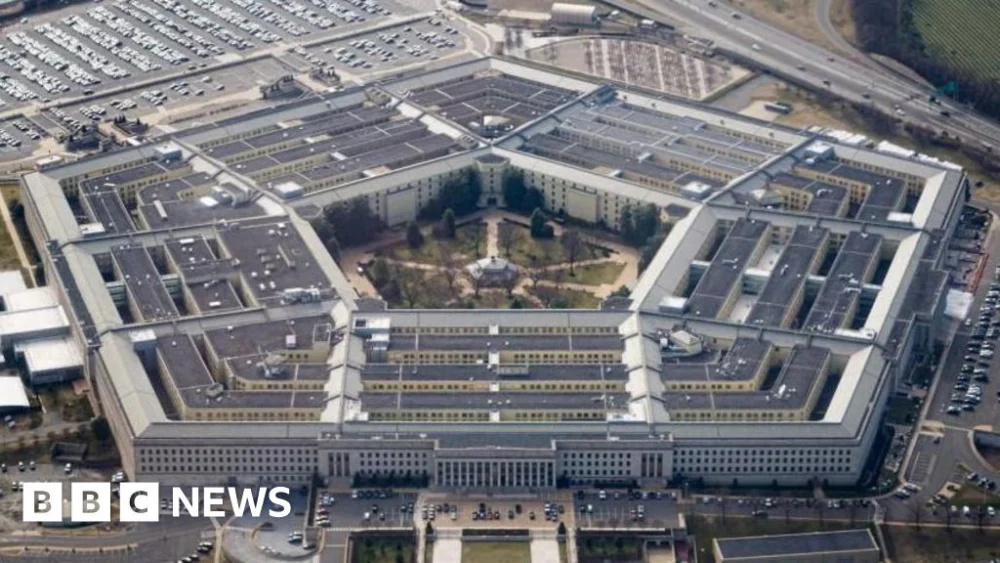
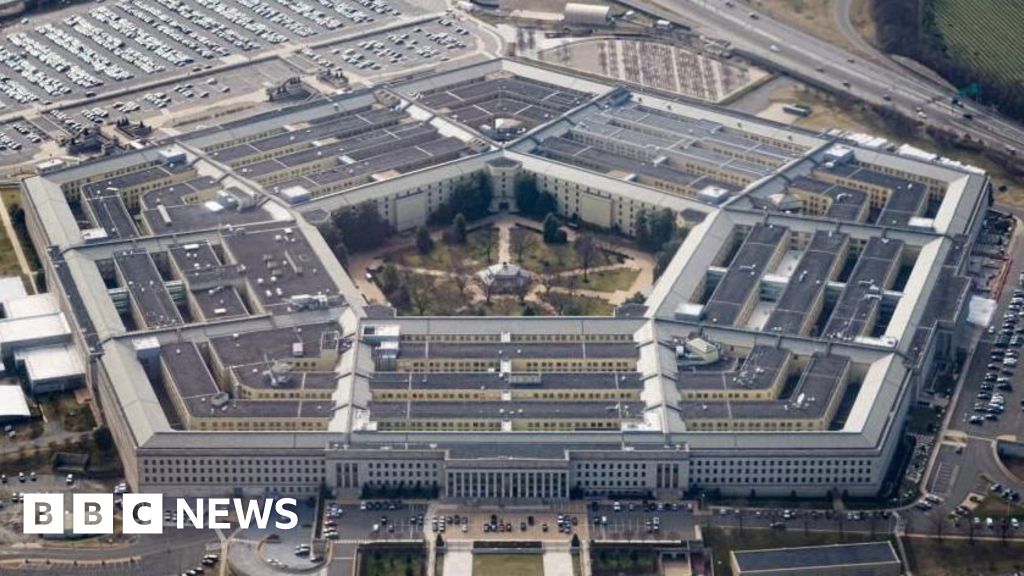
The United States Department of Defense has unveiled a dramatically revised National Defense Strategy (NDS), signaling a profound reorientation of its global security priorities and anticipating a more circumscribed role in the defense of its international partners. This strategic pivot, emphasizing the immediate security of the American homeland and the broader Western Hemisphere above all other concerns, marks a significant departure from previous frameworks that positioned great power competition, particularly with the People’s Republic of China, as the paramount challenge.
For decades, the United States has largely anchored the international security architecture, often serving as the primary guarantor of stability across various geopolitical theaters. This new strategy, however, implicitly acknowledges a shifting global landscape and an evolving domestic imperative, advocating for allies to assume greater responsibility for their own regional defense. While explicitly denying any move towards isolationism, the document champions a philosophy of "hardnosed realism," asserting that American interests, which it claims have been historically conflated with global interests, must now be narrowly defined and prioritized. This intellectual underpinning suggests a future where U.S. military engagement abroad will be more selective, transactional, and directly tied to immediate national security concerns.
The Strategic Genesis: From Global Hegemon to Hemisphere Protector
The shift articulated in the latest NDS is not an isolated event but rather the culmination of several years of evolving strategic thought and political rhetoric, particularly prominent during the current presidential administration. Previous iterations of the NDS, most notably the 2018 document, unequivocally identified "revisionist powers" such as China and Russia as the "central challenge" to U.S. security and prosperity. That strategy painted a picture of an interconnected world where American leadership was essential to counter a "multi-domain threat" emanating from Beijing’s economic and military expansionism. The current strategy, by contrast, elevates the direct protection of U.S. territory and its immediate geographic sphere – encompassing North, Central, and South America – to the zenith of defense priorities.
This recalibration can be traced back to the broader "America First" foreign policy doctrine, which has consistently advocated for a reassessment of international commitments and a re-evaluation of the costs and benefits of global engagement. President Donald Trump’s repeated calls for "burden-sharing" from allies, often accompanied by criticisms of their defense spending, laid much of the groundwork for this formalized strategic shift. The NDS now provides the doctrinal framework for these political pronouncements, translating rhetorical demands into a foundational strategic blueprint.
Furthermore, the National Security Strategy (NSS) published earlier last year offered a precursor to this NDS, notably characterizing Europe as facing "civilizational collapse" and downplaying Russia as a direct threat to the United States. This framing, which was met with unusual approval from Moscow for its perceived consistency with Russian geopolitical views, suggested an emerging U.S. willingness to disaggregate global threats and prioritize domestic vulnerabilities. The current NDS solidifies this perspective, arguing that threats less severe for the United States but more acute for allies should primarily be addressed by those allies themselves.
Implications for Alliances: A Call for Self-Reliance
The most significant and potentially destabilizing aspect of this new defense posture is its explicit demand for allies to augment their defense capabilities and assume primary responsibility for regional security. The NDS posits that partners have become "content" to rely on Washington to subsidize their defense efforts, a reliance the U.S. can no longer sustain without compromising its redefined core interests. This assertion carries substantial weight, particularly for long-standing alliances like NATO and various bilateral security agreements in Asia.
For European allies, the implications are particularly stark. While Russia’s full-scale invasion of Ukraine nearly four years ago continues to destabilize the continent, the NDS categorizes Moscow as a "persistent but manageable threat to NATO’s eastern members." This assessment, while acknowledging the threat, implies a U.S. expectation that European nations, particularly those on NATO’s eastern flank, should take the lead in containing and deterring Russian aggression. This approach could necessitate a substantial increase in European defense spending, a more integrated European defense industrial base, and potentially, a reconsideration of their strategic autonomy from Washington. The notion that a threat "halfway around the world" is not equivalent to a threat to an American citizen underscores a fundamental divergence in threat perception that could strain alliance cohesion.
In the Indo-Pacific, the strategy also signals a nuanced shift. While previous strategies fixated on China as the overarching challenge, the new NDS adopts a more tempered tone, advocating for an approach of "strength, not confrontation." It clarifies that the goal is neither to "dominate" nor to "strangle or humiliate" China, but rather to prevent any single power, including China, from dominating the U.S. or its allies. Curiously, the self-governing island of Taiwan, a frequent flashpoint in U.S.-China relations, receives no direct mention in the document. This omission, following a substantial U.S. arms sale to Taiwan late last year which provoked retaliatory military drills from Beijing, could be interpreted in multiple ways: a deliberate de-escalation of rhetoric, a move towards strategic ambiguity, or an implicit expectation for Taiwan and its regional partners to bear a greater share of their own defense burden.
Similarly, the role of U.S. deterrence in relation to North Korea is also slated for a "more limited" scope. The strategy explicitly states that South Korea is "capable of taking primary responsibility" for this task. This pronouncement could lead to a reassessment of the U.S. military presence on the Korean Peninsula and potentially accelerate South Korea’s own defense build-up and nuclear considerations, impacting the delicate balance of power in Northeast Asia.
The Western Hemisphere: A New Frontier of Focus
The explicit elevation of the Western Hemisphere to the pinnacle of U.S. defense priorities represents a significant geopolitical shift. The strategy reiterates the Pentagon’s commitment to guaranteeing U.S. military and commercial access to "key terrain," specifically naming the Panama Canal, the Gulf of America, and Greenland. This focus is contextualized by recent actions taken by the administration, including the seizure of Venezuelan President Nicolás Maduro, interdiction efforts against alleged drug trafficking in the eastern Pacific and Caribbean, and sustained pressure on allies regarding the acquisition of Greenland.
This renewed emphasis on the immediate geographical neighborhood suggests a strategic calculation that direct threats to U.S. territory, maritime trade routes, and critical infrastructure within the Americas are now considered more pressing than distant geopolitical contests. It implies a potential reallocation of resources, intelligence gathering, and military assets towards monitoring and securing these regional interests, possibly at the expense of deployments or engagements in other parts of the world. This approach aligns with historical doctrines of hemisphere defense but re-energizes them with a contemporary urgency driven by perceived vulnerabilities and the need to secure vital economic and strategic assets.
"Hardnosed Realism" vs. "Utopian Idealism": A Philosophical Underpinning
The NDS explicitly frames its approach as "fundamentally different from the grandiose strategies of the past post-Cold War administrations," proudly proclaiming "Out with utopian idealism; in with hardnosed realism." This philosophical declaration seeks to distance the current administration’s defense policy from what it views as an overly expansive, liberal internationalist agenda that pursued nation-building, humanitarian interventions, and the promotion of democratic values globally.
"Hardnosed realism" implies a transactional and pragmatic foreign policy, prioritizing tangible national interests, security, and economic advantage over broader ideological or moral considerations. It suggests a world of competing powers where alliances are formed out of necessity and mutual benefit rather than shared values, and where military strength is applied judiciously and with clear objectives tied directly to domestic security. The critique of "utopian idealism" can be interpreted as a rejection of previous administrations’ efforts to shape the global order through extensive multilateralism and the promotion of a rules-based international system, particularly when those efforts were perceived as incurring excessive costs or yielding insufficient returns for the American taxpayer.
Global Reactions and the Future Outlook
The unveiling of this strategy has predictably elicited varied reactions from international partners and observers. President Trump’s continued criticisms of NATO, including inaccurate claims about U.S. funding, reinforce the perception of a U.S. leadership increasingly skeptical of its traditional alliance structures.
Figures like Canadian Prime Minister Mark Carney have already voiced concerns, suggesting that the "old world order is not coming back" and urging "middle powers" – such as Canada, South Korea, and Australia – to coalesce. His stark warning, "Middle powers must act together because if we’re not at the table, we’re on the menu," encapsulates the apprehension among nations that might find themselves navigating a more fragmented and less U.S.-anchored global security landscape. French President Emmanuel Macron’s concurrent warning of a "shift towards a world without rules" further underscores the anxiety that a more circumscribed U.S. role could lead to increased instability and a weakening of international norms.
The long-term implications of this NDS are profound. It could accelerate a trend towards regionalization of security, where individual nations or smaller blocs assume greater responsibility for their own defense. This might lead to increased defense spending among allies, diversification of military procurement, and potentially, the formation of new security partnerships independent of U.S. leadership. Conversely, it could also create power vacuums, encourage more aggressive behavior from revisionist states, and heighten the risk of regional conflicts if allies are unable or unwilling to adequately fill the void left by a more restrained U.S. presence.
Ultimately, the success of this "hardnosed realism" will hinge on its execution and the capacity of U.S. allies to adapt. While the strategy aims to focus American strength on its most immediate interests, it simultaneously tests the resilience of a global security framework that has largely relied on sustained U.S. engagement for over seven decades. The coming years will reveal whether this strategic pivot leads to a more secure America and a more responsible network of allies, or a more fractured and unpredictable international order.




 Aura Kasih
 Safa Marwah
 Ayu Aulia