Lisa Mariana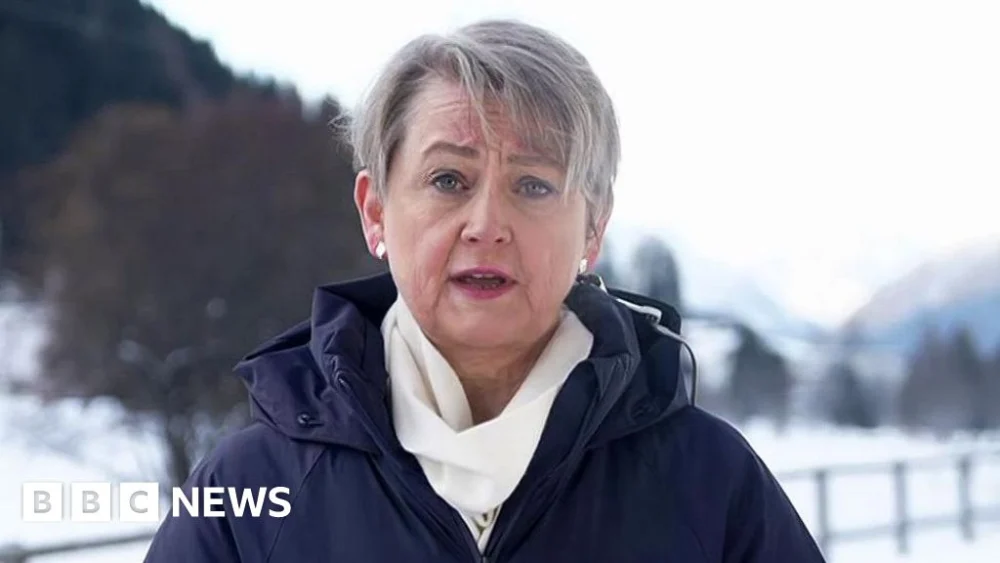
The United Kingdom has signaled a calculated pause in formally aligning with United States President Donald Trump’s newly established Board of Peace, citing profound reservations regarding the potential involvement of Russian President Vladimir Putin and the broader implications of the initiative for established international governance structures. This cautious stance underscores a delicate diplomatic balancing act as global powers navigate a shifting landscape of multilateralism and evolving approaches to conflict resolution.
Unveiled at the prestigious World Economic Forum in Davos, Switzerland, President Trump’s "Board of Peace" is presented by Washington as a groundbreaking international organization poised to address and resolve global conflicts. However, its ambitious mandate and the significant powers vested in its chairman, President Trump himself, have prompted considerable deliberation among traditional allies. Foreign Secretary Yvette Cooper articulated the UK’s position, confirming receipt of an invitation to join the nascent body but indicating that Britain would not be among the initial signatories at the high-profile ceremony. Cooper emphasized that the proposed framework constitutes a "legal treaty that raises much broader issues" beyond its immediate stated focus on de-escalating the ongoing conflict between Israel and Hamas in the Gaza Strip.
The conceptualization of the Board of Peace emerges from a White House initiative initially centered on the post-conflict reconstruction and future governance of Gaza. Yet, leaked details of its foundational charter reveal an expansive scope, positing the Board as an "international organisation that seeks to promote stability, restore dependable and lawful governance, and secure enduring peace in areas affected or threatened by conflict." This broad remit has led many observers and critics to suggest that the Board is designed, at least in part, to assume or supplant certain functions traditionally ascribed to the United Nations, particularly those of its Security Council. The charter’s omission of explicit mention of Palestinian territory, despite the initial focus on Gaza, further fuels these concerns regarding its comprehensive agenda and potential political biases.
A critical point of contention for the United Kingdom, and indeed for several other nations, revolves around President Putin’s purported acceptance of an invitation to participate in the Board. While President Trump publicly stated that Putin had agreed to join, the Kremlin has yet to confirm this, with President Putin himself indicating that Russia is still actively "studying" the invitation. The incongruity of Russia’s leader, whose nation is currently engaged in a full-scale invasion of Ukraine, joining an initiative dedicated to global peace has created a significant ethical and strategic dilemma for prospective members. Foreign Secretary Cooper explicitly linked the UK’s hesitation to Putin’s perceived lack of commitment to peace in Ukraine, stating that there have been no discernible signs from Moscow indicating a willingness to de-escalate or agree to a resolution in that conflict. This position reflects Britain’s unwavering support for Ukraine’s sovereignty and its consistent advocacy for international law in the face of Russian aggression.
The United Nations Security Council (UNSC) has historically served as the preeminent international platform for global diplomacy and the resolution of interstate conflicts since the conclusion of World War Two. Its five permanent members – China, France, Russia, the United Kingdom, and the United States – wield significant influence over global security matters. Notably, none of these permanent members, apart from the initiating United States, have yet committed to participation in President Trump’s Board of Peace. This collective reticence from key pillars of the existing multilateral order underscores a broader skepticism about the new body’s legitimacy, efficacy, and potential to constructively integrate within or constructively challenge established international mechanisms.
Despite these reservations, President Trump, during the signing ceremony in Davos, vigorously defended the Board’s objectives, asserting that it was not intended as a replacement for the UN. He expressed confidence that the initiative would foster an "everlasting" peace in the Middle East and hailed it as potentially "one of the most consequential bodies ever created." Trump articulated a vision for a demilitarized, well-governed, and "beautifully rebuilt" Gaza, positioning this aspiration as the foundational impetus for the Board. He further remarked that once fully constituted, the Board would possess significant latitude to act, though he added a caveat of acting "in conjunction with the United Nations." The initial ceremony saw leaders and representatives from 19 countries, including Argentina, Hungary, Morocco, Saudi Arabia, and Turkey, formalize their commitment, with other nations like Pakistan, Egypt, and Qatar also indicating their intention to join. The Vatican has also confirmed receiving an invitation for the Pope.
The structural elements of the Board, as detailed in the leaked charter, present additional points of analysis. The document stipulates that the charter will enter into force upon agreement by three states and outlines renewable three-year terms for member states. Intricately, permanent seats are reportedly available to nations contributing a substantial sum of $1 billion (£740 million). President Trump is designated as both chairman and the US representative, wielding authority to appoint executive board members and to establish or dissolve subsidiary bodies. The initial founding Executive Board members include US Secretary of State Marco Rubio, Middle East envoy Steve Witkoff, Trump’s son-in-law Jared Kushner, and former UK Prime Minister Tony Blair, signaling a blend of political appointees and figures with diplomatic experience.
The UK’s careful navigation of this new proposition also occurs against a backdrop of recently strained diplomatic relations with the United States. Tensions had escalated following President Trump’s earlier threats to impose tariffs on European nations if his demand for control of Greenland was not met. While President Trump has since appeared to de-escalate, exploring a potential deal with NATO and dropping the planned tariffs, this episode highlighted the potential for unilateral pressures to impact transatlantic alliances. Foreign Secretary Cooper welcomed the apparent climbdown on Greenland, emphasizing the "positive, constructive proposals" put forward by the UK and its European allies regarding Arctic security. This incident serves as a reminder of the inherent complexities in managing the bilateral relationship, even as both nations share broad strategic interests.
The UK’s firm stance as one of Ukraine’s staunchest allies further complicates its decision regarding the Board of Peace. Britain, alongside France, has signed a declaration of intent concerning the potential deployment of troops to Ukraine should a peace deal with Russia materialize. This commitment underscores a principled foreign policy that prioritizes defending international norms and supporting sovereign states against aggression. The ongoing discussions in Davos included a scheduled meeting between President Trump and Ukrainian President Volodymyr Zelensky, where the former reiterated his long-held belief that Putin and Zelensky were close to reaching a deal. This confluence of events in Davos – the launch of the Board of Peace, the UK’s hesitation, and the ongoing dialogue on Ukraine – paints a vivid picture of a world grappling with multifaceted geopolitical challenges and the evolution of international cooperation.
Ultimately, the UK’s decision to withhold immediate endorsement of President Trump’s Board of Peace reflects a considered assessment of its potential impact on established international legal frameworks, the delicate balance of global power, and the ethical implications of legitimizing a leader currently engaged in a major conflict under the banner of peace. While London expresses support for efforts to stabilize Gaza, its broader concerns about the Board’s expansive mandate, its structural ambiguities, and crucially, the shadow cast by Russia’s actions in Ukraine, dictate a cautious, analytical approach to this significant new diplomatic initiative. The future trajectory of the Board of Peace, and its ultimate acceptance or rejection by the wider international community, will undoubtedly be a defining feature of geopolitical discourse in the coming years, shaping the very nature of global governance.

 Aura Kasih
 Safa Marwah
 Ayu Aulia