Lisa Mariana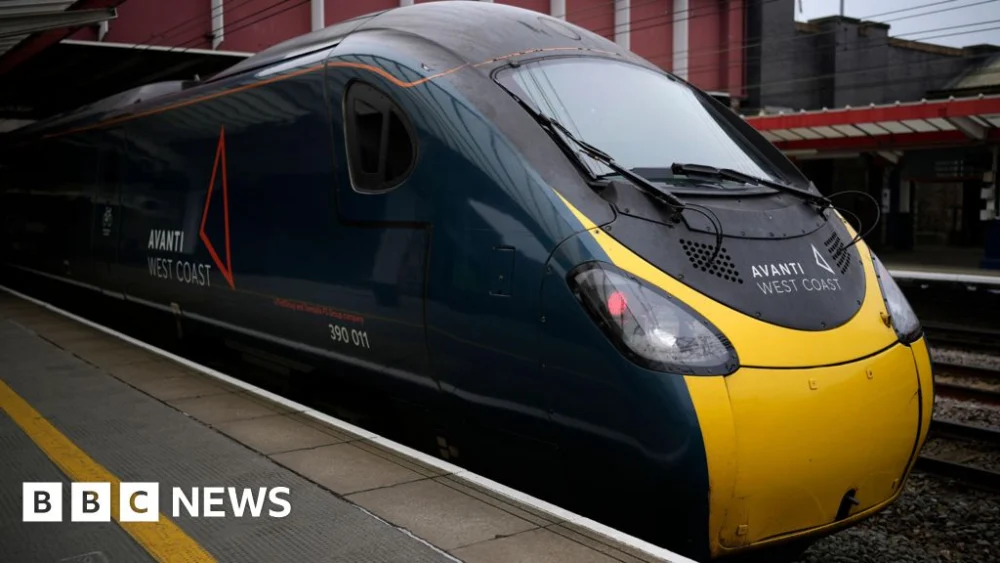
The Office of Rail and Road (ORR), the independent regulatory body for Britain’s railway network, has formally acknowledged significant informational deficiencies in its initial decision to prohibit passenger carriage on a critical peak-hour train service connecting Manchester to London. This admission sheds light on a regulatory misstep that would have compelled a fully staffed and operational train to traverse one of the UK’s busiest routes completely empty for an extended period, an event that drew widespread public and political condemnation. The incident underscores the complexities and potential vulnerabilities within the administrative frameworks governing national rail operations, prompting a commitment from the regulator to implement substantial procedural enhancements.
The controversy centred on the 07:00 departure from Manchester Piccadilly, a popular and vital link on the West Coast Main Line. In November, the ORR had approved an application for this service to operate as an "unoccupied service," meaning it would run without passengers, carrying only essential crew. This decision, slated to commence in mid-December, sparked immediate and intense backlash from commuters, consumer advocacy groups, and parliamentary figures, who questioned the economic and logical rationale behind running a valuable train slot empty while passenger demand remained high. The regulator swiftly reversed its stance following the outcry, but the underlying systemic issues that led to the initial flawed judgment have now been brought into sharp relief through the ORR’s own internal review.
John Larkinson, chief executive of the ORR, conceded that the organisation’s initial assessment was based on an incomplete data set, lacking "critical points" that, had they been known, would have fundamentally altered the regulatory outcome. Specifically, the ORR was unaware that the train in question would be fully staffed for its journey, that its departure point was the commercially active Manchester Piccadilly station rather than a maintenance depot, and, crucially, that its timely arrival at London Euston was prerequisite for it to form the subsequent 09:30 service to Glasgow. These operational specifics, which are fundamental to understanding the logistical and commercial viability of any train path, were overlooked during the initial evaluation process. Larkinson’s statement, "The information that later became available to us meant that our assumption turned out to be incorrect," encapsulates the core of the regulatory oversight.
The ORR’s initial justification for running the service empty was rooted in the concept of a "firebreak" within the timetable. In railway scheduling, a firebreak refers to a planned gap or buffer designed to absorb minor delays and prevent them from cascading across the network, thereby protecting overall timetable integrity. The regulator believed that operating the 07:00 Manchester-London service without passengers would allow its slot to function as such a contingency measure. However, as the full operational context emerged, it became evident that the train’s essential role in forming an onward service to Glasgow, coupled with its fully crewed status and departure from a primary station, rendered it unsuitable for an effective firebreak. Running an empty, fully operational train from Manchester Piccadilly to Euston merely to create a gap would have been a profoundly inefficient use of resources and track capacity, yielding minimal, if any, real-world benefit in terms of delay mitigation.
Further compounding the issue was the internal processing within the ORR. Larkinson’s letter revealed that the team responsible for assessing the track access application did not proactively seek additional information from Avanti West Coast, the train operating company (TOC) involved. This omission was attributed to the team being "stretched and trying to close out multiple interacting decisions," a reference to the considerable workload of managing 82 "complex and competing" track access applications concurrently. This suggests a potential resource constraint or an overreliance on submitted documentation rather than proactive engagement and verification, which are critical components of robust regulatory practice. Moreover, when Avanti West Coast formally raised objections and provided additional clarifications in early November, these crucial points were not "escalated appropriately" within the ORR’s internal hierarchy. This indicates a breakdown in internal communication protocols, where vital information from an affected operator failed to reach decision-makers capable of re-evaluating the initial determination.
The implications of this incident extend beyond the specific train service and touch upon broader questions of regulatory competence, transparency, and accountability within the complex ecosystem of the UK rail network. Public trust in regulatory bodies is paramount, particularly when decisions directly impact essential public services. The admission of an "uninformed" decision can erode this trust, fostering perceptions of bureaucratic inefficiency or disconnect from operational realities. For passengers, the prospect of a popular and profitable service running empty while they face overcrowded trains or limited options is not merely an inconvenience but a source of deep frustration and a challenge to the perceived value of the railway system.
From an economic perspective, the operation of "ghost trains" represents a significant waste of resources. A fully crewed train requires staff wages, fuel consumption, and track access charges, all without generating any revenue. This inefficiency is particularly stark in an industry often criticised for its operational costs and reliance on public subsidies. Such incidents highlight the imperative for regulatory decisions to be not only technically sound but also economically judicious, reflecting a holistic understanding of the operational and financial landscape.
Parliamentary oversight bodies, such as the Transport Committee, play a crucial role in scrutinising regulatory decisions and ensuring public accountability. Ruth Cadbury, the Labour MP and chair of the Transport Committee, welcomed the ORR’s detailed explanation and acknowledgement of responsibility. Her statement, noting that "the public was understandably baffled by the ORR’s decision," underscores the importance of transparent communication and logical decision-making from public bodies. The committee’s commitment to exploring methods to prevent similar occurrences in the future, particularly in the context of the government’s proposed establishment of Great British Railways (GBR), signifies a broader drive towards structural and procedural improvements in rail governance. The GBR initiative aims to consolidate various aspects of rail management, potentially offering an opportunity to embed more integrated and robust regulatory processes from the outset.
The ORR, while acknowledging its misstep in this "unusual case," maintains that it generally possesses "a good track record" of balancing competing interests within the rail sector. However, the specific admission that "we were given new information after our decision was made which we did not properly consider, although we should have done and as a result, we missed the opportunity to re-visit our decision" is a clear recognition of a failure point. The swift reversal once "all the facts were made clear" demonstrates a willingness to rectify errors, but the primary objective for any regulator must be to make informed decisions from the outset.
Looking forward, the ORR’s commitment to "strengthening our processes to reflect the lessons we have learned" will be subject to close scrutiny. Such strengthening could involve several key areas:
- Enhanced Information Gathering Protocols: Implementing mandatory checklists for track access applications, requiring specific operational details such as crewing levels, departure/arrival points, and onward service connections. This would necessitate proactive engagement with TOCs to verify data.
- Improved Internal Communication and Escalation: Revising internal procedures to ensure that objections or additional information provided by operators are promptly and appropriately escalated to senior decision-makers, preventing crucial details from being overlooked.
- Resource Allocation and Training: Reviewing staffing levels and providing enhanced training for assessment teams to manage complex applications efficiently and thoroughly, mitigating the impact of being "stretched."
- Transparency and Stakeholder Engagement: Establishing clearer channels for public and industry feedback on proposed regulatory changes, allowing for earlier detection of potential issues.
- Integration with Future Rail Structures: Actively collaborating with the Department for Transport and other stakeholders in the development of Great British Railways to ensure that the new framework incorporates lessons from this incident, leading to a more unified and effective regulatory and operational landscape.
This incident serves as a salient case study in the critical importance of comprehensive data, robust internal processes, and proactive stakeholder engagement in regulatory decision-making, particularly within highly complex and interconnected infrastructure sectors like the railway. The lessons learned from the "uninformed" decision regarding the Manchester-London service must be systematically applied to bolster the integrity and effectiveness of rail regulation, ensuring that future operational decisions are grounded in complete understanding and serve the best interests of both the travelling public and the national economy.



 Aura Kasih
 Safa Marwah
 Ayu Aulia