Aura Kasih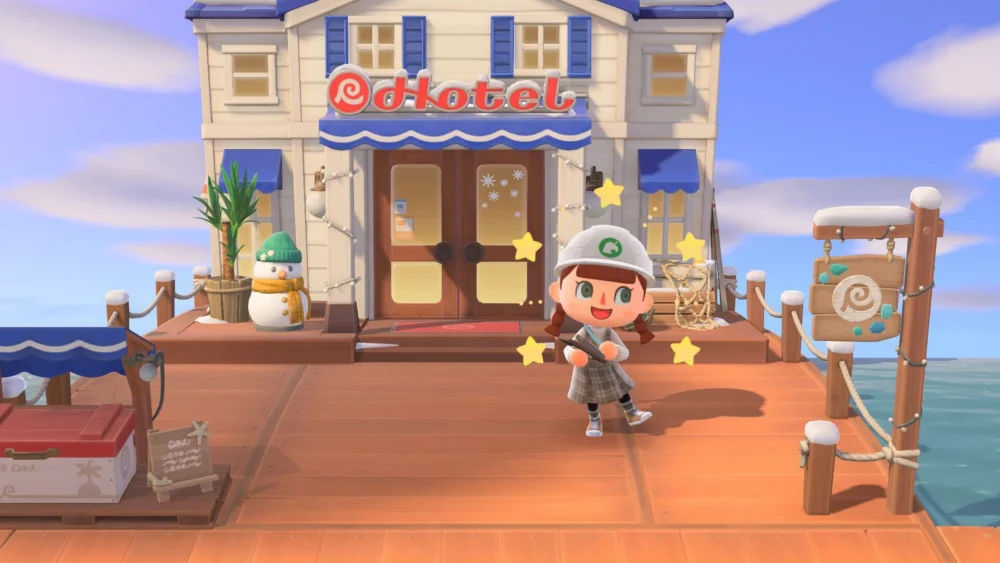
The recent introduction of a significant free update and a revised console edition for Animal Crossing: New Horizons has injected renewed vitality into the beloved life simulation game, addressing long-standing player grievances and enhancing the overall experience for both new and returning enthusiasts. While the core appeal of Animal Crossing has always resided in its deliberate pacing and the rewarding nature of long-term development, New Horizons had, for some, begun to tip into tedium. The latest updates, however, skillfully recalibrate this balance, offering a more streamlined and enjoyable island-living simulation without compromising the game’s inherent charm.
For years, Animal Crossing has cultivated a dedicated following by championing a philosophy antithetical to immediate gratification. The game’s design necessitates patience, real-time progression, and a consistent engagement with a myriad of tasks to foster a thriving virtual existence alongside charming anthropomorphic companions. This inherent slowness is a cornerstone of its appeal, fostering a sense of accomplishment built over time. However, in New Horizons, certain aspects of this deliberate pace evolved into friction points for players. The laborious process of crafting individual items, the painstaking manual effort required to sculpt terrain and waterways, and the meticulous placement of objects one by one, began to detract from the otherwise tranquil experience for a segment of the player base.

The recently released free 3.0 update, alongside the accompanying Nintendo Switch 2 Edition, directly addresses these quality-of-life concerns. These enhancements, while seemingly minor in their content additions, are significant in their impact on reducing operational friction, thereby aligning more closely with the spirit of Animal Crossing. The 3.0 update, in particular, offers just enough new functionality and refinement to serve as a compelling reason for lapsed players to return, without overwhelming them with entirely new gameplay paradigms. The Nintendo Switch 2 Edition, while primarily focused on technical improvements, further contributes to a smoother overall experience.
The Nintendo Switch 2 Edition represents a notable advancement in the technical performance of New Horizons. On the original Nintendo Switch, the game’s performance could degrade significantly as islands became more densely populated with decorations, leading to noticeable frame rate drops. This meant that the very act of extensively customizing an island could, paradoxically, diminish its playability. The Switch 2 Edition addresses this by offering a demonstrably improved frame rate and enhanced resolution, particularly beneficial for players who engage in extensive island customization. Anecdotal evidence suggests a substantial performance uplift, allowing for more complex and visually dense island designs without sacrificing fluidity. This upgrade is particularly valuable for players who embrace maximalist decorative styles and desire their islands to remain both aesthetically impressive and functionally accessible.
Beyond performance, the Switch 2 Edition introduces a few additional features. While not revolutionary, they contribute to the overall user experience. The improved resolution, though subtle, enhances visual clarity. A new megaphone feature, designed to utilize the Switch 2’s microphone for locating villagers by voice, has shown mixed results in initial testing, indicating potential for further refinement or optimization. The addition of Joy-Con mouse controls, available during interior decorating, custom design creation, and bulletin board messages, offers an alternative input method. However, its utility and intuitiveness may vary among players, particularly those who have become accustomed to traditional controller inputs or who prefer to play on larger displays.

The more transformative aspect of the recent New Horizons evolution lies within the free 3.0 update, which is accessible to all players on both the original Switch and the Switch 2. This update represents a more substantial overhaul in terms of quality-of-life improvements. The most impactful change, a seemingly minor addition, is the ability to strafe. Previously, players had to constantly reorient their character to precisely place objects, sculpt terrain, or perform other meticulous tasks. This often involved awkward camera adjustments and character repositioning, leading to frustration and errors. The introduction of strafing, achieved by holding the L button, allows players to move freely in any direction without altering their character’s facing, thereby streamlining construction and terraforming processes significantly. This fundamental change transforms the act of island design from a potentially cumbersome chore into a more fluid and enjoyable creative endeavor.
Furthermore, the update brings back Mr. Resetti in a capacity that offers immediate island management solutions. His new "reset" functionality allows players to instantly clear their entire island, specific beach areas, or designated zones of furniture and collectibles, sending them directly to storage. This feature is particularly beneficial for players undertaking large-scale island redesigns or those who wish to alter specific sections without the tedious manual removal of numerous items. The expansion of in-game storage, with new upgrades increasing the maximum item capacity, complements this functionality, ensuring players have ample space to accommodate their collected items. The ability to store plants and flowers, previously a manual and time-consuming task, further simplifies island maintenance and redesign efforts. Mr. Resetti’s new role effectively addresses one of the most significant barriers to extensive island customization, making major overhauls more feasible and less daunting.
Beyond these critical gameplay enhancements, the 3.0 update introduces new content designed to encourage player engagement. The addition of a hotel on the pier offers a new interactive space for players to decorate, introducing a selection of new furniture and clothing items. This feature, reminiscent of the Happy Home Paradise DLC, provides a structured yet creative outlet for players. The hotel also serves to attract virtual tourists to the island, adding a dynamic element to the player’s ecosystem. Furthermore, the introduction of Slumber Islands allows players to create up to three separate dream islands, providing a sandbox environment for extensive experimentation and design without affecting their main island. These additions, while not as fundamentally impactful as the quality-of-life refinements, serve as effective catalysts for re-engagement, offering tangible goals and creative opportunities for players to explore.

The strategic introduction of these updates demonstrates a keen understanding of the Animal Crossing player base and its evolving needs. By meticulously addressing the pain points that had led to player attrition, developers have managed to rekindle interest without alienating the core tenets of the game. The combination of enhanced technical performance, streamlined interaction mechanics, and thoughtfully integrated new content creates a compelling proposition for both lapsed players seeking to revisit their island paradises and new players looking for a polished and engaging simulation experience. The future outlook for Animal Crossing: New Horizons appears bright, with these recent enhancements setting a strong foundation for continued player investment and creative expression within its charming virtual world.



 Lisa Mariana
 Safa Marwah
 Ayu Aulia