Lisa Mariana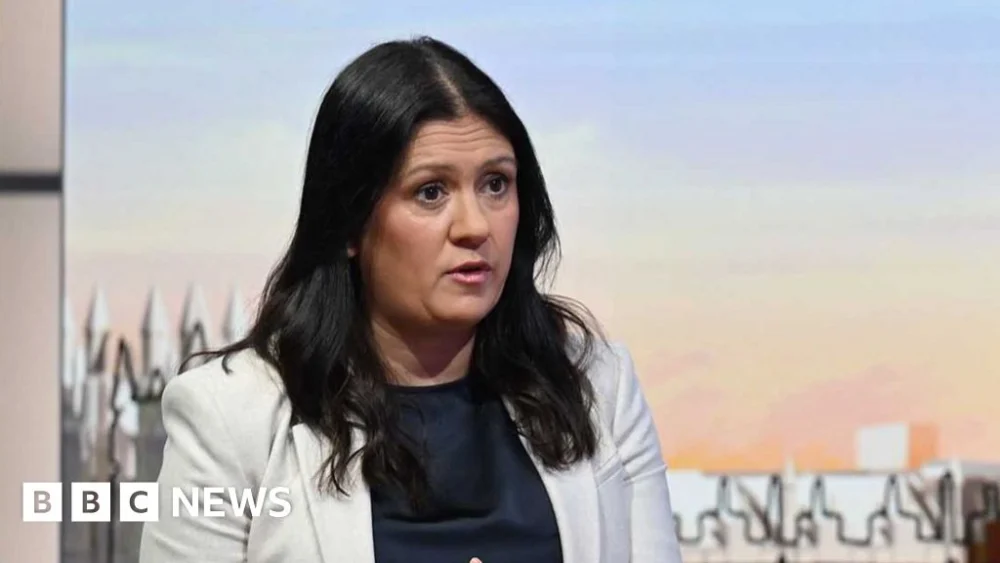
The United Kingdom has unequivocally affirmed its principled position that the future status of Greenland rests solely with its inhabitants and the Kingdom of Denmark, directly challenging recent coercive overtures from the United States administration regarding the autonomous Danish territory. This firm declaration, articulated by a senior UK government official, underscores a rare cross-party consensus in London against external attempts to unilaterally dictate the destiny of a sovereign entity, setting a critical precedent for international norms and transatlantic diplomatic relations.
The UK’s Culture Secretary, Lisa Nandy, conveyed an unambiguous message regarding the nation’s steadfast stance, emphasizing that Greenland’s destiny is a "non-negotiable" matter for its people and the Danish realm. Her statements directly addressed the escalating rhetoric from the White House, particularly concerning US President Donald Trump’s threats to impose significant tariffs on the UK and other European allies. Nandy characterized these threats as "deeply unhelpful and counterproductive," advocating for a more "adult debate" to resolve the diplomatic friction. This assertion highlights a foundational principle of international law: the right to self-determination, which is considered paramount by the British government in this unfolding geopolitical drama.
President Trump’s administration had intensified its campaign for a US acquisition of Greenland, citing critical security interests. The proposed strategy involved a tiered tariff system, commencing with a 10% levy on goods from key European partners – including Denmark, Norway, Sweden, France, Germany, the United Kingdom, the Netherlands, and Finland – slated to begin on February 1st, with a potential escalation to 25%. This economic coercion was explicitly designed to compel a sale of the territory to the United States. Such a unilateral imposition of trade barriers represents a significant departure from established international trade practices and threatens to destabilize economic relationships within the Western alliance.
The implications of Trump’s proposals reverberated across the British political landscape, eliciting a swift and unified condemnation that transcended traditional party lines. Sir Keir Starmer, the Leader of the Opposition, denounced the US initiative as "completely wrong" and committed his prospective government to "pursuing this directly with the US administration." This bipartisan alignment underscored the perceived gravity of the situation, signaling a united front from Westminster against what many view as an aggressive and unwarranted intervention into sovereign affairs.
Nandy, reflecting on the dynamics of engagement with the US President, suggested that Trump often employs strong initial pronouncements as a precursor to negotiation, stating that he "welcomes difference of opinion… and what often happens is a negotiation." However, she unequivocally reiterated that the UK’s principled position on Greenlandic self-determination would remain uncompromised, serving as the immutable "starting point for the conversation." This perspective suggests a diplomatic strategy focused on firm adherence to principles while remaining open to de-escalation through dialogue, albeit on terms dictated by international law and sovereignty. The prospect of high-level discussions, potentially involving Sir Keir Starmer at the World Economic Forum in Davos, Switzerland, was also raised as a potential avenue for direct engagement.
Adding further nuance to the American perspective, US House Speaker Mike Johnson acknowledged the strategic importance of Greenland to the United States while affirming that it was "not our land." Prior to the tariff announcements, Johnson had explicitly stated, "I don’t foresee military intervention," advocating instead for "diplomatic channels" as the appropriate course of action. This contrasts sharply with President Trump’s earlier rhetoric, which notably did not rule out taking the territory by force, thereby raising profound concerns about the potential erosion of international norms and the stability of the global security architecture.
The widespread disapproval of Trump’s plan within the UK parliament underscored the depth of concern. Richard Tice, a Member of Parliament for Reform UK, concurred that the approach was "completely wrong," even while acknowledging the legitimate objective of protecting Greenland for NATO allies. Sir Jeremy Hunt, a Conservative MP, expressed skepticism about Trump’s willingness to follow through on an invasion, arguing that "to invade the sovereign territory of a Nato ally would mean the end of Nato – and that would actually make America weaker." Hunt’s analysis emphasized the foundational role of collective defense, enshrined in Article 5 of the North Atlantic Treaty, and the potential for such an action to dismantle the most successful military alliance in history, thereby undermining American global leadership and security.
Kemi Badenoch, a prominent Conservative leader, unequivocally branded the proposed tariffs as a "terrible idea," predicting "yet another burden for businesses" across the nation. She firmly echoed the sentiment that "the sovereignty of Greenland should only be decided by the people of Greenland." Similarly, Liberal Democrat leader Sir Ed Davey lamented the tariffs as a punishment for the UK and NATO allies "just for doing the right thing," implying a breakdown in trust and collaboration. The Green Party’s parliamentary leader, Ellie Chowns, characterized Trump’s decision as "unhinged," accusing him of attempting to "bully" sovereign nations into compliance, highlighting the ethical and moral dimensions of the dispute. This unified condemnation from diverse political factions in the UK demonstrated a robust national consensus against unilateral coercion and in favor of established international principles.
Greenland itself is a vast, resource-rich autonomous Danish territory strategically positioned between North America and the Arctic. Its immense geographical footprint, nearly three times the size of Texas, encompasses significant deposits of rare earth minerals, zinc, lead, iron, and other critical resources, making it a coveted asset in an era of global resource competition. Furthermore, its location offers unparalleled strategic advantages for early warning systems against missile threats and for monitoring maritime activities in the increasingly important Arctic region, where melting ice caps are opening new shipping lanes and access to previously inaccessible resources. These factors have fueled intensified interest from major global powers, including Russia and China, further elevating Greenland’s geopolitical significance.
European nations have consistently rallied in support of Denmark’s unwavering assertion of sovereignty. The White House’s escalating rhetoric, particularly President Trump’s pronouncements on his Truth Social platform—where he declared that resisting the US plan constituted "a very dangerous game" jeopardizing the "Safety, Security, and Survival of our Planet"—only served to solidify this European unity. Denmark has repeatedly underscored that Greenland is not for sale, warning that any aggressive move against its territory would be tantamount to an attack on a NATO member, thereby risking the fundamental collapse of the alliance itself. This firm stance is further bolstered by the clear preference articulated by Greenland’s government and its people to maintain their current relationship with Denmark rather than becoming a territory of the United States, a sentiment deeply rooted in their cultural identity and pursuit of greater self-determination.
The implications of this diplomatic standoff extend far beyond the immediate dispute over Greenland. At stake are the foundational principles of international law, including national sovereignty, territorial integrity, and the right to self-determination. The US administration’s use of economic coercion and veiled threats of force against allies represents a significant challenge to the post-World War II international order and the stability of transatlantic relations. It risks undermining the very alliances that have underpinned Western security for decades, potentially fracturing NATO at a time when global geopolitical tensions, particularly with Russia and China, are on the rise.
Furthermore, the dispute highlights the intensifying competition in the Arctic, a region rapidly transforming due to climate change. As new shipping routes become viable and access to vast natural resources opens up, the Arctic is increasingly becoming a theater for strategic rivalry. A unilateral US acquisition of Greenland, or even sustained pressure to that end, could destabilize the region, inviting further militarization and complicating multilateral efforts for peaceful governance and environmental protection. The UK’s firm position, therefore, is not merely about Greenland but about upholding a rules-based international system in an increasingly contested world.
The call for an "adult debate" by the UK government signifies a desire to return to established diplomatic protocols, where dialogue, mutual respect, and adherence to international law supersede coercive tactics. While President Trump’s history suggests a willingness to use strong-arm tactics as a negotiating strategy, the unified and principled resistance from European allies, led by the UK and Denmark, indicates that the boundaries of acceptable international conduct are being tested. The outcome of this dispute will undoubtedly set a precedent for future interactions between global powers, shaping the contours of international diplomacy and security for years to come. The unwavering commitment to Greenlandic self-determination articulated by the UK represents a critical defense of sovereignty in a rapidly evolving geopolitical landscape.




 Aura Kasih
 Safa Marwah
 Ayu Aulia