Aura Kasih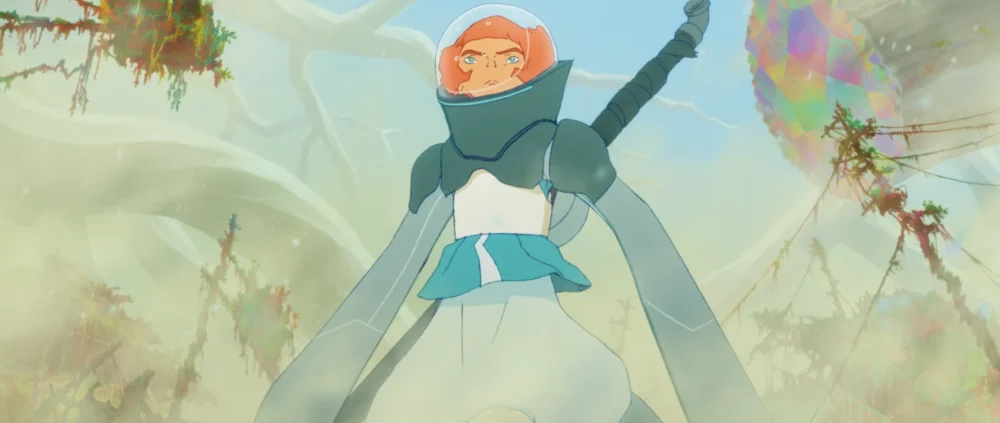
A groundbreaking animated adaptation of Hiroshi Sakurazaka’s seminal science fiction novel, "All You Need Is Kill," has arrived, offering a visually spectacular and thematically resonant exploration of persistence against overwhelming odds, directly channeling the addictive, maddening, and ultimately rewarding essence of video game mechanics. This new cinematic venture, a collaboration between Warner Bros. Japan and Studio 4°C, directed by Kenichiro Akimoto, stands apart from previous interpretations, including the successful live-action "Edge of Tomorrow," by embracing a more experimental narrative structure and a distinct, vibrant aesthetic that amplifies the source material’s core message of unyielding determination.
The narrative centers on Rita Vrataski, portrayed in the English dub by Stephanie Sheh and in Japanese by Ai Mikami, a disillusioned young woman stationed at a research facility dedicated to studying Darol, an enigmatic alien entity that descended from the cosmos. Darol, a colossal, unbloomed floral monstrosity, harbors a sinister secret: a teeming populace of predatory creatures within its depths, poised to unleash devastation. The terrifying reality of these alien organisms becomes brutally apparent when Darol unfurls, exposing Rita to their lethal capabilities firsthand. Despite the advanced technology of her futuristic exoskeleton power armor, Rita finds herself tragically outmatched and perishes during the initial onslaught. Yet, in a twist that echoes the cyclical nature of digital challenges, she awakens to find herself transported back to the dawn of the same fateful day, an unwitting participant in a recurring temporal loop, with no one else privy to the impending doom.
This reimagining masterfully captures the spirit of Sakurazaka’s original work, which explored the psychological and strategic implications of repeated failure and learning. The film artfully presents the early stages of Rita’s predicament as a harrowing, albeit visually striking, iteration of the "Groundhog Day" paradox. Each day, she navigates a preordained path, meticulously observing her surroundings and attempting to alter her destiny before the relentless alien offspring find new and inventive ways to end her existence. The sheer unbelievability of her situation renders attempts at communication futile; her experiences are too extraordinary to be credible. Initially, death appears an unavoidable outcome. However, a pivotal encounter with Keiji (voiced by Jadon Muniz in English and Natsuki Hanae in Japanese), a timid gamer who also finds himself trapped in the temporal anomaly, marks a turning point. This meeting transforms Rita’s perspective, shifting her focus from mere survival to strategic analysis. Each loop becomes an opportunity to dissect Darol’s behaviors and refine her combat proficiency within her powered suit.
Where the live-action "Edge of Tomorrow" offered subtle nods to its video game-like premise, the animated "All You Need Is Kill" explicitly immerses its audience in a roguelike paradigm. The dynamic between Rita and Keiji evolves into a highly synchronized alien-slaying partnership, their survival prospects directly correlating with their ability to enhance their weaponry and tactical approach. This constant cycle of brutal death and subsequent resurrection, however, begins to take a significant toll on their moral compass, forcing them to confront the existential question of whether their hard-won progress, accumulated through countless lives, ultimately holds any lasting meaning. This psychological dimension adds a profound layer to the action, elevating the film beyond a mere spectacle of alien combat.
A significant departure from previous iterations is the striking new art direction, spearheaded by Tomotaka Kubo, known for his work on visually distinctive projects like "Promare" and "Mary and the Witch’s Flower." Kubo, in collaboration with character designer Izumi Murakami, crafts a world that is both breathtakingly beautiful and eerily menacing. The environment is rendered as a lush, vibrant wonderland, its visual splendor amplified by the unsettling elegance of Darol’s alien drones. In contrast to the bulkier, more utilitarian power suits seen in earlier adaptations, which seemed ill-suited for agile alien warfare, mechanical designer Junji Okubo (whose credits include "Star Wars: Visions") re-envisioned these suits. His designs are sleek, almost organic extensions of their pilots, suggesting a heightened level of integration and agility that perfectly complements the film’s kinetic action sequences.
These stylistic choices imbue this rendition of "All You Need Is Kill" with a unique identity, transforming its action sequences into a dazzling visual spectacle. The fluidity of movement, the vibrant color palette juxtaposed with the dark, alien threats, and the innovative suit designs coalesce to create a cinematic experience that is both exhilarating and aesthetically groundbreaking. Even for those familiar with the source material or its previous adaptations, this animated version offers a compelling reason to engage, showcasing the diverse energies each interpretation brings to Sakurazaka’s compelling narrative. For newcomers, it serves as an electrifying introduction to a story that fundamentally questions the nature of perseverance and the human capacity to adapt and overcome.
The enduring appeal of "All You Need Is Kill" lies in its potent exploration of tenacity. Sakurazaka’s original light novel, published in 2004, was a prescient examination of the psychological impact of repeated failure and the necessity of learning from every setback. The narrative’s core concept – being trapped in a time loop, forced to relive the same day after death – has since become a staple in science fiction, influencing numerous books, films, and, most notably, video games. The "Groundhog Day" scenario, when infused with high-stakes combat and strategic progression, naturally lends itself to the addictive feedback loops that define modern gaming. Players are accustomed to dying, learning from their mistakes, and attempting new strategies, all within a structured environment that rewards persistence.
The live-action adaptation, "Edge of Tomorrow" (2014), starring Tom Cruise and Emily Blunt, successfully translated this concept to the big screen, focusing on a military campaign against an alien invasion. While it deviated from the novel’s more intimate focus, it captured the essence of learning through repetition, portraying the protagonist’s incremental improvement with compelling realism. The film’s success highlighted the broad appeal of this narrative device, demonstrating that a story about fighting, dying, and fighting again could resonate with a global audience. However, "Edge of Tomorrow," by its nature as a live-action film, was constrained by the tangible realities of cinematic execution. While innovative, its visual language and narrative pacing were inherently tied to the conventions of traditional filmmaking.
The animated "All You Need Is Kill" transcends these limitations by fully embracing its video game DNA. The film’s director, Kenichiro Akimoto, and his team at Studio 4°C, have leveraged the medium of animation to create a world that is not only visually arresting but also deeply immersive in its simulation of a gaming experience. The fluid animation allows for impossible feats of agility and combat choreography that would be prohibitively expensive or technically challenging in live-action. The vibrant, almost hyperreal aesthetic of the animation serves to underscore the heightened reality of the characters’ predicament. The "game over" screen, in this context, is not a cessation of activity but a reset, a chance to strategize and improve.
The narrative shift towards a female protagonist, Rita Vrataski, is a significant and welcome development. This choice not only offers a fresh perspective on the familiar narrative but also challenges traditional gender roles often seen in action-centric science fiction. Rita’s journey from disillusioned survivor to formidable warrior is compelling, and her amplified agency in this adaptation allows for a deeper exploration of the emotional and psychological toll of her unending struggle. The introduction of Keiji, the gamer, further solidifies the film’s connection to its video game inspiration. His understanding of iterative progression and strategic thinking becomes a vital counterpoint to Rita’s initial desperation, creating a dynamic partnership that is both intellectually stimulating and emotionally engaging.
The visual design, as previously noted, is a critical component of the film’s success. The reimagined power armor, described as sleek and almost organic, represents a departure from the clunky, utilitarian designs often depicted. This aesthetic choice suggests a more advanced, integrated technology, where the suit is less a piece of equipment and more an extension of the pilot’s will. This aligns perfectly with the concept of character progression in video games, where upgrades and enhancements lead to a more refined and powerful avatar. The world itself, rendered in a kaleidoscope of colors, transforms from a beautiful landscape into a terrifying battleground when Darol’s monstrous offspring appear. This visual dichotomy effectively captures the dual nature of the film’s premise: a world of beauty and wonder corrupted by an existential threat, mirroring the often stark contrast between a game’s vibrant overworld and its perilous dungeons.
The implications of this animated adaptation extend beyond mere entertainment. It signifies a maturation of how Japanese source material is translated for a global audience, moving beyond literal interpretations to embrace the spirit and thematic core of the original work. By focusing on the psychological and strategic aspects of the narrative, and by employing a visual language that directly mirrors the mechanics of video games, "All You Need Is Kill" creates a unique cinematic experience that is both innovative and deeply resonant. It demonstrates that stories originally conceived for the written word can find new life and deeper meaning when translated through different artistic mediums, especially when those mediums are inherently capable of conveying complex systems of interaction and progression.
Looking ahead, this animated adaptation sets a high bar for future reinterpretations of Sakurazaka’s work and potentially for other video game-inspired narratives in cinema. Its success could encourage further experimentation with animation as a medium for complex science fiction storytelling, allowing for visual concepts and narrative structures that might be prohibitive in live-action. The film’s ability to blend intense action with profound psychological exploration, all while maintaining the addictive, loop-based structure of a video game, offers a blueprint for how to effectively translate the unique appeal of interactive entertainment into a compelling cinematic narrative. The future of science fiction cinema may well be shaped by the daring, visually stunning, and profoundly resonant echoes of "All You Need Is Kill."




 Lisa Mariana
 Safa Marwah
 Ayu Aulia