Aura Kasih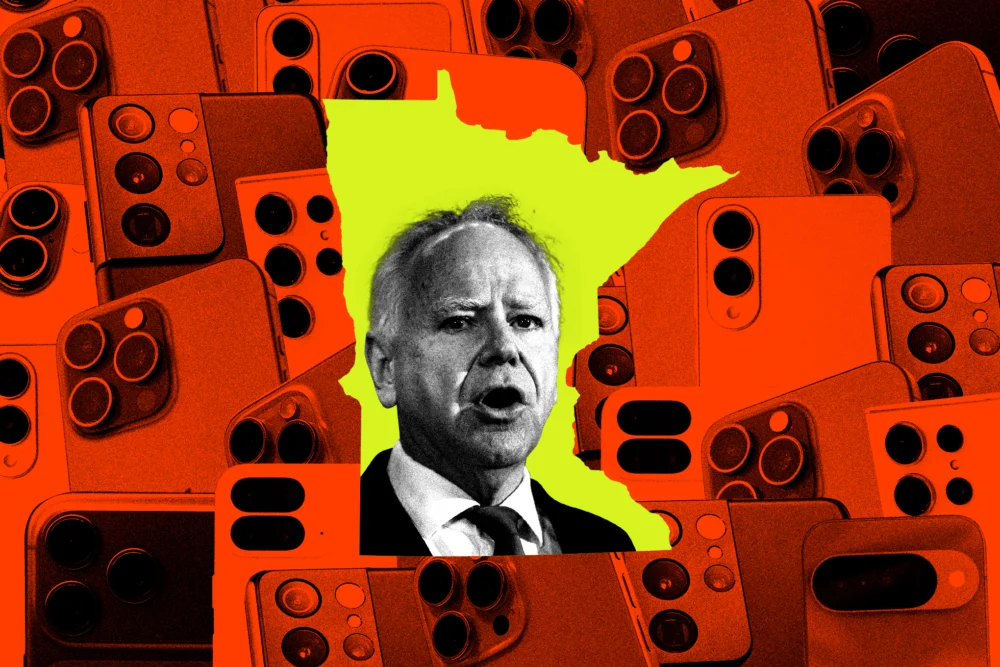
In a dramatic escalation of tensions between state and federal authority, Minnesota is strategically positioning itself for a prolonged conflict, a "war of attrition," against what it perceives as an unwarranted federal invasion. Governor Tim Walz has urged residents to document the actions of Immigration and Customs Enforcement (ICE) agents operating within the Twin Cities, framing these recordings not merely as historical archives but as crucial evidence for future legal reckonings. This call to action follows a significant deployment of approximately 2,000 masked and armed ICE personnel, an operation dubbed "Operation Metro Surge" by the federal administration, which has cast a shadow of fear and disruption across urban centers, impacting essential services like hospitals and schools.
The governor’s appeal, delivered via primetime television, transcends a simple request for documentation; it signals a deliberate strategy to harness the power of public record and legal recourse. By emphasizing a commitment to lawful processes and the democratic electoral system, Walz aims to project an image of a state upholding its constitutional obligations while simultaneously preparing for a robust defense of its sovereignty. The core of Minnesota’s resistance lies in a federal lawsuit filed by the state and its major cities, Minneapolis and St. Paul, seeking to halt the federal operation. This legal challenge is multifaceted, but its central tenet revolves around the principle of states’ rights, asserting that federal actions have infringed upon Minnesota’s inherent authority to govern its own territory and protect its populace.
The deployment of federal agents into communities, particularly those with sanctuary city policies, has become a recurring theme under the current federal administration. Minnesota’s legal challenge, intricately detailed in its filings, highlights a pattern of targeting liberal states and cities, drawing parallels to previous federal actions in cities like Los Angeles, Portland, and Chicago. The lawsuit explicitly references instances where the President has voiced concerns about electoral losses in states like Minnesota, suggesting a potential political motivation behind the federal enforcement surge. Resistance in these previously targeted locales has been significant, both through grassroots activism and judicial intervention, including a notable Supreme Court ruling that curtailed certain federal deployment plans. Minnesota’s current legal strategy appears to learn from these precedents, aiming to establish a clear breach of the constitutional framework that underpins the relationship between federal and state governments.
At the heart of Minnesota’s legal argument is the Tenth Amendment, which reserves powers not delegated to the federal government to the states. The lawsuit contends that the federal surge has undermined the state’s sovereign authority to ensure the health, safety, and well-being of its residents, creating an environment of fear and hindering the normal functioning of civic life. The complaint articulates that citizens have a fundamental right to engage in daily activities – commuting to work, attending school, and accessing public spaces – without the specter of federal intimidation or violence. The federal agents’ actions are depicted as a direct affront to this right, creating a climate of unease that impedes the ability of local authorities to effectively serve their communities.
The concept of self-determination is paramount in this unfolding dispute. Sanctuary cities, by their very nature, represent a democratic choice by local populations not to actively participate in federal immigration enforcement. This deliberate stance is the bedrock of the states’ rights argument, underscoring the principle that local communities should have a significant say in how federal policies are implemented within their borders. The irony, however, is notable. The phrase "states’ rights" has a complex and often contentious historical legacy in American jurisprudence, frequently invoked to defend policies of segregation and resist federal intervention during the Civil Rights Movement. In more recent times, it has become entwined with anti-government sentiments and militia movements, often referencing historical events like the Ruby Ridge and Waco standoffs as potent symbols of federal overreach.
The echoes of these historical confrontations resonate in contemporary discussions about federal authority. The events at Ruby Ridge in 1992 and the Waco siege in 1993 gave rise to a distinct subculture that viewed federal agencies with deep suspicion. These incidents, often characterized by armed confrontations and tragic loss of life, became touchstones for a growing anti-government movement. The bombing of the Oklahoma City federal building in 1995 by Timothy McVeigh, partially motivated by these events, starkly illustrated the potential for extremist responses. More recently, militia occupations, such as the one at the Malheur National Wildlife Refuge in Oregon in 2016, have continued to invoke Ruby Ridge and Waco as emblematic of federal overreach.
In a parallel legal development, a law professor has suggested that the fatal shooting of Renee Good by an ICE agent during the operation could be grounds for state prosecution under similar reasoning applied in the Ruby Ridge case, where an FBI sniper was charged by the state of Idaho for the death of Vicki Weaver. Such a state conviction, it is argued, would be beyond the reach of a presidential pardon. While the circumstances of the two incidents differ – the Ruby Ridge event involved an armed standoff at a remote homestead, whereas Ms. Good’s death occurred during a vehicle encounter – the common thread of a civilian fatality resulting from federal law enforcement action provides a basis for legal scrutiny at the state level.
What is notably absent, however, is the resurgence of militia groups in defense of individuals like Renee Good. Instead, these groups, which have historically championed a particular interpretation of states’ rights and federal opposition, appear to be aligning with or at least tacitly supporting the federal administration’s agenda of mass deportation. Reports suggest that militia organizations have offered assistance in carrying out such operations, raising concerns about their potential involvement or even infiltration of federal enforcement ranks. The poor screening processes within ICE have come under scrutiny, with instances of individuals with questionable backgrounds or affiliations receiving job offers. This raises the unsettling possibility that elements associated with anti-government extremism may be operating within federal law enforcement, a stark departure from the traditional anti-authoritarian stance often associated with such groups. The resistance to federal overreach, therefore, is increasingly being waged not through armed confrontation, but through civil disobedience, digital documentation, and legal challenges.
The federal government’s response to Minnesota’s pushback has been assertive, bordering on retaliatory. Authorities have reportedly denied state officials access to crucial evidence related to the fatal shooting, hindering the state’s ability to conduct its own investigation. Furthermore, the Department of Justice has initiated a criminal investigation into Governor Walz and Minneapolis Mayor Jacob Frey, a move widely seen as an attempt to intimidate state and local leadership. Reports indicate that federal prosecutors were pressured to pursue charges against Renee Good’s wife, leading to the resignation of at least six federal prosecutors. This exodus included a career prosecutor deeply familiar with state fraud cases, which had been controversially reframed by a conservative influencer as evidence of widespread fraud within Somali-run daycare centers.
The narrative surrounding the federal operation appears to have been significantly influenced by viral content. The influencer’s allegations, amplified across social media, reportedly caught the attention of the President, who then cited "fraud" as a primary justification for launching "Operation Metro Surge." This chain of events illustrates how online content can shape federal policy and precipitate real-world consequences, including tragic outcomes like the death of Renee Good. In this complex interplay, Minnesota is now attempting to counter the federal narrative with its own digital campaign.
The Minneapolis City Council President has been actively posting videos documenting interactions with ICE agents, including an incident where he was allegedly shoved. These recordings are intended to highlight the aggressive tactics employed by federal agents and their impact on the broader community. Governor Walz’s directive for citizens to record ICE activity transforms the public into de facto citizen journalists, gathering evidence that the state hopes will bolster its legal case. The proliferation of these videos across social media platforms is creating a powerful counter-narrative, casting federal agents as unwelcome intruders rather than protectors of law and order.
The legal strategy embedded in the lawsuit, Minnesota v. Noem, actively incorporates these user-generated videos as evidence. The complaint is replete with links to social media platforms, using the federal administration’s own pronouncements and the visual documentation of ICE actions to illustrate what it characterizes as irrational animus and a reign of terror that has little to do with legitimate immigration enforcement. The hope is that this compilation of evidence will persuade a federal judge to grant an injunction, effectively halting the federal operation.
However, the question looms: what happens if legal remedies prove insufficient? What if the courts do not intervene, or if the electoral process fails to bring about a change in federal policy? The federal government’s response, including the initiation of criminal investigations against state officials, suggests a reluctance to de-escalate. This escalating confrontation hints at a deeper conflict, potentially pushing the boundaries of intergovernmental relations and raising concerns about a broader national instability.
Governor Walz’s call for documentation can be interpreted as a strategy of "sousveillance" – the act of citizens or lower-level entities monitoring those in positions of power. It represents a last resort for states asserting their rights in a peaceful, constitutional manner. Should these avenues fail, the situation could devolve into more confrontational forms of resistance, potentially aligning with the very civil conflict that some observers believe the current federal administration may be seeking.
The steady stream of videos emerging from Minneapolis has undeniably shifted the public perception of ICE, portraying them not as immigration enforcement agents, but as external forces operating aggressively within the homeland. This narrative, reminiscent of historical instances of federal intervention being met with local resistance, positions Minnesota as a state defending its territory against an unwelcome incursion. The ultimate resolution of this conflict will likely depend on the judiciary’s interpretation of states’ rights and the continued engagement of citizens in documenting and challenging federal actions, thereby shaping the unfolding narrative of this significant constitutional standoff.



 Lisa Mariana
 Safa Marwah
 Ayu Aulia