Lisa Mariana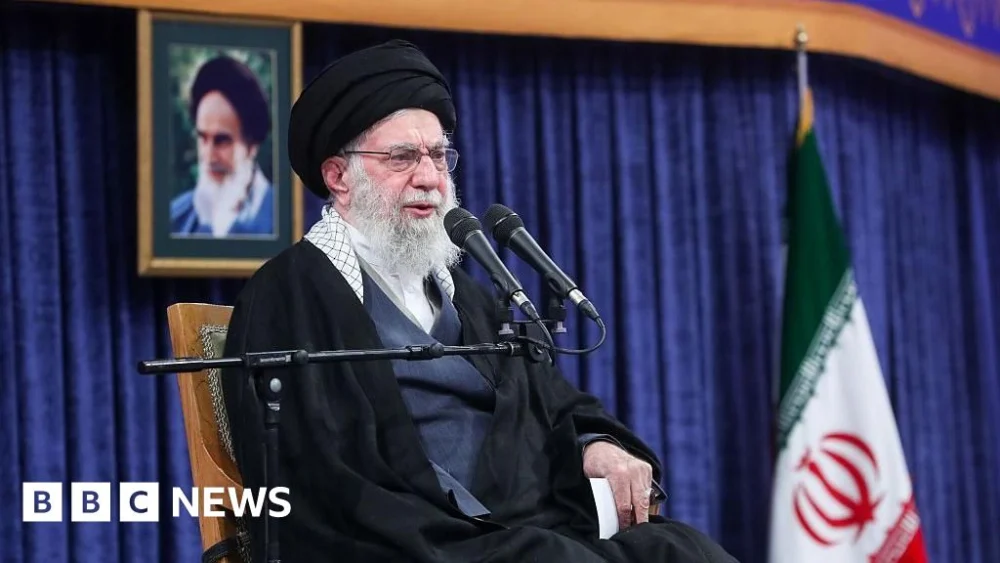
The Islamic Republic’s supreme authority, Ayatollah Ali Khamenei, has directly attributed the recent wave of deadly anti-government demonstrations and associated societal turmoil within Iran to the machinations of the United States and its former President, Donald Trump, a significant escalation in rhetoric that underscores the deepening chasm between the two nations.
In a pivotal public address delivered on Saturday, the octogenarian leader acknowledged the tragic loss of life, stating that thousands had perished during the sustained period of domestic upheaval, some succumbing to what he described as "inhuman, savage" methods. However, in a definitive pronouncement, he vehemently rejected any state culpability, instead assigning blame for these fatalities and the broader disruption to "seditionists" – a term frequently employed by the Iranian establishment to denounce internal dissenters and those perceived as agents of foreign influence. This narrative serves to consolidate internal support and deflect international criticism, framing the widespread discontent not as an organic expression of public grievance but as a foreign-orchestrated plot aimed at destabilizing the regime.
The protests, which first erupted with economic grievances on December 28, have demonstrably evolved beyond initial frustrations over inflation, unemployment, and corruption. What began as localized expressions of financial hardship has metastasized into a formidable challenge to the very foundation of the Islamic Republic, with increasingly vocal demands for an end to the supreme leader’s multi-decade rule. This transformation from economic protest to a direct political confrontation with the highest echelons of power signifies a critical juncture in Iran’s internal dynamics, reflecting a profound disillusionment across various segments of society. The sheer scale of the casualty count, independently reported by the US-based Iranian Human Rights Activists News Agency (HRANA) at 3,090 lives, paints a stark picture of the severity of the confrontation between state security forces and the populace.
The Iranian government has consistently characterized these widespread demonstrations as "riots," meticulously orchestrated and covertly supported by external adversaries. This official framing provides a pretext for the deployment of overwhelming force, a strategy evidenced by numerous verified accounts. Videos authenticated by both BBC Persian and BBC Verify depict security personnel discharging firearms directly into crowds of demonstrators, illustrating the lethal response employed to quell the unrest. Such tactics align with a historical pattern of state repression against dissent, yet the current intensity and reported casualties suggest an unprecedented level of confrontation.
Compounding the opacity surrounding the ongoing situation, the Iranian authorities have implemented a near-total blackout of internet and communication services across the nation. Cyber monitor NetBlocks reported that overall connectivity on Saturday remained at a mere 2% of typical levels, effectively severing Iranians from the outside world and impeding the flow of independent information. This digital Iron Curtain serves multiple purposes: it cripples the ability of protesters to organize, communicate, and document abuses; it prevents the dissemination of information that could fuel further dissent; and it severely obstructs international monitoring and verification efforts. While reports of active unrest have somewhat diminished in recent days, the pervasive internet restrictions render any clear assessment of the ground situation exceedingly difficult, fostering an environment ripe for speculation and misinformation.
Ayatollah Khamenei’s accusatory rhetoric extended further during his address, branding former President Trump as a "criminal" and asserting that the United States must be "held accountable" for the recent unrest. He additionally leveraged social media platforms to propagate the incendiary claim that "America’s goal is to swallow Iran," tapping into a deep-seated historical suspicion of foreign intervention and perceived Western imperialistic ambitions that resonate within certain segments of the Iranian populace. This narrative attempts to mobilize nationalist sentiment against a perceived external threat, thereby diverting attention from internal grievances.
The US administration has, thus far, refrained from a direct, official response to the Supreme Leader’s latest accusations. The BBC’s outreach to the White House for comment underscores the diplomatic void in direct communication channels between Washington and Tehran. However, the US State Department issued a stern warning on Saturday, citing intelligence reports indicating that "the Islamic Republic is preparing options to target American bases." This grave assessment was accompanied by an unequivocal declaration that any such offensive action would be met with "a very, very powerful force," cautioning Tehran against "playing games with President Trump." This exchange of threats signifies a dangerous escalation, raising the specter of direct military confrontation in an already volatile region.
Adding another layer of complexity to the unfolding drama, President Trump had previously stated on Wednesday that he had received information indicating "the killing in Iran has stopped," yet he simultaneously affirmed that military action against the Islamic Republic remained a viable option. This contradictory stance highlights the nuanced and often unpredictable nature of the Trump administration’s foreign policy approach to Iran. These comments followed a visible reduction in military personnel by both the US and the UK at the strategically vital Al-Udeid air base in Qatar. Officials informed CBS, the BBC’s US partner, that this partial American withdrawal was a "precautionary measure," signaling heightened alert and a recalibration of force posture in response to perceived threats. Al-Udeid, a critical logistical hub and command center for US operations in the Middle East, serves as a barometer for regional tensions, and any adjustments to its operational status are closely watched by international observers.
The current conflagration of domestic unrest and international acrimony is not an isolated phenomenon but rather the latest manifestation of a deeply entrenched and antagonistic relationship between the United States and Iran that dates back decades. The 1979 Islamic Revolution fundamentally altered the geopolitical landscape, transforming Iran from a key US ally into an ideological adversary. Subsequent events, including the hostage crisis, the Iran-Iraq War, and more recently, the US withdrawal from the Joint Comprehensive Plan of Action (JCPOA) and the imposition of a "maximum pressure" campaign, have continually fueled mutual distrust and hostility. The Trump administration’s strategy, predicated on crippling sanctions and diplomatic isolation, aimed to compel Iran to renegotiate a more restrictive nuclear deal and curb its regional influence. However, this approach has arguably intensified economic hardship within Iran, potentially contributing to the very social discontent now erupting onto the streets.
From an analytical perspective, the Iranian regime’s steadfast narrative of foreign orchestration is a well-worn tactic designed to delegitimize internal opposition and rally nationalist sentiment. By portraying protesters as mere pawns of external powers, the leadership seeks to obscure the profound domestic grievances that are undoubtedly driving the unrest. The acknowledged "inhuman, savage manner" of deaths, while attributed to "seditionists," inadvertently highlights the extreme violence that has characterized the suppression of dissent, regardless of who is officially blamed. The regime’s resilience has historically been bolstered by its ability to mobilize its loyalist base, particularly the Basij militia and Revolutionary Guard Corps, and to control information flow. However, the sheer scale and persistence of the current protests, coupled with the explicit calls for an end to the Supreme Leader’s rule, suggest a more profound challenge to the regime’s legitimacy than previous waves of dissent.
The broader implications of this escalating crisis are significant for regional stability and international security. The Middle East remains a geopolitical tinderbox, and heightened tensions between the US and Iran carry the inherent risk of miscalculation or unintended escalation, potentially drawing other regional actors into a wider conflict. While international reactions have varied, human rights organizations and democratic governments have largely condemned the violent crackdown and called for restraint and respect for fundamental freedoms. However, a coordinated international response to mediate or de-escalate the situation remains elusive, partly due to the complex web of interests and alliances in the region.
Looking ahead, the trajectory of the Iranian protests remains uncertain. Without free access to information, it is difficult to ascertain whether the internet shutdown has effectively stifled the movement or merely driven it underground, potentially leading to a resurgence once communications are restored. The resilience of the Iranian people, coupled with the regime’s unwavering commitment to maintaining power, suggests a protracted struggle. The immediate future will likely see continued domestic repression juxtaposed against a backdrop of heightened US-Iran brinkmanship. The specter of military confrontation, though consistently downplayed by some, cannot be entirely dismissed, particularly given the volatile rhetoric and precautionary military deployments. The confluence of internal dissent and external pressure places the Islamic Republic at a critical juncture, with profound implications for its future and for the broader geopolitical landscape.

 Aura Kasih
 Safa Marwah
 Ayu Aulia