Lisa Mariana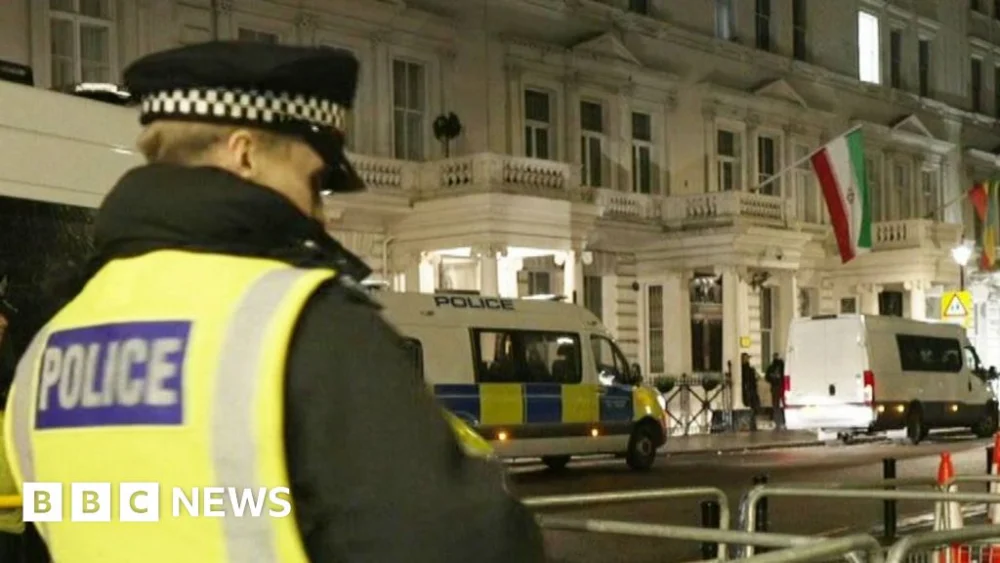
A significant disturbance unfolded outside the Iranian Embassy in London, leading to the apprehension of fourteen individuals and the hospitalization of four people following a contentious demonstration. The incident, characterized by aggressive acts and confrontations, underscores the volatile nature of international solidarity protests, particularly those responding to profound internal crises within nations.
The focal point of the unrest on Friday evening involved a demonstrator who scaled the embassy’s facade, traversing balconies to access a terrace from which a national emblem was reportedly removed. This individual was subsequently detained by law enforcement. Beyond this specific act, a further thirteen arrests were made on charges encompassing serious public order offenses, including violent disorder, criminal damage, unauthorized entry onto diplomatic property, and assaults on emergency service personnel. These events reflect a growing intensity in demonstrations outside Iranian diplomatic facilities across the globe, fueled by widespread dissent within Iran itself.
The underlying catalyst for these fervent demonstrations stems from the ongoing, nationwide anti-government protests within Iran. These internal upheavals, which have drawn significant international scrutiny, have been met with a severe governmental crackdown. Human rights organizations, particularly those based in the United States, have documented a harrowing toll, reporting that fatalities among demonstrators in Iran have tragically surpassed 2,600 individuals. This grim statistic provides critical context for the impassioned, and at times confrontational, nature of the solidarity movements observed internationally.
During the London protest, law enforcement officials reported that various projectiles were launched at officers. The Metropolitan Police confirmed that four of its personnel sustained minor injuries, though none required hospital treatment. The individual responsible for removing the flag was taken into custody under suspicion of criminal damage, unauthorized presence on diplomatic grounds, and assault against police officers, and remains detained as investigations proceed. The police further detailed that attempts by a segment of the demonstrators to obstruct this arrest necessitated the deployment of dispersal tactics. These measures were enacted, according to authorities, to ensure public safety and prevent further escalation of disorder. In response to the persistent unrest, a Section 35 dispersal order was officially imposed around the embassy perimeter, granting police enhanced powers to direct individuals to leave the area.
Emergency medical services were called to the vicinity, specifically at the intersection of Exhibition Road and Kensington Road, at approximately 8:45 PM GMT. A spokesperson for the London Ambulance Service confirmed that four individuals were transported to hospital for treatment, while an additional two received medical attention at the scene without requiring further hospitalization. These figures highlight the physical toll taken during the confrontation, affecting both participants and those in close proximity.
This recent incident is not isolated. Earlier in the week, the Iranian ambassador to the United Kingdom was formally summoned to the Foreign Office. This diplomatic action was a direct consequence of the reported fatalities and the broader suppression of protest within Iran, signaling London’s grave concerns over human rights. Furthermore, just the previous Saturday, two individuals were arrested during another demonstration at the same embassy. A similar act occurred during that protest, where a demonstrator climbed onto the building’s balcony and reportedly tore down the Iranian flag, underscoring a pattern of highly symbolic and confrontational acts targeting the diplomatic mission.
Contextualizing the Unrest: The Iranian Protests and Global Repercussions
The protests outside the Iranian embassy in London are a direct manifestation of a deeper, more widespread crisis unfolding within Iran. The current wave of dissent, ignited by the death of Mahsa Amini in September 2022 while in the custody of Iran’s morality police, has evolved into a nationwide anti-government movement. Initially focused on women’s rights and compulsory hijab laws, the demonstrations quickly broadened to encompass broader grievances against the ruling clerical establishment, including economic hardship, political repression, and a lack of fundamental freedoms. The slogan "Woman, Life, Freedom" has become a rallying cry, symbolizing the multifaceted demands for change.
The Iranian government’s response has been characterized by a brutal crackdown, employing security forces, mass arrests, and lethal force against unarmed protesters. Reports from various human rights monitors, including Amnesty International and the Iran Human Rights (IHR) group, consistently detail a high number of casualties, including children, and widespread allegations of torture and ill-treatment in detention. The scale of this repression has drawn condemnation from international bodies and numerous governments, leading to sanctions against Iranian officials and entities implicated in human rights abuses.
Diplomatic Ramifications and International Law
The targeting of diplomatic missions, while symbolic, carries significant diplomatic implications. Under the Vienna Convention on Diplomatic Relations (1961), host states are obligated to protect diplomatic premises from intrusion or damage and to prevent any disturbance of the peace of the mission or impairment of its dignity. The acts of climbing the embassy, removing the flag, and engaging in violent disorder directly contravene these international legal principles.
Such incidents place the host nation, in this case, the United Kingdom, in a delicate position. While upholding freedom of speech and assembly is a cornerstone of democratic societies, there is an equally important responsibility to ensure the safety and inviolability of diplomatic missions. Failure to adequately protect an embassy can lead to formal protests from the sending state, potentially escalating diplomatic tensions and impacting bilateral relations. The summoning of the Iranian ambassador to the Foreign Office earlier in the week illustrates the UK’s attempt to exert diplomatic pressure while simultaneously managing the security of Iranian diplomatic assets on its soil.
Law Enforcement Challenges and Protest Dynamics
Managing protests outside foreign embassies presents unique challenges for law enforcement agencies like the Metropolitan Police. They must navigate the fine line between facilitating legitimate protest and preventing acts that breach public order, endanger individuals, or violate international diplomatic conventions. The use of dispersal orders, as seen in this incident, is a standard tool to manage escalating situations, aiming to restore order and prevent further harm.
The dynamics of diaspora-led protests are often distinct. Participants, many of whom have fled the regime they are protesting, often feel a profound sense of urgency and emotional connection to the events unfolding in their homeland. This can lead to more fervent, and occasionally confrontational, demonstrations. The symbolic act of removing a national flag from an embassy, for instance, is a powerful visual statement of rejection of the regime it represents, intended to draw international media attention and underscore the protesters’ resolve. However, such acts inevitably cross legal boundaries, leading to arrests and potential charges.
Expert Analysis: Symbolism, Strategy, and Strain
From an analytical perspective, the recurring acts of targeting the Iranian embassy in London serve multiple strategic purposes for the protest movement. Firstly, they amplify the message of dissent, ensuring that the plight of those within Iran receives sustained international attention. Secondly, they exert indirect pressure on the Iranian regime by demonstrating that its authority is challenged even abroad, potentially impacting its international standing and legitimacy. Thirdly, these actions aim to galvanize support within the Iranian diaspora, fostering a sense of collective action and solidarity.
However, these tactics also carry inherent risks. The confrontational approach can alienate potential allies, complicate relations with host governments, and expose protesters to legal consequences. The consistent police response, including arrests and the deployment of dispersal tactics, reflects the UK authorities’ commitment to maintaining public order and upholding international legal obligations, even amidst strong public sympathy for the protesters’ cause. The incident underscores the severe strain placed on the UK-Iran bilateral relationship, which has been consistently tested by issues ranging from human rights to nuclear proliferation.
Implications and Future Outlook
The implications of these events are multi-layered. For the Iranian diaspora in the UK, these protests represent a critical avenue for expressing their opposition and advocating for change. However, continued arrests and legal actions may force a re-evaluation of protest strategies to balance impact with personal risk. For the Metropolitan Police, it signals the ongoing need for robust security protocols around diplomatic premises, anticipating further potential unrest given the unresolved situation in Iran.
Looking ahead, it is highly probable that demonstrations outside Iranian diplomatic missions will persist as long as the internal crisis in Iran continues. The scale and intensity of these protests will likely ebb and flow with developments inside Iran, particularly in response to major incidents or significant government actions. The UK government will likely maintain its dual approach of diplomatic pressure on Tehran regarding human rights, while simultaneously ensuring the security of diplomatic missions within its borders. The events in London are not merely isolated acts of defiance but part of a broader global movement reflecting profound geopolitical and human rights struggles, signaling continued vigilance and complex diplomatic maneuvering in the foreseeable future.


 Aura Kasih
 Safa Marwah
 Ayu Aulia