Lisa Mariana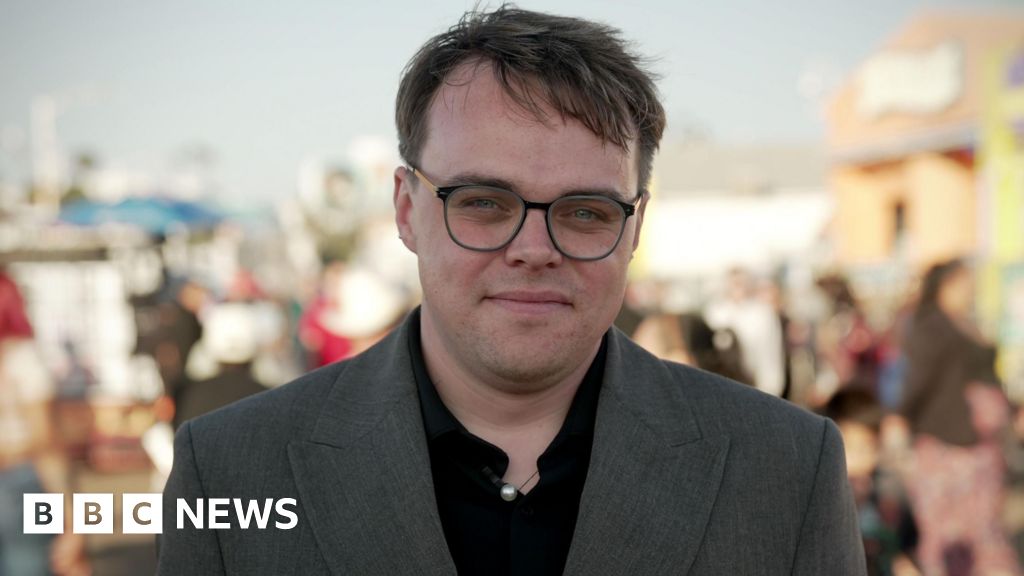
Pavel Talankin, known affectionately as Pasha, embarked on an extraordinary, unplanned journey from the industrial heartland of Russia to the global stage of Hollywood, culminating in an Academy Award for his documentary "Mr Nobody Against Putin." This remarkable ascent saw a man, previously confined to the everyday tasks of a primary school videographer in one of the planet’s most environmentally scarred regions, emerge as a poignant cinematic voice challenging the very foundations of the Russian state’s wartime propaganda. His narrative is a compelling testament to individual courage against systemic pressure, illustrating how an unassuming figure can wield significant influence in the global discourse on freedom and truth.
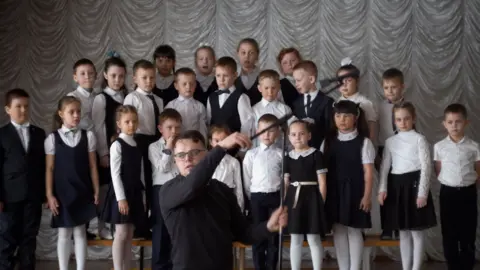
Before the seismic shifts of recent years, Talankin’s world was circumscribed by the borders of Russia, specifically the Ural Mountains, where he resided in Karabash. This town, notorious for its extreme pollution, offered little hint of the international recognition that awaited him. His professional life involved documenting school events – from student performances to graduation ceremonies – a seemingly innocuous role that would soon place him at the intersection of local life and geopolitical conflict. It was in the summer of 2024 that the escalating risks associated with his quiet defiance of President Vladimir Putin’s military apparatus compelled him to seek refuge abroad, marking his first departure from his homeland.
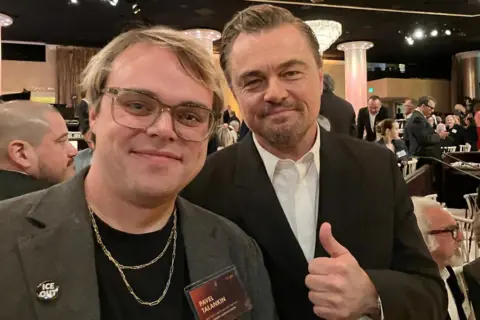
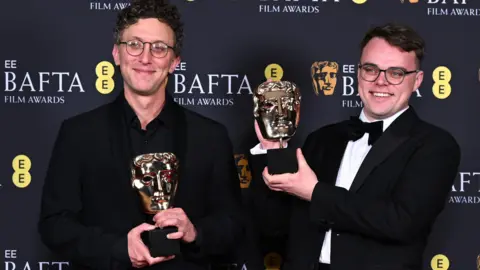
Within an astonishingly brief period of less than two years, Talankin transitioned from his role as an events coordinator and videographer to an internationally acclaimed filmmaker. His documentary, co-directed with the Copenhagen-based American filmmaker David Borenstein, "Mr Nobody Against Putin," garnered significant critical attention, securing the Best Documentary award at the BAFTA Film Awards in February, before ultimately claiming the coveted Oscar for Best Documentary. This dual recognition catapulted him from obscurity to prominence, placing him in the unexpected company of Hollywood luminaries. Prior to his Oscar triumph, Talankin, visibly embracing his newfound status, was observed engaging with leading actors such as Leonardo DiCaprio and Ethan Hawke, capturing selfies that underscored the surreal nature of his journey. His understated observation that "They are just normal people like the rest of us" belied the extraordinary path he himself had trodden, transforming the self-styled "Mr Nobody" into a global "Mr Somebody."
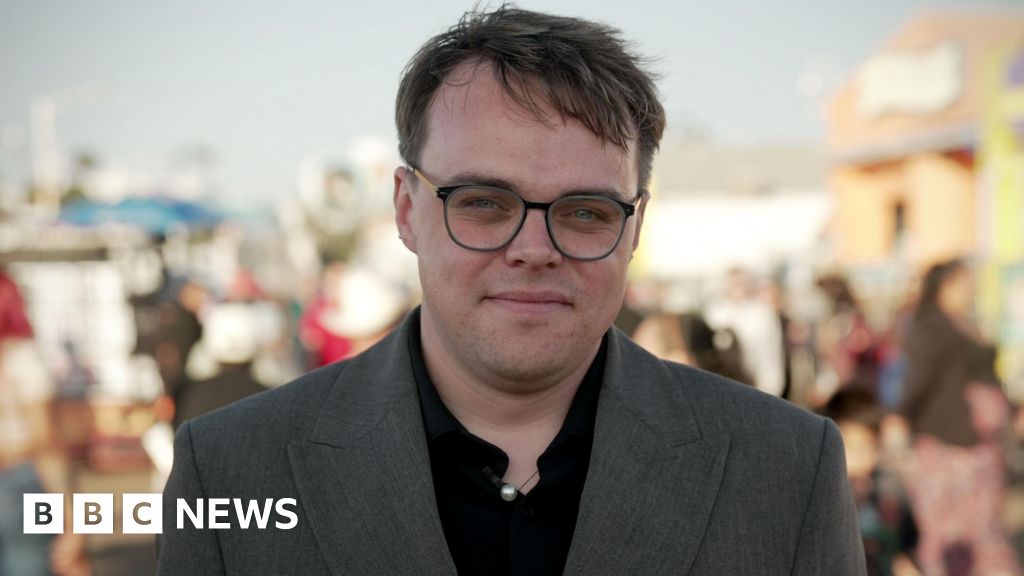
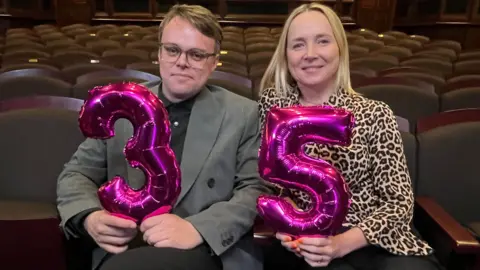
Talankin’s journey to cinematic renown coincided with a personal milestone: his 35th birthday. His arrival at an interview in Los Angeles, adorned with self-purchased pink "3" and "5" balloons, provided a glimpse into the disarming sincerity and unique personality that defines him. His pre-Oscar curiosity about the actual weight of the statuette, contrasting with the lightness of cheap replicas, exemplified his sardonic wit and grounded perspective, which remained intact despite the dazzling allure of Hollywood. The Oscar, for those interested in such details, weighs a substantial 3.86 kilograms – a fitting weight for the gravity of the story it represents.
A defining characteristic of Talankin’s approach, and indeed the film itself, is the strategic deployment of humor, even when confronting profoundly serious subjects. Director David Borenstein noted, "Pasha obviously has used humour as a way of coping with what was happening around him." This observation speaks to a deeper cultural phenomenon: humor as a time-honored mechanism for resilience under authoritarianism. Historical examples, particularly Soviet-era political jokes, illustrate the potent subversive power of comedy in environments where overt dissent is brutally suppressed. This comedic vein in "Mr Nobody Against Putin" serves not merely as comic relief but as an integral narrative device, humanizing the struggle and making the bleak realities more accessible, and ultimately, more impactful.
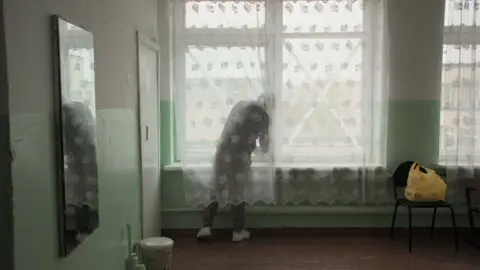
The BBC-commissioned documentary meticulously chronicles the unfolding events following Russia’s full-scale invasion of Ukraine in 2022. It captures Talankin’s initial reluctance to be drawn into the Kremlin’s expanding propaganda machinery, which began to exert its influence directly within the educational system. His responsibilities, once confined to benign school videography, quickly morphed. The war ushered in a new era of state-mandated patriotism, militarization, and civic duty, enforced through rituals such as flag-raising ceremonies and revised curricula. Talankin found himself under explicit instructions to document these activities, providing visual evidence to authorities that the school was adhering to the new, nationalistic directives.
This mandate effectively positioned him as an unwitting "monitor of the teachers," compelling him to record compliance and ensure that educators adhered to the government-approved narratives and materials. The psychological burden of this role, coupled with his innate sense of integrity, fueled a profound internal conflict. It was in this crucible of conscience that Talankin made a perilous, instantaneous decision: to become a filmmaking whistleblower. He began covertly transmitting his raw footage to Borenstein via encrypted channels, a choice made in a surge of "rage" but with far-reaching personal and political consequences. "I didn’t care really," he recounted, reflecting on that pivotal moment. "I thought, let anyone do it, let anyone show this film, let anyone edit it. The main thing is that it exists, to show what is happening."
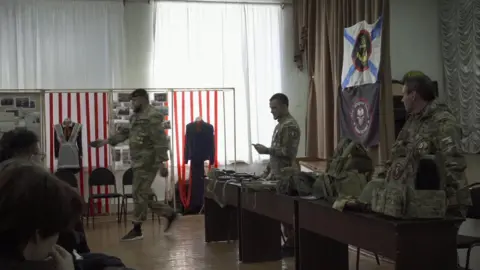
Borenstein underscored the international imperative behind their collaboration, stating, "We thought it was so important for the world to see that Putin obviously has no intention of stopping with just Ukraine… he’s telling the children of Russia every single day that you need to prepare for a future of warfare and Empire." The footage Talankin smuggled out was damning: Wagner mercenary group soldiers instructing children on mine detection and firearm handling, and teachers delivering propagandistic lectures on the "denazification" of Ukraine. These scenes provided an unvarnished, chilling glimpse into the systematic indoctrination of Russia’s youth, transforming schools into conduits for state ideology and militaristic fervor.
Beyond documenting the overt propaganda, the film also bears witness to the human cost of the conflict. It relays the heartbreaking accounts of former students perishing on the battlefield and captures the raw anguish of a mother grieving at her son’s graveside. While the inherent dangers precluded Talankin from filming the funeral directly, he courageously recorded the mother’s harrowing audio, preserving her testimony of profound loss. Interspersed with these grim realities are Talankin’s own subtle, yet potent, acts of resistance. A genuine "prankster," he defiantly altered the pro-war "Z" symbols displayed on school windows into "X"s, symbolizing support for Ukrainian refugees. In another audacious act, he filmed himself lowering the Russian flag from the school flagpole while provocatively blasting Lady Gaga’s rendition of the US National Anthem – a brazen, symbolic rejection of the state narrative.
Despite these acts of profound bravery, Talankin steadfastly refuses to characterize himself as such, maintaining that his actions were "just normal." Borenstein, however, offers a contrasting perspective: "I would describe him as someone that is very brave, someone that feels emotions very, very strongly, someone that is really, really concerned about truth and someone who really, really, really loves his birthday." This dual portrayal highlights the subjective nature of courage, often perceived by the actor as mere necessity, while recognized by others as exceptional.
For the international filmmaking team, ensuring the safety of Talankin and those featured in the documentary was paramount. Borenstein detailed the extensive "security protocols" implemented, driven by "dire assessment[s] of the risks in Russia." The alarming reports of Russian citizens facing severe prison sentences for minor acts of dissent – such as desecrating the national flag, an act Talankin himself committed – underscored the extreme peril involved. "We were scared. He wasn’t scared," Borenstein confessed, highlighting Talankin’s remarkable composure in the face of grave danger. The turning point arrived when a police car was spotted outside his apartment, signaling that his life was imminently at risk and compelling him to flee his homeland.
The documentary captures the tense moments of his escape, as a Russian-speaking producer provided precise instructions: "Before you cross the border, you must delete our secure messaging app. You need to be very careful about how you take your footage past border control. Just be calm. You have a return ticket. They’ll think you are returning in seven days. Just believe in yourself. I think what you’ve done is going to make a big impact." Leaving behind his mother and his familiar life, Talankin now resides in an undisclosed location in Europe, a stark reminder of the personal sacrifices exacted by his commitment to truth. Yet, his resolve remains unbroken. He harbors a clear intention to return, stating, "When the regime has fallen, I am planning to return and be useful." His mother, a school librarian, also features in the documentary, her presence a poignant link to the life he left behind and the community he sought to inform.
Currently, Talankin is dedicated to maximizing the film’s reach. He is aware that "Mr Nobody Against Putin" has resonated within Karabash itself. Following its premiere at the Sundance Film Festival, Borenstein recounted how a digital recording of the film was surreptitiously circulated throughout the town, demonstrating the potent underground network of information dissemination that bypasses state controls. Talankin’s activism is not isolated; he notes that nearly 200,000 teachers departed their positions rather than participate in the state’s indoctrination efforts. He profoundly hopes that his film will serve as a beacon for other Russians who share his convictions, showing them "that they are not alone."
During a reflective moment on Santa Monica pier, under the Californian sun, the grim specter of war intruded once more. Talankin shared the news he had just received: a 19-year-old former student, Nikita, had been killed in Ukraine. "I know him. He is a kind guy and he would never have gone without the propaganda," he lamented, underscoring the insidious power of the state narrative and the tragic, personal costs of its spread. This somber revelation brings a profound weight to his triumph, linking the glamour of the Oscar stage directly to the brutal realities of the conflict he exposed.
In a poignant gesture of solidarity and continued resistance, Talankin has announced that, should "Mr Nobody Against Putin" win the Oscar, the acceptance speech would be collaboratively penned by his former students. This decision ensures that the voices of those directly affected by the propaganda, and those who represent Russia’s future, would resonate on the global stage, amplifying the film’s core message. His declaration, "If we win, it’s going to be their speech," encapsulates the collective spirit of his courageous endeavor, transforming a personal accolade into a powerful, shared act of defiance against a formidable regime. The film now stands as a critical document, available to viewers in the UK via BBC iPlayer, offering a rare, intimate look at the human cost of authoritarian control and the enduring power of individual conscience.

 Ridwan Kamil
 Aura Kasih