Aura Kasih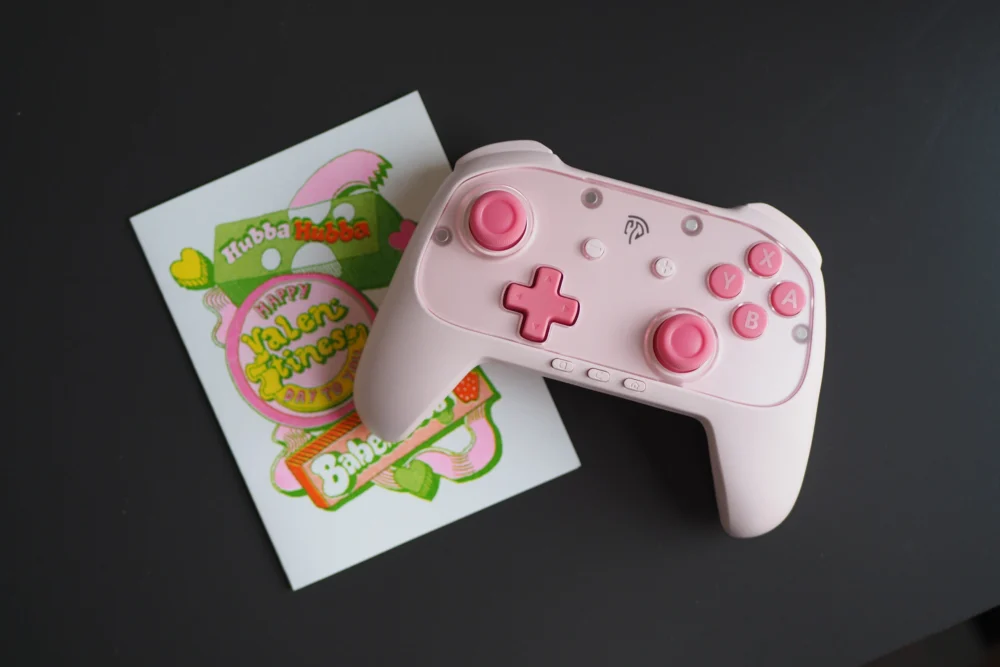
In the ever-evolving landscape of gaming peripherals, EasySMX has once again asserted its dominance in the third-party controller market with the introduction of the S10 Lite. Building upon the success of its predecessor, the S10, which was widely lauded as the premier alternative to the official Nintendo Switch 2 Pro controller, the S10 Lite arrives with a suite of enhancements designed to streamline the gaming experience, though not without a few calculated omissions. This new iteration introduces native console integration, a feature previously exclusive to first-party hardware, promising a more intuitive and seamless connection for Switch 2 owners, while simultaneously refining the user interface for essential functions.

Last autumn, the EasySMX S10 controller cemented its status as a top-tier accessory for the Nintendo Switch 2. Retailing at a competitive price point, often falling below the $50 mark, it ingeniously replicated and even surpassed many of the coveted features found in the significantly more expensive official Switch 2 Pro controller, which commands a $90 premium. The S10 distinguished itself with exceptionally immersive haptic feedback, utilizing TMR joysticks engineered for enhanced durability over Nintendo’s offerings. Furthermore, it boasted comprehensive amiibo support, ergonomic grips, and tactile buttons and triggers that provided a satisfying tactile response. The newly released S10 Lite, while strategically trimming certain functionalities, advances EasySMX’s position by integrating a groundbreaking feature that is poised to become an industry standard.
The S10 Lite represents a significant leap forward, being the first third-party controller to offer native system-level integration with the Switch 2. This departure from the macro-dependent functionalities of other aftermarket controllers, which typically require a convoluted initial setup to enable basic functions like system wake-up, marks a paradigm shift. The S10 Lite, in contrast, is recognized by the console as a first-party device, even masquerading as a Switch 2 Pro controller within the system interface. This native recognition facilitates immediate pairing and allows for remote console wake-up via the Home button, mirroring the convenience of Nintendo’s premium controller. Although EasySMX’s product page initially suggested otherwise, the S10 Lite also demonstrates compatibility with the original Nintendo Switch. However, it is important to note that the controller’s advanced OS-level integration and dedicated GameChat button functionalities are exclusive to the Switch 2 platform.

This native integration extends to a remarkable enhancement in controller customization. The S10 Lite allows users to reconfigure its GL and GR rear paddle buttons directly through the Switch 2’s operating system. This is achieved by simply pressing and holding the controller’s Home button while engaged in a game. This capability is a unique selling proposition, as it is a feature not found on any other non-Nintendo controller currently available. By leveraging the Switch 2’s inherent ability to remember custom GL/GR mappings on a per-game basis, the S10 Lite offers a significantly more streamlined and intuitive customization experience compared to third-party alternatives that necessitate manual button mapping adjustments with every game switch. This sophisticated integration underscores EasySMX’s commitment to providing an uncompromised user experience that rivals, and in some aspects exceeds, that of the official hardware.
The strategic decision to omit certain features in the S10 Lite, while making it a more accessible option, also presents a nuanced choice for consumers. The most conspicuous advantage of the S10 Lite over its predecessor, the S10, and indeed most other third-party controllers, is its native integration with the Switch 2. This allows for a more fluid and responsive connection, eliminating the need for workaround solutions often associated with aftermarket accessories. However, this advancement comes at the cost of some functionalities that were highly valued in the original S10. Specifically, the S10 Lite foregoes amiibo support, a feature that remains a draw for many collectors and players. Additionally, while the S10 Lite’s rumble feedback is still superior to that offered by many competitors, including some from 8BitDo, it does not quite reach the nuanced and impactful quality of the rumble found in the original S10. Another notable difference lies in the joystick technology; the S10 Lite employs Hall effect sticks, which are known for their longevity and resistance to drift, whereas the S10 features TMR sticks, which were also highly praised for their performance and durability. Despite these differences, both Hall effect and TMR technologies represent a significant upgrade over the joysticks found in the official Switch 2 Pro controller, which have been a point of contention for some users due to their susceptibility to wear and tear over time.

Priced at a compelling $39.99, the S10 Lite effectively simplifies core aspects of connectivity and customization, achieving two significant milestones in the process. This simplification, however, is achieved by trading off some of the more desirable, albeit arguably secondary, features found in its sibling. For gamers who prioritize a hassle-free setup and a deeply integrated console experience above all else, the S10 Lite emerges as the more pragmatic and cost-effective choice when compared to the original S10. The elimination of the need for complex initial configurations and the seamless wake-up functionality are undeniable benefits. Nevertheless, the absence of amiibo support and the slightly less refined rumble quality may deter some users who found these features indispensable. The ideal scenario for consumers would be a single EasySMX controller that masterfully integrates all desirable features without compromise. While this perfect convergence has not yet been realized, the trajectory of EasySMX’s product development suggests that such an offering may be on the horizon, further solidifying their position as a leader in the third-party accessory market. The company’s consistent innovation and attention to user feedback indicate a commitment to pushing the boundaries of what can be expected from non-proprietary gaming hardware.
The strategic segmentation of features between the S10 and S10 Lite allows EasySMX to cater to a broader spectrum of consumer needs and budget constraints. The S10 Lite’s primary innovation – its native integration with the Switch 2 – is a testament to the company’s technical prowess and its ability to reverse-engineer and implement system-level functionalities that are typically reserved for first-party hardware manufacturers. This achievement not only benefits consumers by offering a more intuitive and feature-rich experience but also signals a potential shift in the third-party accessory market, where deeper system integration could become a new benchmark for quality and value. The inclusion of Hall effect joysticks in the S10 Lite also addresses a common concern among gamers: stick drift. Hall effect sensors utilize magnetic fields to detect movement, eliminating the physical contact and wear that can lead to drift in traditional analog sticks. This technological choice enhances the long-term reliability and performance of the controller, further justifying its competitive price point.

The implications of EasySMX’s advancements extend beyond mere product improvements. By offering a controller that rivals, and in some ways surpasses, the official Nintendo Switch 2 Pro controller at a significantly lower price, EasySMX is fostering a more competitive market. This competition can drive innovation across the board, encouraging all manufacturers, including Nintendo itself, to continually refine their own hardware and pricing strategies. Consumers ultimately benefit from this dynamic environment, gaining access to higher quality peripherals that are more affordable and offer a wider range of features. The S10 Lite’s success could pave the way for even more sophisticated third-party controllers in the future, potentially incorporating advanced haptic feedback, customizable LED lighting, and even wireless charging capabilities, all while maintaining a competitive edge against official offerings. The company’s consistent ability to deliver robust performance and innovative features at accessible price points solidifies its reputation as a key player in the gaming accessory industry.
The future outlook for EasySMX and its product line appears exceptionally bright. The S10 Lite’s successful integration of native system features is a significant development that could set a new precedent for third-party console accessories. As gaming consoles become more sophisticated, the demand for peripherals that can seamlessly interact with their advanced operating systems will undoubtedly grow. EasySMX’s pioneering approach in this area positions them as a frontrunner in meeting this demand. Furthermore, the company’s willingness to iterate on successful designs, introducing both enhanced and more budget-friendly variants, demonstrates a keen understanding of market dynamics and consumer preferences. The ongoing pursuit of an "ideal" controller that balances all desirable features suggests a long-term vision focused on delivering comprehensive gaming solutions that empower players without imposing prohibitive costs. The market eagerly anticipates EasySMX’s next move, confident that they will continue to redefine expectations for what a third-party controller can and should be.

Photography by Cameron Faulkner / The Verge.



 Lisa Mariana

 Ridwan Kamil