
 Aura Kasih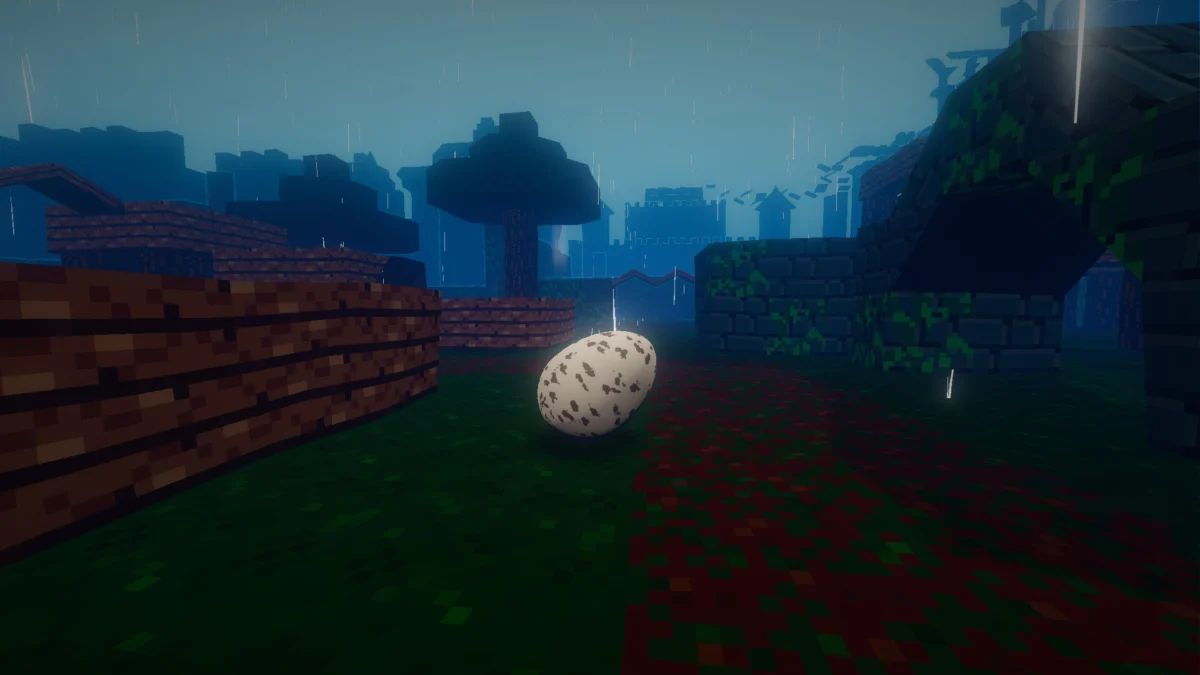
In a digital landscape often characterized by intricate mechanics and elaborate narratives, Increpare Games’ latest offering, Oeuf, presents a refreshing departure, focusing instead on the deceptively simple yet profoundly challenging act of controlling an egg. This physics-based platformer eschews complexity for a singular, compelling premise: navigating its meticulously crafted worlds through the nuanced physics of ovate locomotion. The game invites players to contemplate the fundamental principles of momentum, balance, and inertia, all embodied by a humble, brown-speckled egg.
Oeuf distinguishes itself not only through its core gameplay mechanic but also through its distinctive visual presentation. The game embraces a retro-futuristic aesthetic, rendering its environments in a blocky, ’90s-era 3D style that evokes a sense of nostalgia reminiscent of early polygonal adventures. This stylistic choice, far from being a mere aesthetic flourish, contributes to the game’s overall sense of approachable yet deep gameplay. The juxtaposition of this retro charm with the precise, often demanding, physics simulation creates a unique and engaging player experience. The narrative, if one can call it that, is elegantly sparse: players assume the role of an egg, unceremoniously launched from a church steeple, with the sole objective of returning home. This minimalist approach to storytelling allows the emergent gameplay to take center stage, fostering a pure, unadulterated focus on the player’s interaction with the game’s systems.
The inherent unpredictability of an egg’s movement forms the bedrock of Oeuf‘s challenge. Whether rolling on its side, prone to overzealous momentum, or balanced precariously on its end, offering more stability but less control, the player is constantly engaged in a delicate dance of precise inputs. Success hinges on mastering minute adjustments to build the necessary speed for leaps and, crucially, to arrest that motion before an inevitable tumble. The game’s inherent difficulty is acknowledged with a charmingly understated "oof!" upon failure, transformed into the game’s namesake, "oeuf!" This playful acknowledgment of player struggle underscores a core tenet of Oeuf‘s design philosophy: challenging, yet ultimately fair.
Comparisons to titles like Getting Over It with Bennett Foddy are inevitable, given the shared emphasis on difficult platforming and player perseverance. However, Oeuf distinguishes itself through a more forgiving approach to progression. The inclusion of generous checkpoints significantly mitigates the potential for grinding frustration that can plague similar games, allowing players to maintain a sense of forward momentum without the dread of constant repetition. These checkpoints are not merely a concession to player patience; they are integral to establishing a comfortable and rewarding gameplay rhythm, punctuating tense sequences with moments of respite and allowing for strategic breaks.
A key element of Oeuf‘s masterful design is its deliberate pacing and varied challenge structure. The game adeptly avoids the pitfall of escalating difficulty into monotonous drudgery. Instead, it intelligently intersperses longer, more demanding platforming sequences with shorter, mechanics-focused challenges. This dynamic approach ensures that players remain engaged, experiencing a satisfying sense of progress through a pulsing mix of punishing and more relaxed gameplay segments. Successfully navigating a series of intricate jumps and precise movements often leads to a segment that introduces a novel mechanic or a different type of traversal, such as short, sharp bursts of speed-based challenges on inclines, rewarding players for their mastery of fundamental mechanics.
The player’s experience with Oeuf is inherently subjective and will likely depend on their affinity for specific gameplay styles. Some players may find greater satisfaction in the methodical navigation of lateral crossings and vertical climbs, while others might gravitate towards the more dynamic challenges presented by obstacle courses and momentum-driven puzzles. The game’s inherent variability in challenge is evident in the fact that a particularly demanding section encountered early in the game, involving a series of descending ramps, might prove trivial for one player while another might find a subsequent tree-climbing segment to be far more taxing. This organic diversification of difficulty ensures a personalized and engaging journey for each player.

Crucially, Oeuf demonstrates a sophisticated understanding of player psychology and the delicate balance between challenge and frustration. The game’s carefully orchestrated rhythm is designed to prevent players from reaching a point of outright abandonment. The readily available checkpoints serve not only as markers of progress but also as clear invitations to pause and reassess. Furthermore, the game’s generous approach to maintaining player progress encourages strategic retreats from particularly challenging sections. Stepping away to recompose oneself often leads to a swift and decisive conquest of a previously insurmountable obstacle upon return. This sense of accomplishment is amplified as players then race through subsequent, often faster-paced, sections, a testament to the game’s ability to foster a rewarding cycle of challenge and triumph. This technical self-awareness in game design is a rare and commendable trait, setting Oeuf apart from many of its contemporaries.
Despite its many strengths, Oeuf is not without its occasional technical quirks. While the game excels at demanding precision in its jumping mechanics, some momentum-based puzzles can exhibit a degree of finickiness. In certain instances, the egg’s unique interaction with the ground, particularly when bouncing on its end, can lead to jump inputs feeling slightly unresponsive. This appears to be an emergent property of the game’s physics simulation rather than a fundamental programming flaw, but it can lead to moments of unexpected difficulty.
Further complicating the player’s journey, not all sections are afforded the same level of checkpoint generosity. One particularly arduous segment, demanding navigation across a series of sloping surfaces, presented a significant hurdle across multiple play sessions. The solution, which involved meticulously balancing on the corners of blocks, was clear, yet the unforgiving nature of the obstacle, coupled with the absence of an immediate checkpoint upon completion, created a jarring break in the game’s otherwise consistent rhythm. The subsequent checkpoint, arriving only after a considerably extended sequence of jumps, represented a rare discordant note in an otherwise harmonious design.
However, Oeuf offers a unique and robust solution to potential player bottlenecks through its integrated map editor. This feature not only allows players to craft and share their own custom challenges but also provides an invaluable tool for mitigating frustration. Players can effectively edit particularly vexing sections to be more forgiving, thereby circumventing potential progression impediments. Furthermore, the inclusion of pre-built custom maps offers an alternative avenue for players to decompress and explore different gameplay permutations. This feature, whether intentionally designed as an accessibility tool or an emergent gameplay element, provides a valuable escape route from any perceived loops of frustration.
Ultimately, Oeuf achieves a paradoxical state of being both a demanding platformer and a surprisingly relaxing experience. While moments of intense concentration and perhaps even clenched controllers are inevitable, the game consistently strives to guide the player towards a state of focused calm. The ambient soundtrack, coupled with the naturalistic sound design, creates an atmosphere conducive to deep immersion. The player’s ability to achieve this relaxed state, however, is intrinsically linked to their comfort with precarious situations and their aptitude for fine motor control when faced with the constant threat of tipping into the abyss.
The enduring appeal of Oeuf lies in its fundamentally honest approach to gameplay. With its rapid restarts, surmountable obstacles, and well-placed checkpoints, the game fosters a healthy and constructive relationship with failure. While many games aspire to deeper metaphorical meaning, Oeuf remains refreshingly direct. It is, at its core, a game about the physics of being an egg and the simple, yet profound, joy of navigating a series of platforms. This unadorned fun, executed with such precision and charm, is what makes Oeuf a truly exceptional and thoroughly enjoyable experience.
Oeuf is currently available on Steam.




 Lisa Mariana

 Ridwan Kamil