
 Lisa Mariana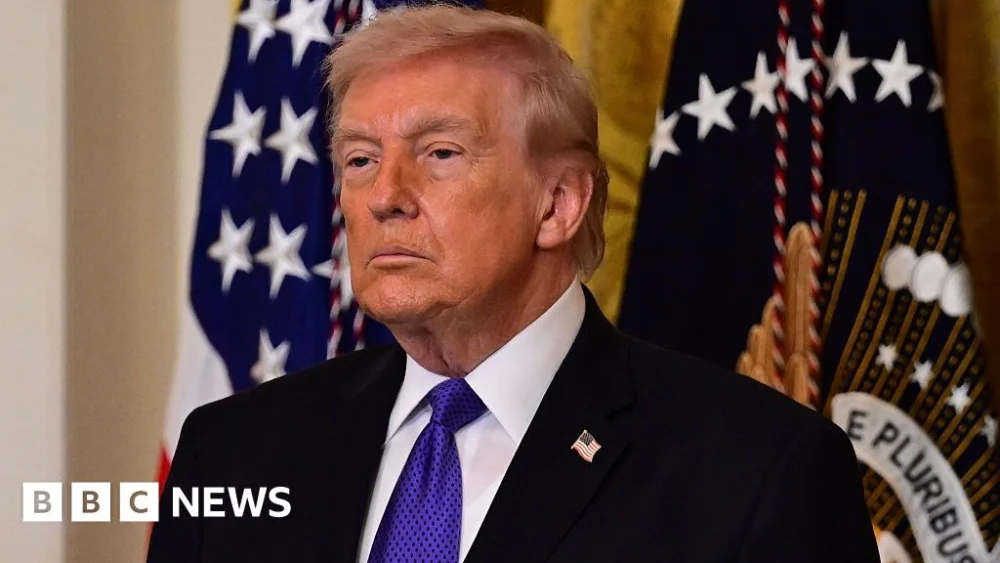
As the United States’ military campaign against Iran enters its critical phase, the precise strategic objectives and the envisioned post-conflict landscape for the Islamic Republic remain shrouded in considerable opacity. Three days into what constitutes the most significant American military engagement in the Middle East in two decades, President Donald Trump and his senior executive branch officials have presented a spectrum of rationales, fostering widespread uncertainty regarding the administration’s ultimate aims and its position on a potential leadership transition in Tehran.
Initially, the stated primary goal of the offensive was the dismantlement of Iran’s nuclear capabilities. However, in the hours and subsequent days following the commencement of hostilities, this foundational rationale has undergone successive reinterpretations. President Trump’s distinctive communication methodology, characterized by rapid-fire social media pronouncements and impromptu telephone interviews with journalists, has served as the principal conduit for signaling his intentions, contributing to an often-contradictory narrative.
During his inaugural public remarks at the White House since the military operation began, President Trump articulated several objectives. He asserted that the US seeks to neutralize Iran’s ballistic missile arsenal, incapacitate its naval forces, eradicate its capacity for developing atomic weapons, and curtail its extensive support for proxy militias across the region. The overarching justification for this military intervention, he posited, was the imperative to safeguard the United States and its regional allies from perceived Iranian aggression. "An Iranian government equipped with long-range missile systems and nuclear armaments would represent an intolerable menace, not only to the Middle East but profoundly to the American populace itself," Trump declared.
Conspicuously absent from these pronouncements, however, was any substantive articulation of Iran’s prospective political future following the cessation of hostilities, or a clear explanation of how the outlined military objectives, once achieved, would definitively eliminate Iran as a threat to US interests. This Monday statement marked a notable divergence from his initial post-strike rhetoric. On Saturday, President Trump had explicitly exhorted the Iranian populace to "reclaim your government," a statement widely interpreted as an implicit endorsement of regime change targeting the long-standing leadership under Supreme Leader Ayatollah Ali Khamenei.
Furthermore, President Trump had publicly lauded the reported demise of Supreme Leader Khamenei over the weekend. Yet, he offered no discernible blueprint or commentary regarding a potential succession plan. In an interview with ABC News on Sunday evening, he remarked, "The strike was so effective it eliminated most of the potential successors. It won’t be anyone we previously considered, as they are all deceased. The individuals in second or third positions are also gone." Such remarks, delivered through unconventional channels, underscore the administration’s departure from established norms of crisis communication and strategic clarity.
The President’s positions have frequently appeared to diverge from those expressed by other high-ranking administration officials. Secretary of Defense Pete Hegseth, for instance, speaking hours before President Trump’s White House remarks on Monday, explicitly disavowed the notion that the US launched attacks against Iran with the direct intent of overthrowing its government. "This is not a so-called regime change conflict," Hegseth stated during a joint press conference with General Dan Caine, Chairman of the Joint Chiefs of Staff, before adding a paradoxical caveat: "but the regime certainly did change."
Secretary Hegseth expressed confidence in the success of "Operation Epic Fury," yet refrained from providing specific details regarding the campaign’s scope or its anticipated duration. This optimistic assessment contrasted sharply with General Caine’s more circumspect evaluation. General Caine cautioned that America’s military objectives in Iran "will prove challenging to attain, and in certain instances, will entail arduous and gritty effort." He also issued a stark warning regarding the potential for additional US casualties as the conflict unfolds. To date, four US service members have tragically perished in retaliatory strikes launched by Iran, targeting various US interests and allies in the region, including installations in Jordan, Bahrain, and the United Arab Emirates.
President Trump has also acknowledged the likelihood of further American losses, framing such sacrifices as a necessary cost for fundamentally reconfiguring the geopolitical power dynamics of the Middle East. He has consistently cast the current conflict within a broader historical context, asserting his intent to dismantle what he characterizes as the foremost adversary to both the United States and Israel in the region. On Monday, the President contended that immediate military action against Iran was imperative, stating, "This represented our final optimal opportunity to strike," without providing an elaborate explanation for this urgency. By Monday afternoon, Secretary of State Marco Rubio presented what appeared to be an alternative justification: the US initiated "pre-emptive" strikes upon learning of an impending Israeli attack, which, in turn, would have inevitably provoked Iranian retaliation against American forces. "We recognized that unless we pre-emptively engaged them before they launched those attacks, we would incur significantly higher casualties," Rubio informed reporters on Capitol Hill prior to briefing key legislators.
This discernible lack of detailed strategy or a coherent plan beyond the immediate aerial campaign has predictably drawn escalating criticism from Capitol Hill. While most Republican lawmakers have publicly rallied behind President Trump, Democratic legislators have voiced profound concerns, arguing that the President lacks a well-defined strategy and warning of the considerable risk of the US becoming entangled in a protracted conflict. Representative Adam Smith, the ranking Democrat on the House Armed Services Committee, stated earlier on Monday to NPR, "The Trump administration has yet to provide any specifics regarding the current status of Iran’s nuclear program." He added, "We have not been presented with any specific intelligence, leading me to conclude there is no credible assertion of an imminent threat emanating from Iran, though Iran certainly poses a problem."
General David Petraeus, former Director of the CIA, acknowledged the killing of Iran’s supreme leader as a "historic achievement" in an interview with the BBC. However, he cautioned against the inherent risks of inciting the Iranian populace to revolt. "Regrettably, in most such scenarios, it is those who possess the most weaponry, command the most loyal enforcers, and demonstrate the greatest willingness for brutality who ultimately prevail," he observed. Petraeus highlighted that the regime’s security apparatus, estimated at approximately one million personnel, has historically demonstrated a readiness to employ lethal force against its own citizens.
Despite these warnings, the retired general, who also commanded US forces in Iraq, expressed skepticism about President Trump deploying ground troops in Iran to achieve his objectives. "No, the President has explicitly stated that will not occur – the Vice-President has reiterated that position. In a sense, I believe they are endeavoring to preemptively reassure the American public that there will not be another prolonged, arduous, and costly conflict akin to those experienced in Iraq or Afghanistan," he elaborated. This stance reflects a perceived lesson from prior engagements where extensive ground commitments led to protracted nation-building efforts and significant human and financial costs.
A substantial portion of the criticism leveled against the administration stems from President Trump’s unconventional approach to public communication during wartime. Historically, presidents have addressed the nation from the Oval Office or other symbolically significant venues to articulate the rationale for committing military forces to combat. President George W. Bush delivered multiple speeches from the White House to build public support for the US interventions in Iraq and Afghanistan. Similarly, President Barack Obama presented a comprehensive argument for his decision to surge US troops into Afghanistan early in his first term. In both historical precedents, the US deployed thousands of ground forces.
In contrast, President Trump has confined the current offensive against Iran primarily to air strikes, consistent with his approach to a separate strike on Iran’s nuclear facilities last year. While he did not explicitly rule out the deployment of ground troops in the future "if they were necessary" during a brief telephone interview with the New York Post on Monday, his overall messaging strategy represents a significant departure from established presidential precedent.
The President announced the initiation of the attack via a video posted early Saturday, subsequently reinforcing his message through Truth Social posts. He further spent the weekend engaging in direct calls with individual reporters and conducting brief interviews, during which he made numerous disparate claims regarding the potential duration of the conflict and his broader strategic aspirations. President Trump’s remarks on Monday were thus keenly awaited by observers seeking insight into his strategic calculus three days into the conflict. However, his comments remained succinct, offering little clarity on the envisioned future for Iran or the broader regional implications. He projected the war’s duration could be "four to five weeks" but also affirmed it could last "as long as it takes." "Whatever the timeframe, it is acceptable. Whatever is required," Trump concluded, leaving the ultimate endgame shrouded in profound uncertainty.
This pervasive lack of a unified, clearly articulated strategy has significant implications. It could undermine international coalition-building efforts, embolden adversaries who perceive internal divisions, and complicate post-conflict planning. The strategic ambiguity, while sometimes employed as a deliberate tactic to keep an adversary guessing, in this context appears to reflect either an evolving and not-yet-fully-formed strategy or a fundamental disagreement within the administration regarding the true objectives of the military campaign. Without a coherent vision, the United States risks not only an extended engagement but also the potential for unintended escalations and a prolonged period of regional instability, the ultimate consequences of which remain largely unpredictable.



 Aura Kasih


 Ridwan Kamil