Aura Kasih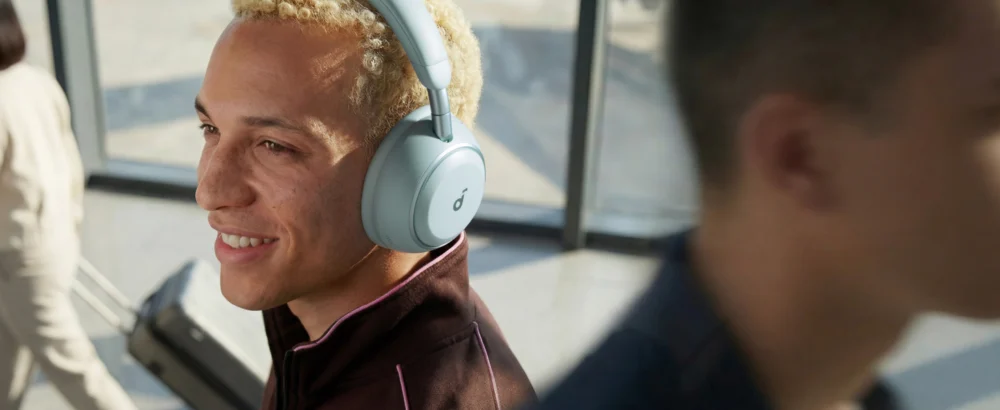
Anker’s audio sub-brand, Soundcore, has officially unveiled the Space 2, a significant evolution of its popular budget-friendly noise-canceling headphone line, poised to redefine consumer expectations at the $130 price point.
The unveiling of the Soundcore Space 2 at MWC 2026 marks a highly anticipated update to the brand’s established Space One model, which garnered considerable acclaim for its impressive performance relative to its initial cost. This new iteration, set for a US market debut on April 21st, will be available in a trio of sophisticated colorways: Linen White, Jet Black, and Seafoam Green. The suggested retail price of $129.99 represents a modest $30 increase over the original Space One, a strategic adjustment that signals a clear intent to integrate enhanced technologies and refined features into the consumer audio landscape.
At the core of the Space 2’s advancements lies a comprehensively upgraded active noise cancellation (ANC) system. Soundcore has engineered a full-band noise cancellation solution, with a particular emphasis on optimizing the attenuation of low-frequency ambient sounds. This focus is directly targeted at the sonic disruptions most commonly encountered by travelers and commuters – the pervasive hum of airplane engines, the rumble of train carriages, and the drone of bus motors. While the Space 2 retains the same microphone count as its predecessor for noise detection, the brand asserts that performance gains have been achieved through meticulous refinement of microphone placement, acoustic structural improvements, and the strategic selection of materials. This approach suggests a sophisticated understanding of acoustic engineering, where subtle adjustments in hardware and design can yield substantial improvements in noise suppression without necessitating an escalation in component count, thereby maintaining a competitive cost structure.
The audio drivers within the Space 2 have also undergone a significant redesign, featuring 40mm units constructed with a dual-layer diaphragm. This innovative design incorporates a silk diaphragm complemented by a metal-ceramic layer. According to Soundcore’s technical specifications, this synergistic combination is engineered to deliver a faster transient response, enabling the drivers to react with greater alacrity and precision to sudden sonic shifts. This enhanced responsiveness is crucial for reproducing intricate musical passages and dynamic soundscapes with superior clarity and detail. Furthermore, this architectural innovation is purported to result in a more harmonically balanced sound profile. The Space One was already lauded for its commendable audio performance within its price bracket, and the prospect of further enhancements in accuracy and fidelity for the Space 2 is a compelling proposition for audiophiles seeking exceptional value. Aligning with the capabilities of its predecessor, the Space 2 will continue to offer support for LDAC high-resolution audio codecs, a feature that significantly elevates the potential for detailed and nuanced audio playback when paired with compatible source devices.
Connectivity for the Space 2 is facilitated by Bluetooth 6.1, offering a robust and stable wireless experience. However, a notable omission in its feature set is support for Auracast transmissions. Auracast, a developing Bluetooth standard designed for broadcasting audio to an unlimited number of nearby devices, represents a significant step towards shared audio experiences. Its absence from the Space 2, while perhaps a concession to cost management or development timelines, may be a point of consideration for users prioritizing future-proof connectivity and the ability to seamlessly share audio with multiple individuals or public broadcasts. For users requiring a fallback option or compatibility with older audio sources, the inclusion of a 3.5mm jack ensures a versatile wired connection.
Battery life has seen a substantial enhancement, with the Space 2 now offering up to 50 hours of playback with active noise cancellation engaged, and an impressive 70 hours when ANC is deactivated. This represents a considerable leap from the 40-hour (ANC on) and 55-hour (ANC off) figures of the Space One. Such extended battery endurance positions the Space 2 as a formidable contender for extended travel or prolonged periods of use without the need for frequent recharging. Complementing this robust battery performance is a rapid charging capability: a mere five-minute charge is sufficient to yield an additional four hours of listening time, a practical feature that addresses the perennial concern of battery depletion during critical moments.
Many of the user-centric features that contributed to the Space One’s success are retained in the Space 2. The integrated HearID 3.0 technology allows users to personalize the headphone’s sound signature through a guided series of audio tests, tailoring the listening experience to individual preferences. This feature proved effective in the Space One for refining the audio output, particularly in mitigating any perceived harshness in the higher frequencies. Additionally, an intelligent wear detection sensor automatically pauses playback when the headphones are removed, ensuring continuity for music and podcasts. A minor point of critique, however, persists from the Space One: the inclusion of a fabric carrying bag instead of a protective hard-shell case. While aesthetically coordinated with the headphone colors, this soft pouch offers less robust protection against the rigors of travel, particularly for users accustomed to transporting their audio gear in packed backpacks or luggage. The absence of a more substantial case remains an area where Soundcore could further enhance the overall value proposition and user experience.
The Soundcore Space One established a strong benchmark for budget-oriented ANC headphones, and its ability to remain competitive against more recent releases is a testament to its inherent quality. With the Space 2’s price point now exceeding the $100 threshold, consumer expectations are naturally elevated. The competitive landscape for ANC headphones continues to evolve, with manufacturers like Sony, EarFun, and JLab consistently introducing compelling options at various price points. The efficacy of the Space 2’s ANC performance, coupled with its continued delivery of the sound quality and comfort that characterized the Space One, will be critical factors in its success. Should the Space 2 successfully navigate these competitive pressures, it is highly probable that it will emerge as a prominent recommendation within consumer electronics reviews and purchasing guides, reinforcing Soundcore’s position as a leading provider of high-value audio solutions. The trajectory of Soundcore suggests a deliberate strategy of iterative improvement, focusing on key performance indicators like noise cancellation and audio reproduction while maintaining an accessible price point, a formula that has consistently resonated with a broad consumer base seeking premium features without an exorbitant investment. The Space 2 represents the latest chapter in this ongoing narrative of democratizing advanced audio technology.




 Lisa Mariana