Aura Kasih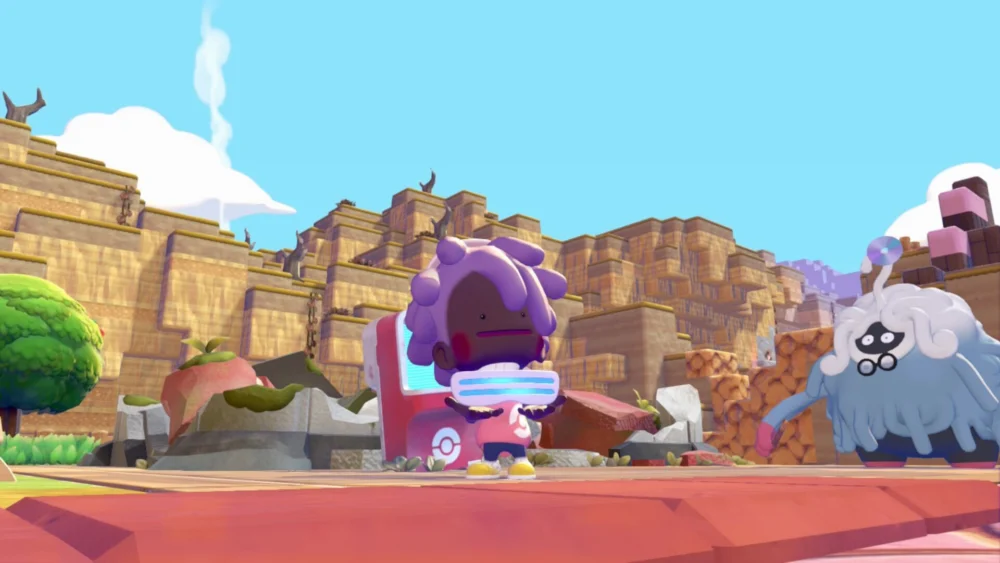
Nintendo has a long-standing tradition of enriching the expansive Pokémon universe through its diverse range of spin-off titles. Games like the beloved Pokémon Snap series and the intriguing Detective Pikachu franchise, while perhaps less action-centric than their mainline counterparts, have excelled at imbuing Pokémon with a tangible sense of life and agency independent of their trainers. This philosophical shift towards Pokémon autonomy is further emphasized in recent mainline entries, such as Pokémon Legends: Z-A, which subtly suggests that the creatures might indeed flourish with a degree of separation from human interference. However, historically, these Pokémon spin-offs have often been contained experiences, offering focused narratives and limited playable areas. This often resulted in a sense of scale that felt somewhat diminutive when juxtaposed with the ambitious scope of Pokémon Pokopia.
Pokémon Pokopia distinguishes itself by drawing significant inspiration from established life simulation giants such as Animal Crossing, Minecraft, and Stardew Valley. Co-developed by The Pokémon Company, Game Freak, and Omega Force, this new life sim skillfully integrates these familiar mechanics, but reinterprets them through a distinctly Pokémon-infused lens, resulting in a fresh and engaging experience. The core premise of Pokopia centers on the gradual cultivation of friendships and the restoration of a shattered world, eschewing the traditional catching mechanics for a more nuanced approach to interspecies relationships. While initially presenting as a slow-paced, character-driven narrative, the game progressively unfolds into a vast, open-ended adventure that players can shape and personalize according to their unique vision.
The player assumes the role of a unique Ditto, separated from its human companion and finding itself adrift in a seemingly desolate world. The Ditto’s sole lingering memory is its trainer’s visage. While the character customization offers a palette of skin tones and hairstyles, fashion choices are initially constrained. Driven by a profound sense of loneliness, the Ditto possesses the innate ability to transform into a duplicate of its former trainer. This mimicry proves sufficiently convincing to reactivate an ancient Pokédex, which relies on facial recognition technology. However, the truly astonishing encounter occurs with a peculiar Tangrowth, who identifies itself as a form of "Professor" and expresses considerable bewilderment at the appearance of a "human."
Unlike the near-tabula rasa presented in Animal Crossing: New Horizons, Pokémon Pokopia immerses the player in a pre-existing, albeit dilapidated, world crying out for restoration. Upon entering the initial biome alongside Professor Tangrowth, it becomes evident that this area was once a charming mountain village, complete with established roads, residences, and a Pokémon Center, all tragically reduced to ruins by an unspecified cataclysm. The potential for reconstruction is palpable, requiring the strategic placement of cubical building blocks of earth, pavement, stone, and vibrant flora. However, the immediate priority is the care of a distressed Squirtle that unexpectedly appears.
The process of imitating the dehydrated Squirtle and learning to utilize its signature "Water Gun" attack serves as the Ditto’s introduction to manipulating the environment through the abilities of other Pokémon. A simple application of water revives the ailing Squirtle, while directing the move towards the barren earth instills new life into dormant vegetation. This newfound capacity for environmental beautification is the catalyst that attracts other Pokémon, fostering friendships and encouraging them to join the nascent community. Within the initial hours of gameplay, Pokopia presents players with the challenge of repopulating the once-barren town with a diverse array of Pokémon, akin to the habitat creation mechanics found in Viva Piñata, by establishing specific environmental conditions.
Pokémon Pokopia immediately engages players with its core gameplay loop, providing a foundational understanding of how its luring, construction, and mood-influencing mechanics interlock to drive the overarching narrative. The reconstruction of vital structures, such as the Pokémon Center and new dwellings, necessitates the recruitment of Pokémon possessing specialized skills. For instance, Pokémon capable of "Bulldoze" are essential for demolition and relocation efforts, while those with "Chop" abilities are required to transform raw lumber into usable building materials. However, before these specialized Pokémon can be recruited, players must first construct suitable habitats that appeal to their preferences, such as dense patches of grass shaded by trees or flowerbeds adjacent to water sources. The more Pokémon players encounter and befriend, the more transformations and unique abilities Ditto acquires. Players must also remain cognizant of an upgradeable "Power Point" gauge, which indicates the remaining uses of Ditto’s abilities before fatigue sets in.
The inherent charm and engaging narrative of Pokémon Pokopia can easily lead players to become engrossed in befriending individual Pokémon. The writing imbues each creature with a level of personality that often surpasses that found in more traditional Pokémon titles. A notable example is a Vespiquen character, who, despite not being a personal favorite, becomes a captivating companion as she diligently gathers honey, expressing amusement at Ditto’s human-like attire. As players invest more time in fulfilling the requests of their burgeoning Pokémon entourage, the creatures begin to affectionately refer to Ditto by its chosen moniker, "Doop," and their overall mood and contentment within the biome demonstrably improve.
As the player delves deeper into Pokémon Pokopia, the sheer breadth of Pokémon requests and the game’s inherent freedom to explore and experiment can lead to delightful detours. Once a player amasses a sufficient inventory of materials and has acquired the necessary abilities, the game presents few barriers to embarking on ambitious construction projects. While distinct biomes are demarcated by impassable boundaries, the expansive maps allow for extensive subterranean exploration and ambitious aerial constructions. Provided that appropriate outdoor habitats are established, Pokémon will naturally migrate to these areas or agree to reside there if escorted.
The ability to unlock certain biomes in any order further contributes to the game’s remarkable flexibility. Anecdotal evidence from colleagues engaged with the title reveals divergent progression paths, leading to unique introductions to various game mechanics and elements. This non-linear approach fosters a sense of personal discovery and replayability.
The sheer scale of Pokémon Pokopia and its encouragement of inter-biome travel present a wealth of engaging activities. However, this expansive nature can also lead to a degree of disorganization. Early in the game, players learn recipes for constructing expanded storage solutions for collected items that may not be immediately needed. The challenge lies in remembering the precise locations of these storage units, as the game lacks a readily accessible system for locating them.
On multiple occasions, players may recall having acquired a specific item requested by a Pokémon, only to be unable to pinpoint its storage location. Similarly, managing the population of a biome becomes more intricate as players undertake renovations of its green spaces and infrastructure. Pokémon may wander independently when not actively tasked with following, which can present an impediment when a specific creature is required for a construction project.
However, a significant portion of Pokémon Pokopia‘s allure lies in observing the whimsical activities the Pokémon engage in during their free time, such as traversing train tracks. While this can occasionally induce a sense of overwhelm, this perceived stress is an inherent trade-off for the game’s unparalleled openness. Drawing parallels with titles like New Horizons and The Legend of Zelda: Tears of the Kingdom, it is evident that construction-focused games possess a remarkable capacity to inspire imaginative creations among players. With Nintendo having strategically slated the release of the next mainline Pokémon title for the following year, players will undoubtedly have ample opportunity to unleash their creativity within the boundless expanse of Pokémon Pokopia.
Pokémon Pokopia is scheduled for release on March 5th for the Nintendo Switch 2.




 Lisa Mariana

 Ridwan Kamil