Lisa Mariana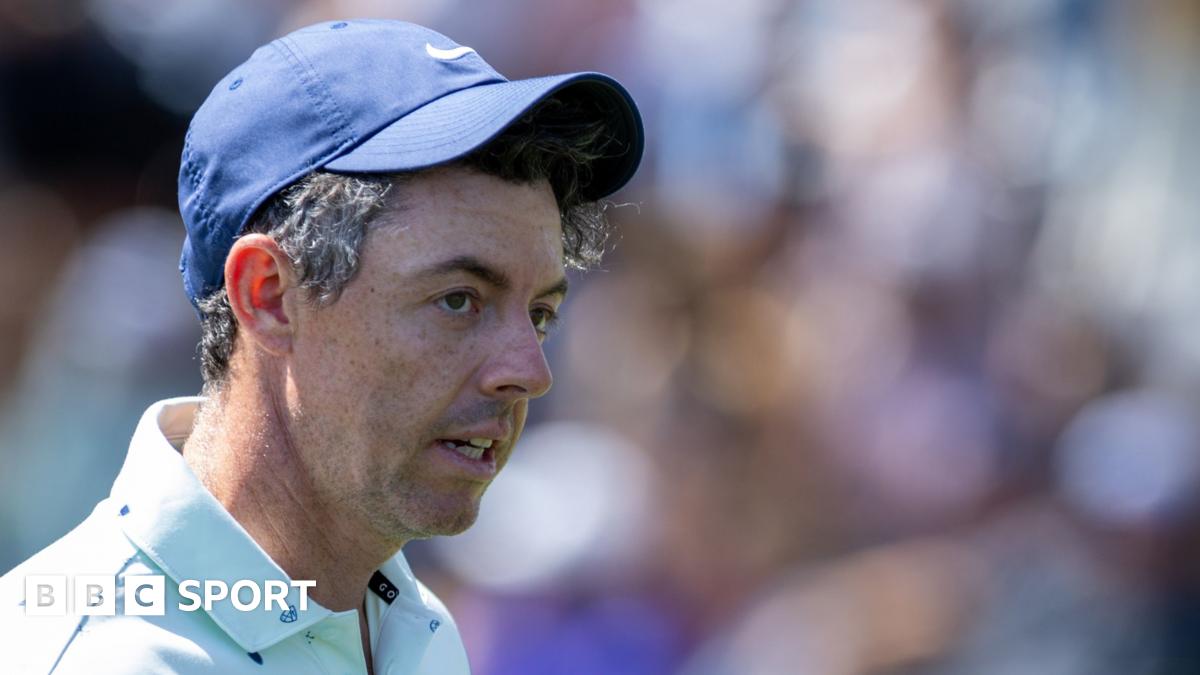
The Players Championship, often lauded as golf’s unofficial fifth major, witnessed a stark dichotomy of fortunes during its second round, with defending champion Rory McIlroy facing an anxious wait to determine his weekend participation while Xander Schauffele delivered a masterclass in precision and aggression to establish a formidable lead at the tournament’s halfway point.
Rory McIlroy, a figure synonymous with major championship contention and a previous victor at TPC Sawgrass, found himself at a precarious one-over-par total following a second-round 71, placing him precisely on the projected cut line. This delicate position underscores a challenging start to his title defense, particularly as he grapples with the residual effects of a recent back injury. McIlroy’s initial assessment after his opening round pointed to a distinct lack of sharpness, a consequence of several days away from the course for recovery. While acknowledging an improved ball-striking performance in the second round, his frustration was palpable regarding his putting, a critical component of scoring at the highest level. The world number two candidly admitted to missing seven birdie opportunities from within twenty feet, a statistic that highlights the fine margins separating a strong round from one merely adequate. For a player of McIlroy’s stature, whose game is built on power and finesse, such a struggle with the short stick represents a significant impediment to ascending the leaderboard. His reliance on a final-hole birdie to even reach the projected cut is a testament to the intense pressure and unforgiving nature of championship golf, particularly when a player is not operating at peak performance. The potential ramifications of missing the cut extend beyond immediate prize money, impacting FedEx Cup standings, world ranking points, and, crucially, psychological momentum heading into the critical phase of the golfing season, including the upcoming major championships where McIlroy seeks to complete his career Grand Slam.
Conversely, Xander Schauffele’s second-round performance was a clinic in controlled aggression and technical mastery, catapulting him to a commanding ten-under-par total and establishing the clubhouse lead. His scintillating round of 65, which featured eight birdies against a solitary bogey, was a testament to exceptional ball-striking, a hallmark of his consistently high-level play. Schauffele’s strategic approach was clear: to attack the challenging Pete Dye design rather than adopt a defensive posture. This offensive mindset was enabled by his unerring accuracy off the tee, evidenced by hitting every single fairway. At TPC Sawgrass, a course renowned for its tight landing areas and penal hazards, maintaining such precision allows a player to approach greens from optimal positions, thereby increasing the probability of aggressive pin hunting. Schauffele also astutely recognized the temporary advantage of softer greens, which allowed for more direct approaches and receptive putting surfaces, though he noted the course was gradually firming up. His consistent excellence, underscored by two previous runner-up finishes at this prestigious event, suggests a profound understanding and affinity for the nuances of TPC Sawgrass. This blend of strategic insight, technical execution, and mental fortitude positions Schauffele as a formidable frontrunner, setting a demanding pace for the remainder of the field. His performance not only places him in a prime position for victory but also reinforces his status as a perennial contender at golf’s most significant tournaments.
The narrative unfolding behind Schauffele’s lead is equally compelling, featuring a blend of rising talents and established stars battling for position. Cameron Young, a player noted for his prodigious power and increasingly refined all-around game, sits one shot back at nine-under-par following an impressive round of 67. Young’s ascendancy in professional golf has been rapid, and his performance at TPC Sawgrass further solidifies his reputation as a significant force. Another notable mover was Corey Conners, whose round of 67, bringing him to eight-under-par, was highlighted by an extraordinary front nine that required only 30 strokes. The Canadian’s precision iron play was epitomized by a remarkable 102-yard wedge shot holed for an eagle three on the ninth hole, a moment of brilliance that underscores the fine margins and potential for dramatic shifts in scoring at this level. Conners’ ability to navigate challenging courses with his characteristic accuracy makes him a constant threat.
Further down the leaderboard, the idiosyncratic nature of golf was vividly illustrated by Jordan Spieth. The former world number one embarked on a sensational run of five successive birdies midway through his round, showcasing the exceptional talent that has defined his career. However, his round concluded with a double-bogey, a disappointing finish that, for the second consecutive day, marred an otherwise strong performance. Spieth’s candid assessment of golf as a "weird game" perfectly encapsulates the emotional rollercoaster and inherent unpredictability of the sport, where moments of sublime skill can be immediately followed by frustrating errors. His final score of 68 left him at three-under-par, a position that reflects both his enduring capacity for brilliance and the ongoing challenge of maintaining consistency throughout 18 holes.
As the later groups commenced their second rounds, attention turned to several other key figures. World number one Scottie Scheffler, the reigning Players champion and a dominant force in recent memory, began his day seeking to rectify an "erratic" level-par 72 from his opening round. Scheffler’s ability to rebound from a modest start is well-documented, and his performance will be closely scrutinized as he attempts to close the gap on the leaders. Joining him in the later wave was England’s Tommy Fleetwood, a consistent performer on the global stage known for his elegant swing and strong short game. Meanwhile, Sweden’s Ludvig Aberg, one of golf’s most exciting young talents, burst onto the scene with an electrifying start to his second round, carding three birdies and an eagle in his opening four holes. Aberg’s rapid ascent through the professional ranks and his fearless approach to championship golf mark him as a player to watch, representing the vanguard of a new generation poised to challenge the established order.
The Players Championship holds a unique position in the professional golf calendar, often referred to as the "fifth major" due to its elevated status, substantial prize fund, and the strength of its field. The challenging nature of TPC Sawgrass, particularly its iconic 17th "Island Green," ensures that drama and volatility are ever-present. The evolution of course conditions, from the initial softness noted by Schauffele to the anticipated firming up of greens, will play a crucial role in determining scoring averages and strategic decisions over the weekend. Firmer greens typically demand greater precision and can make aggressive approaches riskier, potentially shifting the advantage towards players with exceptional short games and putting prowess. The psychological aspect of navigating such a demanding tournament cannot be overstated; the pressure of contending for a title, especially on a course designed to test every facet of a player’s game, can lead to dramatic swings in momentum.
For players like Rory McIlroy, making the cut is not merely about extending his participation; it represents an opportunity to regain rhythm, build confidence, and salvage a respectable finish, which could be vital for his season-long aspirations. Conversely, for leaders like Xander Schauffele, the challenge shifts to maintaining focus and executing under the intense scrutiny that accompanies holding the lead at such a significant event. The weekend promises to deliver compelling narratives, with a blend of seasoned champions, rising stars, and those battling for every stroke, all vying for one of professional golf’s most coveted titles. The Players Championship thus serves as a critical barometer for form and mental resilience, offering profound implications for the players’ trajectories as the PGA Tour season progresses towards its pinnacle events.




 Aura Kasih
 Ridwan Kamil