
 Lisa Mariana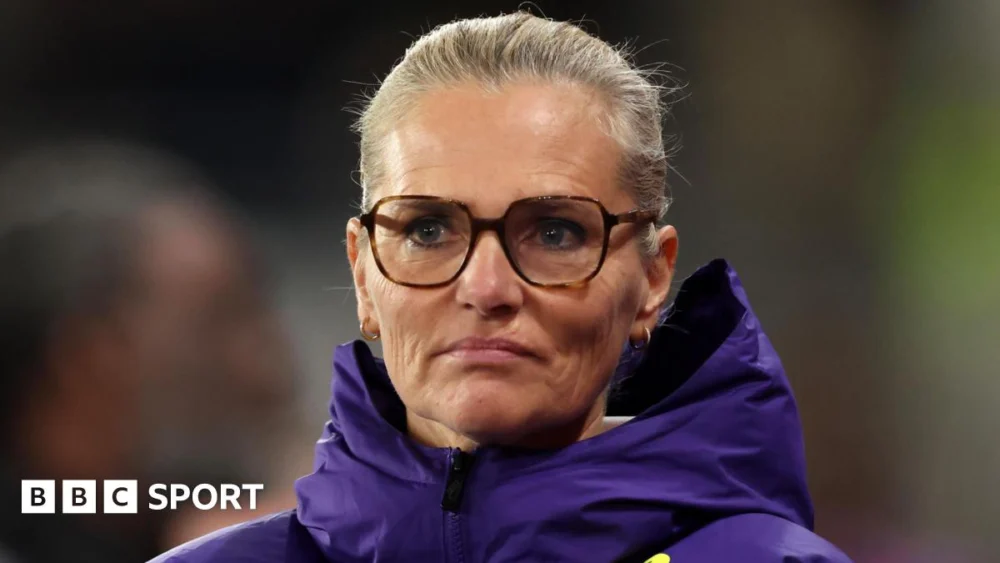
England’s national women’s football team, the Lionesses, has received comprehensive security assurances regarding their upcoming Women’s World Cup qualifier against Ukraine in Turkey, as concerns mount over the escalating geopolitical landscape across the broader Middle East region. The fixture, relocated to Antalya due to the protracted conflict in Ukraine, now takes place against a backdrop of heightened regional instability, prompting detailed safety protocols and continuous monitoring by the Football Association and relevant governmental bodies.
The decision to host the match in Turkey, a nation strategically positioned at the crossroads of Europe and Asia and bordering several countries currently experiencing significant unrest, was initially necessitated by the ongoing five-year conflict between Ukraine and Russia, which has rendered home matches within Ukraine impossible. However, recent days have witnessed a dramatic intensification of tensions throughout the Middle East. Notably, the United States, in conjunction with Israel, executed targeted strikes against Iranian assets, triggering a series of retaliatory actions by the Iranian regime. These responses have included assaults on American interests and allied nations in the region, encompassing Bahrain, Qatar, the United Arab Emirates, Kuwait, and Iraq. The geographical proximity of Turkey to Iran and Iraq, coupled with a recent incident involving an Iranian drone crashing into a British Royal Air Force base in Cyprus, underscores the palpable regional fragility. Furthermore, exchanges of fire between Israel and Hezbollah in Lebanon have contributed to a rapidly evolving and unpredictable security environment.
In response to these developments, Sarina Wiegman, the Lionesses’ head coach, affirmed that the team’s delegation has been in constant communication with both the British government and local Turkish authorities responsible for security. "We have indeed been given robust reassurances," Wiegman stated, emphasizing the meticulous coordination. "Our presence here is continually evaluated, and we maintain an unbroken line of communication with all responsible authorities. While we acknowledge the global concerns arising from current events, the directive is clear: should our government or our security assessments indicate any risk, we would immediately repatriate. As of this moment, no such signals have been received." This proactive stance highlights the stringent risk assessment frameworks in place for international sporting events, particularly when held in regions subject to geopolitical flux. The logistical complexities of relocating an entire national squad, technical staff, and support personnel under such circumstances underscore the gravity of prioritizing participant safety above all other considerations.
The team’s early arrival in Turkey last Wednesday, intended to facilitate an optimal training camp environment, has been overshadowed by these unfolding events. While the facilities and climate in Antalya have been praised for providing an ideal preparation setting, the atmosphere surrounding the match has undeniably shifted. The escalating regional tensions have led to a noticeable impact on planned attendance, with a number of supporters and several media contingents making the difficult decision to withdraw from attending the fixture. This trend reflects a broader public and organizational cautiousness regarding travel to areas adjacent to zones of conflict, even when official reassurances are provided. The economic and reputational implications for host nations and sports federations in such scenarios are considerable, often requiring delicate balancing acts between commitment to fixtures and paramount safety concerns.
Beyond the immediate security concerns, the circumstances of the match serve as a poignant reminder of the enduring human cost of conflict. Wiegman articulated a profound sense of sadness regarding Ukraine’s inability to host the qualifier on their home soil. "It is truly heartbreaking that Ukraine cannot play in their own country," she remarked. "The facilities here are excellent, and the climate aids our preparation, but the underlying reason for our presence here is deeply regrettable. The challenges faced by the Ukrainian people in their homeland are truly horrific. We sincerely hope that this game can serve as a moment of unity, offering Ukraine an opportunity to present themselves to the world through the unifying power of football, potentially bringing some measure of joy amidst their suffering." This sentiment underscores the role of sport as a platform for resilience, solidarity, and a temporary respite from adversity, even when the practicalities of conflict dictate radical adjustments to established sporting norms. The extensive travel burdens placed upon the Ukrainian team, navigating a nation at war, further highlight the extraordinary dedication required to participate in international competition under such duress.
The upcoming fixture against Ukraine is a critical component of England’s campaign to qualify for the 2027 Women’s World Cup in Brazil. Placed in a challenging group alongside Ukraine, Iceland, and Spain, the Lionesses face a demanding qualification pathway where only the top-ranked team secures automatic progression to the global showpiece event. This high-stakes environment necessitates peak performance and strategic acumen from the outset. Midfielder Georgia Stanway, a pivotal figure in the England squad, articulated the team’s unwavering focus on their sporting objectives. "Our primary goal is to secure qualification as swiftly as possible," Stanway affirmed. "However, we also possess a thorough understanding of the intricate process involved in reaching major tournaments like the Euros and the World Cup. We recognize the immense difficulty of this journey. It is imperative that we continuously adapt, evolve, and refine our game, acknowledging that our opposition is consistently improving and raising their own standards." This commitment to continuous improvement reflects the increasing competitiveness within women’s international football, where tactical innovation and physical conditioning are paramount.
Adding another layer of interest to the Lionesses’ camp, Stanway recently announced her decision to depart from Bayern Munich upon the expiration of her contract at the end of the current summer season. This move signals a significant moment in the decorated midfielder’s career, prompting considerable speculation about her next destination. Stanway confirmed that she is "very close" to finalizing her future plans, with extensive discussions reportedly ongoing with Arsenal regarding a potential pre-contract agreement. Such a high-profile transfer would undoubtedly send ripples through the women’s club football landscape, potentially strengthening Arsenal’s formidable squad and further elevating the profile of the Women’s Super League (WSL).
Reflecting on her tenure in Germany, Stanway expressed profound satisfaction: "My time at Bayern has been absolutely incredible, arguably one of the finest decisions I’ve ever made. From the moment I arrived, it felt like home, and I still cherish it deeply. However, I reached a point where I wanted to ensure that my memories of Bayern remain entirely positive. I was determined to avoid any scenario where I might cease to enjoy my experience or feel a sense of fatigue. My aspiration is to continue performing at my best throughout this season and create as many lasting memories as possible." This decision underscores a growing trend among elite female athletes to strategically manage their careers, seeking new challenges and ensuring sustained motivation and enjoyment in a rapidly professionalizing sport. Her departure from a European powerhouse like Bayern Munich to potentially join a leading WSL club like Arsenal exemplifies the increasing fluidity and attractiveness of the top leagues, as players weigh competitive opportunities, personal growth, and professional development in their career trajectories.
In conclusion, the England Lionesses’ presence in Turkey encapsulates a complex interplay of sporting ambition, geopolitical realities, and humanitarian considerations. While prioritizing the safety of its delegation amidst regional tensions, the team simultaneously aims to commence its World Cup qualifying campaign strongly, all while acknowledging the profound challenges faced by their Ukrainian counterparts. The individual career developments of players like Georgia Stanway further highlight the dynamic and evolving landscape of women’s football, both on and off the pitch. The confluence of these factors ensures that the qualifier against Ukraine will be viewed not only through the lens of athletic competition but also as a powerful testament to resilience and the enduring spirit of sport in an unpredictable world.




 Aura Kasih

 Ridwan Kamil