
 Lisa Mariana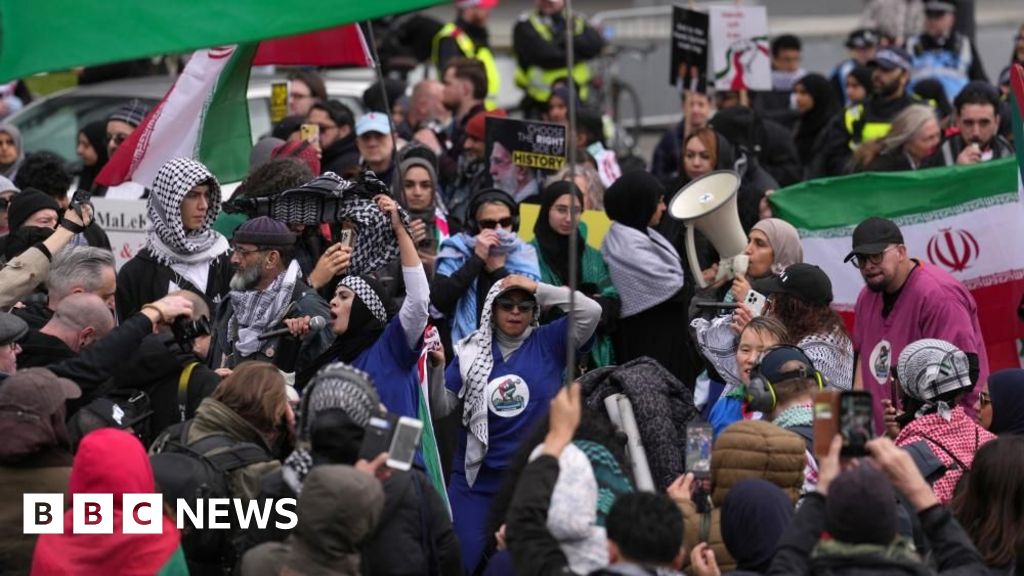
Central London became the focal point of significant public order operations over the weekend, as a controversial annual demonstration marking Al Quds Day, alongside a concurrent counter-protest, resulted in a dozen arrests and necessitated a substantial police presence. The events unfolded under stringent restrictions, with the Home Secretary having sanctioned a ban on the traditional march, compelling organizers to conduct static rallies amidst escalating concerns over public disorder and the potential for inflammatory rhetoric.
The Metropolitan Police confirmed that twelve individuals were taken into custody during Sunday’s demonstrations. The charges spanned a range of offences, including expressions of support for a proscribed organization, affray, dangerous driving, and threatening or abusive behaviour. Authorities also initiated an investigation into specific chants emanating from a speaker at the Al Quds Day rally, acknowledging the profound distress such utterances can inflict, particularly within London’s Jewish communities. The deployment of approximately 1,000 police officers underscored the anticipated volatility, with strategic closures, including Lambeth Bridge, implemented to maintain separation between the opposing factions.
The Genesis and Evolution of Al Quds Day
Al Quds Day, translating to "Jerusalem Day" from Arabic, is an international event observed annually, typically on the last Friday of the Muslim holy month of Ramadan. Its origins trace back to 1979, shortly after the Iranian Revolution, when Ayatollah Ruhollah Khomeini, the founder of the Islamic Republic of Iran, declared the day to express solidarity with Palestinians and to oppose Israel’s control over Jerusalem. For its proponents, it serves as a symbolic call for the liberation of Jerusalem and Palestinian territories. However, for critics, particularly those within Jewish communities and anti-regime Iranian diaspora groups, the day is perceived as a platform for anti-Zionist and often antisemitic sentiments, frequently associated with the geopolitical agenda of the Iranian state.
Globally, Al Quds Day manifests through various demonstrations, with the largest and most officially sanctioned events occurring within Iran itself. In Western capitals like London, these demonstrations frequently attract a diverse array of participants, including pro-Palestinian activists, Islamist groups, and supporters of the Iranian regime. This complex tapestry of participants often leads to significant friction with counter-protesters who advocate for Israel, condemn Hamas, or oppose the Iranian government’s human rights record and regional influence.
The London Context: A Nexus of International Dissent
London, a global city renowned for its historical role as a hub for diverse political expression, routinely hosts protests reflecting international conflicts and human rights issues. The Al Quds Day demonstration in the UK capital has, for many years, been a source of contention. While organizers, primarily the Islamic Human Rights Commission (IHRC), frame it as a pro-Palestinian solidarity event, the Metropolitan Police and various community groups have consistently highlighted its perceived links to the Iranian regime and the potential for the propagation of extremist views.
This year’s event unfolded against a backdrop of heightened sensitivities surrounding the ongoing conflict in the Middle East, amplifying the already potent geopolitical dimensions of the protest. The Met’s assertion that the organizers are "supportive of the Iranian regime" adds a layer of complexity, intertwining the Palestinian cause with the broader regional ambitions and ideological tenets of Tehran. Indeed, numerous attendees at the Al Quds rally were observed displaying Iranian flags and placards conveying messages such as "Choose the right side of history," alongside images of the late Iranian Supreme Leader, Ayatollah Ali Khamenei. The presence of these symbols underscores the multifaceted nature of the demonstration, extending beyond a singular focus on Palestinian rights to encompass a broader alignment with Iranian foreign policy objectives.
The Ban on Marching and the Policing Strategy
The decision by Home Secretary Shabana Mahmood to approve the Metropolitan Police’s request for a month-long ban on the Al Quds Day march marked a significant intervention. This power, rarely exercised, was last invoked in 2012, indicating the severity of the intelligence assessment regarding potential public disorder. Assistant Commissioner Ade Adelekan articulated the police’s rationale, stating that the "risk of public disorder was so severe, we did not have any other choice" but to seek a prohibition on the procession. The Met’s strategy pivoted to facilitating static protests, which were deemed more manageable and effective in preventing direct confrontations between the opposing groups.
The logistical challenge of separating potentially volatile factions was paramount. By containing the Al Quds Day rally on one side of the Thames and the counter-protest on the other, authorities aimed to mitigate direct clashes. The closure of Lambeth Bridge was a critical component of this containment strategy. Following the events, Assistant Commissioner Adelekan expressed satisfaction with the policing operation, noting that "our policing plan worked" and that attendance figures were "significantly fewer… than anticipated," which he posited as validation for the decision to ban the march. This assessment suggests a successful de-escalation of what could have been a far more disruptive and confrontational event.
Contentious Chants and Legal Complexities
The investigation into specific chants made by a speaker at the Al Quds Day rally highlights the perennial tension between freedom of expression and the legal boundaries concerning hate speech and incitement. The Met explicitly acknowledged the "concern footage and chanting like this causes, particularly with London’s Jewish communities." Phrases such as "from the river to the sea" are profoundly divisive, interpreted by many as a call for the eradication of Israel, while "death, death to the IDF" directly targets Israel’s military.
The legal landscape surrounding such expressions is notoriously complex in the UK. The Met’s statement that the Crown Prosecution Service (CPS) had previously determined "insufficient evidence to take a case forward" regarding similar language underscores the high legal threshold required for prosecution. For an act to constitute a criminal offence, it typically needs to demonstrate intent to stir up racial or religious hatred, or to glorify terrorism, among other stringent criteria. The public discourse around these phrases often fails to fully grasp the nuances of legal interpretation, leading to frustration among those who perceive them as unambiguously antisemitic or inciting violence.
The presence of Bobby Vylan, a member of the punk-rap duo Bob Vylan, at the rally further brought this issue into sharp relief. Vylan had previously led similar chants at Glastonbury 2025, which also resulted in police investigation but no criminal charges. These repeated instances underscore the ongoing challenge for law enforcement and legal authorities to balance robust protections for free speech with the imperative to prevent incitement and protect vulnerable communities from hatred and intimidation.
The Counter-Protest: A Coalition of Opposition
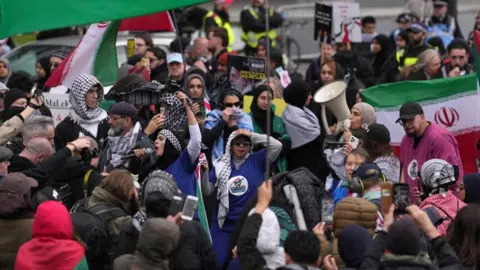
Across the Thames, a robust counter-protest gathered, representing a diverse coalition united in their opposition to the Al Quds Day rally’s messaging and perceived affiliations. Groups such as Stop the Hate, a Jewish-led organization committed to combating antisemitism, were prominent, alongside anti-Iranian regime groups like Lion Guard of Iran and the Free Iran Coalition. This confluence of interests underscored the multifaceted nature of the opposition: condemnation of antisemitism, solidarity with Israel, and rejection of the Iranian government’s ideology and human rights record.
The visual messaging at the counter-protest was direct and unequivocal. Israeli flags were widely displayed, and signs prominently declared "Hamas is terrorist," directly challenging the pro-Palestinian narratives often associated with Al Quds Day. The presence of anti-Iranian regime activists also served to highlight the internal divisions within the broader Iranian diaspora, many of whom seek to distance themselves from the current Iranian government and its international agenda. This counter-demonstration served not only as a retort to the Al Quds rally but also as a powerful assertion of alternative perspectives and allegiances within London’s diverse social fabric.
Implications and Future Outlook
The events of Al Quds Day in London serve as a microcosm of broader global tensions and the ongoing challenges faced by democratic societies in managing public discourse around highly sensitive international conflicts. The Met’s policing strategy, culminating in a march ban and static protests, will likely be scrutinised for its effectiveness in balancing public order with fundamental rights to protest. The relatively low number of arrests, coupled with the police’s assessment of fewer attendees, could be interpreted as a validation of this proactive approach.
However, the ongoing investigation into specific chants and the persistent legal ambiguities surrounding hate speech will continue to fuel debate. The difficulty in securing prosecutions for certain types of inflammatory language, despite its profound impact on community relations, highlights the need for continuous review of relevant legislation and prosecutorial guidelines. The perception of a disparity between the emotional harm caused by certain rhetoric and the legal threshold for criminal charges remains a significant point of contention for many affected communities.
Looking ahead, London can anticipate continued activism and counter-activism surrounding Middle Eastern affairs, particularly given the enduring nature of the Israeli-Palestinian conflict and the geopolitical maneuvering of regional powers. The role of social media in disseminating footage, amplifying messages, and shaping public perception of these events will only grow. For the Metropolitan Police and the Home Office, the management of such demonstrations will remain a delicate balancing act, requiring meticulous intelligence gathering, robust legal frameworks, and a commitment to protecting both freedom of expression and public safety while navigating the complex currents of international politics on the streets of the capital.


 Aura Kasih
 Ridwan Kamil
 Ayu Aulia