Aura Kasih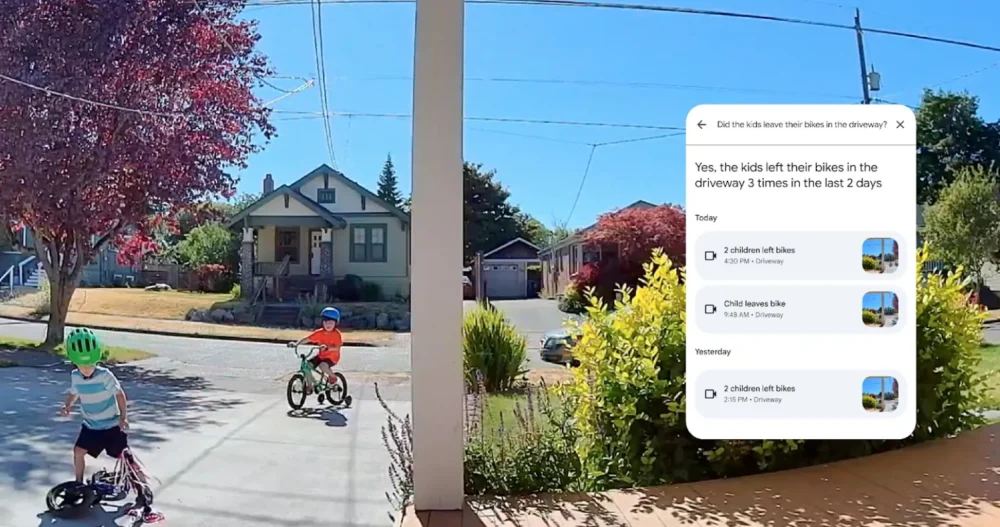
Google is ushering in a significant evolution for its smart home ecosystem, introducing a powerful new capability that allows its Gemini artificial intelligence to interpret and describe live video feeds from connected cameras. This groundbreaking feature, announced by Anish Kattukaran, head of Google Home, represents a leap forward in how users can interact with and leverage their home surveillance systems, moving beyond simple recording to intelligent, contextual understanding of their immediate surroundings.
For years, smart home cameras have primarily served as passive recording devices, capturing events as they unfolded. Users could review footage after an incident or receive motion alerts, but real-time interpretation of visual data by the AI was largely absent. This new integration with Gemini fundamentally alters that paradigm. Instead of merely storing what happens, Gemini can now actively "see" and comprehend the visual information presented by a live camera feed. This allows for a more dynamic and proactive approach to home monitoring, enabling users to ask natural language questions about their environment and receive immediate, intelligent responses based on what the camera is currently observing.
The implications of this "Live Search" functionality are far-reaching. Imagine a user approaching their home and asking, "Hey Google, is there a car in the driveway?" Previously, such a query would be unanswerable by the smart home assistant without a dedicated sensor. Now, Gemini can process the visual input from an exterior camera, identify the presence or absence of a vehicle, and provide an accurate answer. This extends to a multitude of scenarios: checking for unexpected visitors, confirming whether a package has arrived, or even verifying the status of pets or children in a backyard. This capability shifts the smart home from a reactive system to a more predictive and responsive one, enhancing both convenience and security.
This advanced camera interpretation is not a universally available feature. It is integrated into the Google Home Premium’s "Advanced" subscription tier, which comes with a monthly cost of $20 or an annual fee of $200. This pricing structure suggests a premium offering, positioning the real-time AI analysis as a high-value addition for users seeking the most sophisticated smart home experience. The decision to monetize this feature is likely driven by the significant computational resources and ongoing development required to power such advanced AI capabilities.
Beyond the headline-grabbing camera feed analysis, Google is also refining the underlying Gemini models powering the broader Google Home experience. These updates are designed to improve the accuracy and relevance of general AI responses and to enhance the playback of newly released music. This indicates a broader commitment to enhancing Gemini’s overall intelligence and utility within the smart home context, aiming to make interactions more seamless and enjoyable.
A crucial aspect of this Gemini upgrade is its improved understanding of context. This addresses a common frustration with voice assistants: their tendency to misinterpret commands or apply them too broadly. For instance, the ability to differentiate between "turn off the kitchen" and intending to control only the lights in that specific room, rather than every smart device in the vicinity, represents a significant step towards more intuitive control. Previously, such a command might have triggered an unintended shutdown of multiple appliances or devices. The new contextual awareness ensures that commands are precisely targeted, reducing errors and enhancing user confidence in the system’s reliability.
Furthermore, the enhanced contextual understanding extends to location-aware commands. When a user issues a command like "turn off all the lights," Gemini will now intelligently apply this to the user’s current location. This is particularly beneficial for users managing multiple properties, such as a primary residence and a vacation home or a family member’s dwelling. Previously, a command issued at one location might inadvertently affect devices in another, leading to confusion and inconvenience. The updated system now ensures that commands are relevant to the immediate environment, offering a more personalized and accurate smart home experience.

The release notes for these updates provide a comprehensive overview of all the changes, detailing the numerous enhancements and bug fixes that contribute to a more robust and user-friendly Google Home platform. These incremental improvements, while perhaps less flashy than the live camera analysis, are vital for maintaining user satisfaction and trust in the smart home ecosystem. They reflect a continuous effort to refine the user experience, address long-standing issues, and ensure that the platform evolves in line with user expectations.
The strategic integration of Gemini’s advanced AI capabilities into Google Home signals a clear direction for the future of smart home technology. The ability for AI to not only process spoken commands but also to interpret visual data in real-time opens up a vast array of possibilities. This moves the smart home beyond simple automation and voice control towards a more intelligent, perceptive, and proactive assistant that can truly understand and interact with its environment.
From a broader technological perspective, this development aligns with the burgeoning trend of edge AI and the increasing sophistication of on-device processing. While the specifics of where the camera feed analysis occurs—whether on the device or in the cloud—are not detailed, the ability to process visual data in real-time points to advancements in both network infrastructure and AI model efficiency. The successful implementation of such features relies on a delicate balance between processing power, latency, and data privacy.
The implications for home security are particularly profound. The "Live Search" functionality could empower users to remotely monitor their properties with unprecedented detail and responsiveness. For instance, in the event of a security concern, a user could quickly ask Gemini to describe the activity at their front door, potentially providing crucial real-time information that could inform their response or alert authorities more effectively. This moves beyond generic motion alerts to actionable intelligence derived directly from the visual environment.
Moreover, the enhanced contextual understanding of commands has the potential to significantly reduce user frustration. Many users have experienced instances where smart home devices fail to respond as expected or execute commands in unintended ways. By improving Gemini’s grasp of nuance and location, Google is addressing these pain points and working towards a more reliable and intuitive user experience. This is critical for widespread adoption and long-term user engagement with smart home technologies.
The continuous improvement of AI models, as evidenced by the updates to Gemini for general questions and music playback, suggests a commitment to ongoing innovation. As AI technology advances, we can anticipate further refinements to Gemini’s capabilities, potentially leading to even more sophisticated interactions and functionalities within the Google Home ecosystem. This could include more nuanced understanding of human behavior, more personalized automation routines, and deeper integration with other smart devices and services.
The future outlook for Google Home, powered by Gemini, appears to be one of increasing intelligence and integration. The ability to interpret live camera feeds is a significant milestone, demonstrating the potential for AI to bridge the gap between the digital and physical worlds in our homes. As these technologies mature and become more accessible, the smart home will likely transform from a collection of connected devices into a truly intelligent and responsive living environment, capable of anticipating needs and providing proactive assistance. The ongoing evolution of platforms like Google Home, driven by advancements in AI, will continue to shape how we interact with our living spaces and the technologies that inhabit them.




 Lisa Mariana

 Ridwan Kamil