Lisa Mariana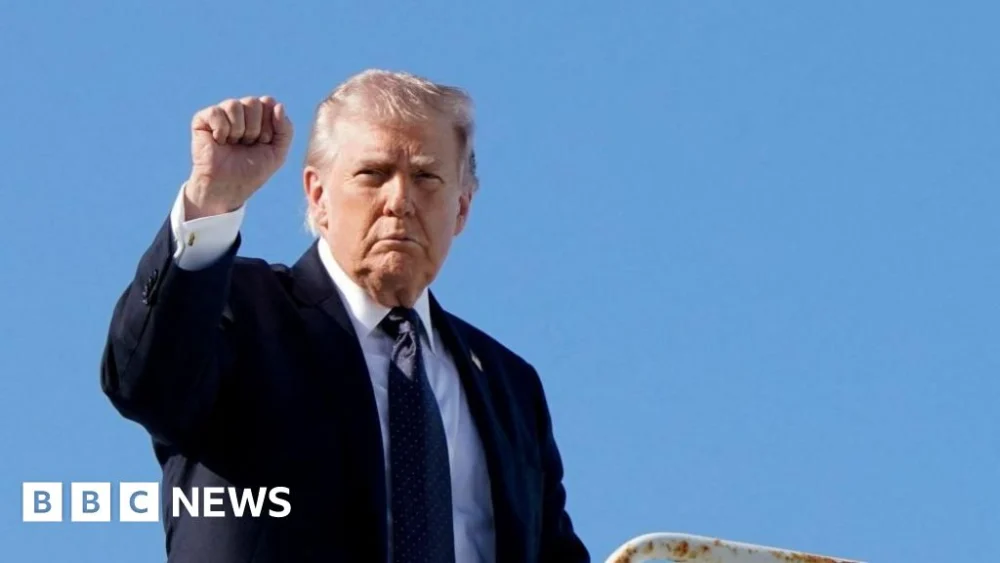
As the United States launched military operations against Iranian targets, the reverberations reached far beyond the Middle East, creating a complex political landscape in Texas, where upcoming primary elections highlight a nuanced blend of unwavering loyalty to former President Donald Trump and underlying anxieties about protracted foreign entanglements. While many prominent Republican figures in the Lone Star State swiftly voiced approval for the executive action, framing it as a necessary show of strength, a quieter current of apprehension regarding the potential for an enduring and costly conflict, reminiscent of previous Middle Eastern "quagmires," underscores the delicate balance Trump must maintain as he navigates both international crises and domestic political aspirations.
The global significance of the American military response to Iran, following escalating regional hostilities, initially registered as a secondary concern in Texas, a state deeply immersed in its own primary election season. With voters heading to the polls to select their Democratic and Republican nominees for November’s congressional elections, the immediate focus for many political candidates and constituents remained on pressing domestic issues. This initial subdued reaction, however, belied the deeper ideological alignment and strategic considerations at play within the Republican base.
At a prominent gathering in Waco, Texas, State Attorney General Ken Paxton, a Republican vying for a U.S. Senate seat, exemplified this dynamic. His address to a conservative audience was predominantly dedicated to traditional red-meat issues: border security, fiscal policy, and Second Amendment rights. While the situation with Iran received a perfunctory mention, framed within a broader message of effecting political change through democratic processes rather than military force, it was clearly not the central plank of his campaign pitch. Yet, when pressed by reporters after the event, Paxton, a staunch loyalist to former President Trump, unequivocally endorsed the military action. "I am very glad that he did it," Paxton affirmed, articulating a common sentiment that Iran represents a significant and persistent threat to national security.
The forthcoming Senate primary battles represent the marquee electoral contests in Texas, featuring highly contested races on both sides of the political spectrum. While Democratic contenders have felt comfortable offering critiques of Trump’s foreign policy decisions, including the recent Iranian operations, their Republican counterparts have largely mirrored Paxton’s approach. A prevailing strategy has been to commend Trump’s decisiveness before pivoting back to more localized or domestically focused campaign themes. Incumbent Senator John Cornyn, also facing primary challengers, echoed this sentiment, characterizing Trump’s actions as "decisive." Similarly, Congressman Wesley Hunt utilized social media to laud Trump for achieving "peace through American strength," a resonant phrase within the conservative movement.
Among the attendees at the Waco rally, a discernible pattern of support for Trump’s firm stance emerged. Marcia Michael, a participant, articulated a widely shared belief that Trump was engaged in a sophisticated, multi-layered strategic maneuver, often termed "five-dimensional chess," to finally confront the long-standing perceived threat posed by Iran. Her perspective reflected a conviction that proactive measures, even if involving immediate sacrifice, were necessary to avert greater future costs. "I think we recognize that we can’t keep playing this game and kicking the can down the road," she stated, adding, "This is the investment we have to make now in blood and tears so that we don’t pay later that same cost in greater numbers." This viewpoint underscores a willingness within a segment of the Republican base to accept military action as a necessary, albeit potentially costly, investment in national security.
However, beneath the surface of vocal support, a vein of apprehension permeated the discussions. The most salient concern centered on the inherent unpredictability of military operations and the potential for unintended consequences. Mark Plough, another attendee, voiced this disquiet, remarking on the perpetual instability of the Middle East. His primary fear was that the United States could become embroiled in another prolonged and resource-intensive conflict, drawing parallels to the protracted engagements in Afghanistan and Iraq. "We don’t want to end up in a quagmire like we were in Afghanistan or even in Iraq," Plough cautioned, articulating a wariness deeply rooted in recent American military history.
Such sentiments could pose a latent challenge for Trump, whose political brand has been carefully cultivated around a critique of "forever wars" in the Middle East. Both during his 2016 and 2024 campaigns, he consistently advocated for an "America First" foreign policy that prioritized domestic concerns and sought to extricate the nation from costly, open-ended conflicts abroad. His communication strategy regarding the Iran strikes has reflected this posture. During a recent State of the Union address, the topic of Iran was relegated to the latter part of his nearly two-hour speech, receiving only a few minutes of attention. Although he subsequently released video statements following the initial strikes, he notably refrained from delivering a comprehensive address to the nation, a customary practice during significant military engagements. This relatively low-key approach suggests an intent to conduct military operations without unduly alarming a public that has demonstrated considerable fatigue with prolonged overseas commitments.
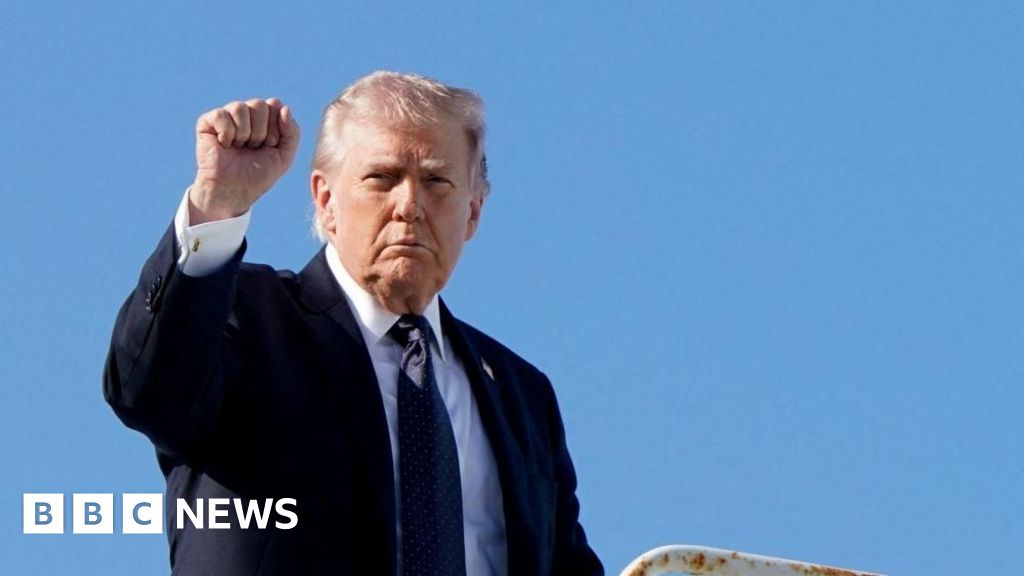
This understated communication strategy may partially explain the muted public response to the Iran strikes and the prevailing belief among many Trump supporters in Texas that the bombing campaign will be relatively brief. Throughout his previous administration, Trump oversaw several targeted military actions, often characterized by their limited scope and duration. For instance, a previous strike on Iranian nuclear facilities was a contained, one-night operation. These past actions have fostered an expectation that, even when military force is deployed, it will be executed with precision and concluded swiftly, avoiding a protracted engagement.
The current strikes, while extending over multiple days—with Trump himself suggesting they could last weeks—are still largely perceived by many as a similarly contained undertaking, expected to conclude without significant lingering adverse effects. Aaron Reitz, a former Marine and Trump administration official who is currently campaigning to succeed Paxton as attorney general, articulated this confidence. "What we’ve seen with this president is he is very deliberate and specific in launching targeted strikes against known high-value targets," Reitz observed, adding, "I trust that the president is not going to want to get us involved in a never-ending ground war." This trust in Trump’s strategic acumen to avoid a drawn-out conflict is a cornerstone of his support base’s rationale for endorsing the current actions.
However, the political fallout from these operations remains inherently unpredictable, with several scenarios potentially complicating Trump’s management of the situation. A significant escalation in global oil prices, translating into higher fuel costs for American consumers and a broader negative impact on the U.S. economy, would undoubtedly capture public attention. This would starkly contrast with Trump’s recent boasts about low pump prices during his State of the Union address, potentially undermining a key economic talking point. Furthermore, any surge in militant attacks targeting American personnel or interests, whether abroad or domestically, would exact a substantial toll on the President’s approval and credibility. The most challenging scenario involves an outcome where the conflict lacks a clear resolution, where hardliners consolidate power in Iran, or where the entire region descends into further destabilization, potentially drawing the U.S. into an even more intricate and perilous entanglement.
Cognizant of these risks, Trump administration officials have diligently sought to frame the military actions as finite and strategically distinct from previous conflicts. Defense Secretary Pete Hegseth, for example, emphasized the targeted nature of the operations, stating, "This is not endless. Our generation knows better, and so does this president. He called the last 20 years of nation-building wars dumb—and he’s right. This is the opposite." This narrative aims to reassure both domestic and international audiences that the U.S. is not embarking on another open-ended intervention.
Yet, the American public’s conviction in this narrative appears less than absolute. Polling data suggests a sharply divided populace regarding the wisdom of these strikes. A Morning Consult survey indicated that 41% of Americans supported the attack, while 42% favored diplomatic efforts. Similarly, a Reuters-Ipsos poll registered 27% in favor and 43% opposed. These figures were compiled before reports emerged of American casualties, and before Trump’s somber warning that further deaths might occur, factors that could significantly shift public opinion towards increased skepticism or opposition.
The general sentiment on the ground often diverges from political rhetoric. Outside the Waco banquet hall, two construction workers, Paul Barbieri and a friend, happened upon the political event. Barbieri, though not intentionally seeking a political gathering, expressed a keen awareness of the Middle East situation. While acknowledging the potential necessity of the attacks, he unequivocally voiced his aversion to American military involvement on foreign soil. "I grew up through the Iraq War for 20-something years," he reflected, "I knew people went and died there. I don’t like war at all." This sentiment, rooted in personal experience and a weariness of prolonged conflict, represents a significant undercurrent in the broader American consciousness, a sentiment that any administration must carefully manage.
Ultimately, Trump faces the intricate challenge of balancing a demonstration of national resolve and military strength with his established anti-"forever war" stance. The political stakes are substantial, particularly as he navigates a challenging election cycle. Should the situation in the Middle East stabilize quickly and align with the administration’s stated objectives, it could bolster his image as a decisive leader. Conversely, if the conflict escalates, leading to sustained casualties, economic repercussions, or broader regional instability, the political ramifications for his campaign could be severe. The complex and volatile nature of the Middle East ensures that the challenges for any U.S. administration remain profound and enduring, with no easy or predictable resolution in sight.



 Aura Kasih
 Ridwan Kamil