Lisa Mariana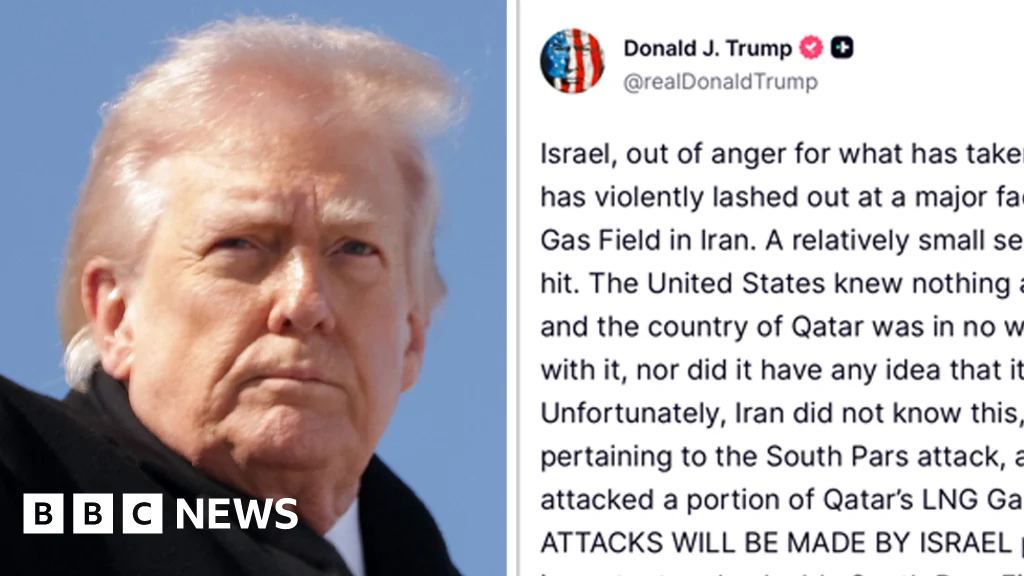
A recent surge in hostilities targeting critical energy infrastructure in the Persian Gulf, culminating in a striking declaration from former US President Donald Trump, has cast a revealing light on the intricate, often opaque, dynamics governing the strategic alliance between the United States and Israel in their shared confrontation with Iran. This latest flashpoint, involving significant gas fields jointly managed by Iran and Qatar, has not only sent ripples through global energy markets but has also intensified scrutiny over the precise degree of strategic synchronization between Washington and Jerusalem as the conflict deepens.
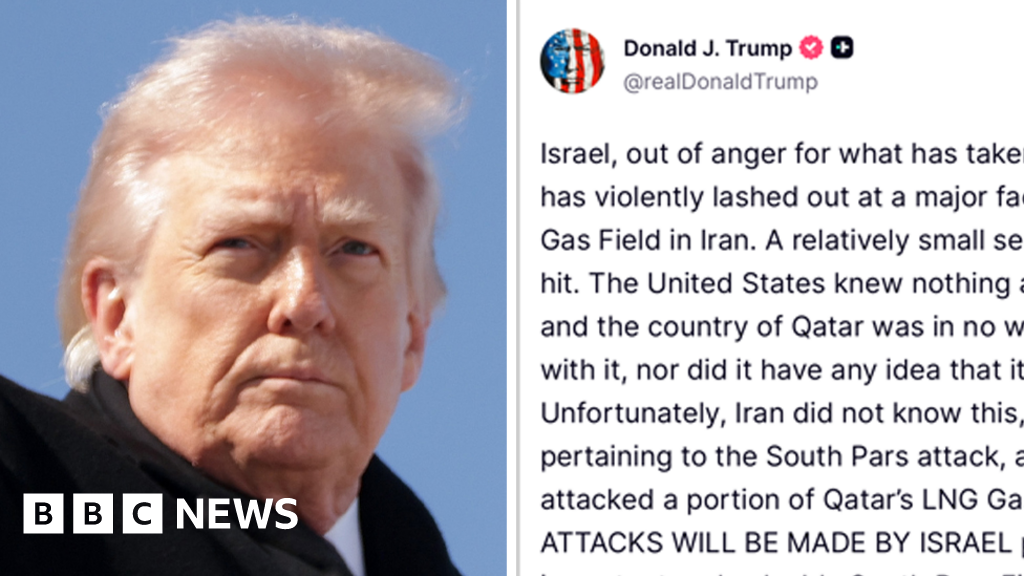
The immediate catalyst for this heightened diplomatic and military attention was a series of attacks earlier this week. Reports indicated an Israeli military operation against Iran’s South Pars gas field, a colossal natural gas reservoir shared with Qatar, which subsequently triggered a retaliatory strike by Tehran against an energy complex located within Qatari territory. In the wake of these events, Donald Trump, utilizing his favored social media platform, issued a characteristically forceful statement, threatening Iran with unprecedented destruction while simultaneously asserting US disengagement from the initial Israeli offensive. This complex and multi-layered statement, delivered through an unconventional channel, necessitates a rigorous analytical dissection to discern the underlying strategic alignments, or potential divergences, between the two principal actors.
The Strategic Nexus of Energy: South Pars and Regional Vulnerability
The South Pars/North Dome gas field is not merely an energy asset; it is a geostrategic linchpin. As the world’s largest natural gas field, its operational integrity is vital to the economies of both Iran and Qatar, and by extension, to global energy supply. An attack on such a facility carries profound economic and political implications, capable of triggering market volatility and exacerbating regional instability. Israel’s decision to target a segment of this critical Iranian infrastructure, reportedly “out of anger” as Trump suggested, signifies a calculated escalation in its campaign against the Islamic Republic. This move, regardless of the precise coordination, demonstrates a willingness to strike at the heart of Iran’s economic lifelines, moving beyond conventional military targets or proxy forces. Iran’s swift retaliation against Qatar’s liquefied natural gas (LNG) facilities, while potentially a misdirected response as Trump implied, underscores the inherent risks of targeting shared resources and the potential for unintended consequences to engulf neutral parties. The ensuing spike in global energy prices serves as a stark reminder of the broader economic fragility tied to Middle Eastern security.
Deconstructing Presidential Declarations: Autonomy or Alliance Strain?
President Trump’s assertion that the United States "knew nothing about this particular attack" directly contradicts multiple reports emanating from Israeli media. Leading Israeli newspapers, including the centrist Yedioth Ahronoth and the right-leaning Israel Hayom, published accounts suggesting that the Israeli strike was not only coordinated but explicitly "agreed upon" between Prime Minister Benjamin Netanyahu and President Trump, with prior discussions involving other Gulf state leaders. This stark discrepancy between the public statements of a key ally and media narratives poses significant questions regarding the transparency and coherence of the alliance’s strategic communication.
Such a divergence could serve several purposes. It might be an attempt by Trump to create plausible deniability, particularly if the US aims to maintain a degree of separation from actions perceived as excessively escalatory. Alternatively, it could signal a deliberate attempt to manage domestic and international perceptions, presenting the US as a reactive rather than proactive participant in specific operations. However, the choice of language used by Trump to describe the Israeli action—"violently lashed out," "out of anger"—is particularly telling. This framing deviates significantly from the standard diplomatic lexicon used to describe a carefully planned military operation by a close strategic partner. Instead, it evokes an image of impulsive, potentially unwise, action. Such phrasing, whether intentional or not, could be interpreted as a subtle rebuke, suggesting a degree of US discomfort with the specific tactical choices or the perceived risk appetite of its Israeli counterpart.
The Imposition of Boundaries: "NO MORE ATTACKS"
Perhaps the most emphatic element of Trump’s statement was his all-caps declaration: "NO MORE ATTACKS WILL BE MADE BY ISRAEL pertaining to this extremely important and valuable South Pars Field unless Iran unwisely decides to attack a very innocent, in this case Qatar." This forceful directive, delivered through a personal social media platform, represents a significant public intervention in an ally’s operational freedom. For a president known for asserting control, this could either be the public reiteration of a private understanding or a direct, unambiguous constraint imposed on Israel.
This sentiment echoes previous reports of Trump’s frustration with Israeli actions during the conflict, particularly regarding earlier strikes on Iranian oil depots. Such public pronouncements from a US president, dictating specific operational parameters to a sovereign military ally, are rare and underscore a potential tension point within the alliance. It suggests that while the US and Israel may be aligned on broad strategic objectives, there might be significant differences in tactical approaches, acceptable levels of escalation, or the precise definition of red lines. The implicit question raised is whether the US, as the more powerful partner, is attempting to rein in what it perceives as potentially destabilizing or overly aggressive Israeli actions, thereby exposing a fissure in the perceived "lockstep" alignment.
Divergent Strategic Objectives: A Question of Endpoint
While Israeli officials, such as Alex Gandler of the Israeli embassy in London, consistently emphasize a profound alignment between the two nations on overarching goals concerning Iran’s nuclear program, ballistic capabilities, and the role of the Islamic Revolutionary Guard Corps (IRGC), a closer examination reveals potential divergences, particularly regarding the ultimate desired outcome.
Israel, under Prime Minister Netanyahu, has consistently articulated a long-standing desire for regime change in Iran. Israeli military and intelligence operations, including assassinations of Iranian leaders and scientists, cyberattacks, and targeting elements of state control like the Basij paramilitary units, appear to be part of a broader strategy to undermine the Iranian regime’s authority and foment internal unrest. As one Israeli official quoted in Yedioth Ahronoth stated, disrupting gas supplies to citizens could "bring the uprising closer," indicating a clear intent to leverage economic hardship for political destabilization.
The United States, while sharing concerns about Iran’s regional destabilization and its military capabilities, appears to harbor a more pragmatic and arguably less ambitious set of objectives. As noted by David Satterfield, a former US special envoy for the Middle East, President Trump is likely seeking a credible declaration of victory that avoids an open-ended commitment to the "quixotic regime change goal" that he believes is unrealistic. US military efforts have largely focused on degrading specific Iranian capabilities—missile and drone forces, naval assets, and targeting of military infrastructure along the Gulf coastline—rather than a comprehensive strategy aimed at internal political upheaval. This distinction suggests that while both nations agree on the imperative to counter Iranian influence and capabilities, their respective definitions of "success" and the acceptable means to achieve it may not be entirely harmonious.
The Qatar Quandary and the Rhetoric of Retaliation
Trump’s statement carefully absolved Qatar of any involvement or foreknowledge of the Israeli strike, emphasizing that Iran’s retaliation against Qatari LNG facilities was "unjustifiable and unfairly" executed because Tehran "did not know the full picture." This framing attempts to de-escalate the situation by removing a neutral party from the equation and potentially offering Iran a face-saving off-ramp, suggesting its actions were based on a misunderstanding rather than deliberate malice towards Qatar.
Qatar, a vital US ally and host to the largest American military base in the Middle East, Al Udeid Air Base, plays a crucial role in regional stability and global energy markets. Protecting Qatar’s neutrality and energy infrastructure is a significant US strategic interest. Trump’s emphasis on Qatar’s innocence could be an attempt to prevent the conflict from broadening further, isolating Iran’s retaliatory actions and preserving the regional coalition against Tehran.
The Ultimate Threat: A Testament to Unilateral Power
The most alarming passage in Trump’s statement was his threat of "massively blow[ing] up the entirety of the South Pars Gas Field at an amount of strength and power that Iran has never seen or witnessed before," should Qatar’s LNG facilities be attacked again. This bombastic rhetoric, a hallmark of Trump’s foreign policy pronouncements, underscores the immense destructive capacity at Washington’s disposal. It serves as a stark deterrent, signaling a willingness to inflict devastating economic and environmental damage on Iran.
Crucially, the phrase "with or without the help or consent of Israel" stands out. This clause is more than a mere stylistic flourish; it is a profound declaration of US autonomy. It could be interpreted as a pointed message to Benjamin Netanyahu, a reminder that while Israel is a valued ally, the ultimate authority for such a catastrophic military action rests solely with the United States. It potentially acts as a corrective, asserting Washington’s prerogative to act independently, particularly in scenarios where Israeli actions might be perceived as overstepping or risking broader US interests. For a domestic audience, particularly elements of the "Make America Great Again" (MAGA) movement who sometimes express skepticism about the extent of Israeli influence on US foreign policy, this clause could serve to reinforce the narrative of "America First" and the president’s ultimate control.
Broader Implications and the Unfolding Conflict
The recent events and President Trump’s subsequent statement highlight the inherent complexities and unpredictable nature of the ongoing conflict with Iran. The direct targeting of critical energy infrastructure, followed by a retaliatory strike, underscores the escalating risk of miscalculation and unintended consequences. Global energy markets remain volatile, and the stability of crucial shipping lanes like the Strait of Hormuz is under constant threat.
For the US, this conflict presents significant foreign policy challenges. The administration faces the delicate task of balancing support for its key ally, Israel, with the imperative to prevent a wider regional conflagration that could destabilize global economies and draw American forces into an open-ended war. Domestically, while support for confronting Iran remains robust in Israel, public opinion in the US is more divided, with support for the war below 50%. The conflict’s trajectory could significantly impact the political fortunes of both Benjamin Netanyahu, who seeks to consolidate power, and Donald Trump’s Republican Party, particularly with crucial midterm elections looming.
Despite the impressive military achievements racked up by the US and Israel in a relatively short period, the conflict is proving to be far more intricate and fraught with unexpected developments than initially anticipated. The "curve balls" of war, as Trump alluded to, continue to challenge strategic planning and force difficult choices. The question of whether the US and Israel truly operate in "lockstep" remains fluid, oscillating between moments of apparent cohesion and instances revealing distinct, sometimes divergent, strategic priorities and operational philosophies. The nuanced interpretation of Trump’s recent pronouncement suggests that while the alliance remains strong, it is also subject to the pressures of an evolving conflict and the distinct political imperatives of its leaders.



 Aura Kasih
 Ayu Aulia