
 Lisa Mariana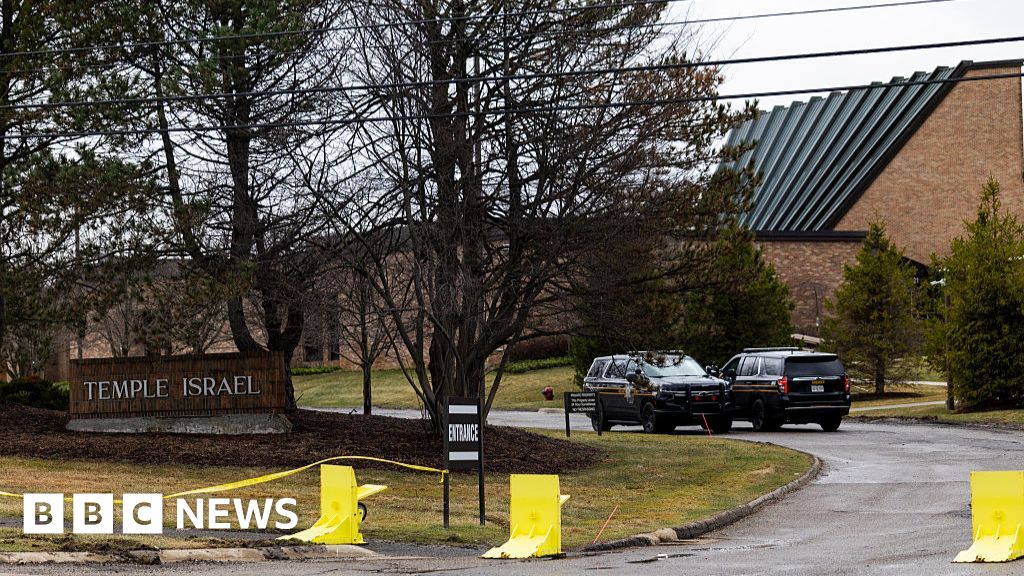
A recent and violent attack on a Michigan synagogue, which saw a vehicle rammed into the building and subsequent gunfire, has taken a complex turn with authorities confirming the assailant had recently endured profound personal loss in an Israeli airstrike in Lebanon. This tragic incident, investigated as a targeted act against the Jewish community, underscores the intricate and often volatile connections between international geopolitical conflicts and the manifestation of extremism within domestic spheres, prompting widespread concern over escalating antisemitism and the critical need for community resilience.
The harrowing events unfolded on a Thursday at Temple Israel, a prominent Reform Jewish synagogue located in West Bloomfield, a suburb northwest of Detroit. Law enforcement officials identified the perpetrator as Ayman Mohamad Ghazali, a 41-year-old naturalized United States citizen who had immigrated from Lebanon in 2011. The sequence of the assault began with Ghazali reportedly waiting in his truck for approximately two hours outside the synagogue premises before initiating the attack. His vehicle, heavily laden with commercial-grade fireworks and multiple containers of flammable liquid, was then driven directly into the building. The impact and subsequent ignition of these materials resulted in a significant blaze, creating a chaotic and dangerous environment for those inside.
During the unfolding chaos, Ghazali engaged security personnel, firing through his vehicle’s windshield. A gunfight ensued between the assailant and law enforcement officers who rapidly responded to the scene. The confrontation culminated in Ghazali’s death from a self-inflicted gunshot wound to the head, as confirmed by the Federal Bureau of Investigation (FBI) in a Friday statement. Miraculously, despite the intensity of the assault, no staff members or children present at the synagogue and its attached preschool were seriously injured. A security guard, however, sustained injuries and is currently receiving medical treatment, with expectations of a full recovery. Several law enforcement officers were also treated for smoke inhalation, highlighting the perilous conditions they faced during the intervention.
The investigation into the incident, spearheaded by the FBI Detroit field office, is actively pursuing the classification of the attack as a targeted act of violence against the Jewish community. While Jennifer Runyan, the special agent in charge, cautioned against premature speculation regarding Ghazali’s precise motive, citing the early stages of the ongoing inquiry, the emerging details paint a complex picture. Dearborn Heights Mayor Mo Baydoun revealed that Ghazali had recently suffered "devastating and personal losses overseas," acknowledging the profound impact of these events while unequivocally stating that they provided "not an excuse" for the synagogue attack. Reports from the BBC’s US media partner, CBS News, further elaborated that Ghazali had lost two brothers, a niece, and a nephew in an Israeli airstrike in Lebanon in early March, a tragedy that occurred just weeks prior to the West Bloomfield incident.
This revelation immediately introduces a significant geopolitical dimension to what might otherwise appear as a domestic hate crime. The conflict between Israel and Hezbollah, frequently escalating along the Israel-Lebanon border, has resulted in civilian casualties on both sides. For individuals with deep familial ties to these regions, such losses can be profoundly traumatic, potentially fostering intense feelings of grief, anger, and a desire for retribution. The psychological impact of losing multiple immediate family members in a foreign conflict, particularly when the individual is an immigrant living in a host country, can be immense. It can create a sense of helplessness and displacement, sometimes leading to radicalization, even in individuals with no prior criminal record or known extremist affiliations, as was the case with Ghazali, who had neither a criminal history nor registered weapons. This scenario aligns with the profile of a "lone wolf" attacker, where personal grievances, often amplified by broader geopolitical narratives, drive an individual to violence, making detection and prevention particularly challenging for security agencies.
The immediate aftermath of the attack saw a unified condemnation from political leaders and community figures. Michigan Governor Gretchen Whitmer characterized the incident as "antisemitism and ‘hate, plain and simple’," asserting the state’s unwavering commitment to combating such "ancient and rampant evil." Her remarks underscored the broader context of rising antisemitism in the United States, urging a reduction in divisive rhetoric across the state and the nation. Senator Elisa Slotkin, a Democrat who grew up in the area and has strong ties to the Jewish community, echoed these sentiments during a press conference. She emphasized that the Jewish community disproportionately experiences hate crimes, suffering ten times the number of such incidents compared to any other demographic group in the country. Slotkin stressed the collective responsibility to confront antisemitism, regardless of its origin on the political spectrum, to prevent its escalation into violence.
The emotional toll on the Jewish community, particularly in the West Bloomfield area, is palpable. Rabbi Jen Lader of Temple Israel described the moments after the attack as "sheer terror," a sentiment amplified by the community’s heightened awareness of its vulnerability. "American Judaism is such these days that every synagogue is a target," Rabbi Lader lamented, highlighting the constant threat perception that mandates extensive security measures. She noted that Temple Israel had proactively implemented training protocols in anticipation of such incidents, a grim testament to the current reality faced by religious institutions. The necessity of maintaining an armed, full-time security team to ensure congregants’ safety was described as a "nightmare," reflecting the profound shift in how places of worship must now operate in an increasingly volatile environment. The fact that the attack specifically targeted a facility that housed young children, with over 100 preschoolers aged zero to five being evacuated, further intensified the community’s distress and fear.
This incident serves as a stark reminder of the complex interplay between global events and local security. The conflict in the Middle East, while geographically distant, frequently reverberates through diaspora communities, sometimes manifesting in domestic acts of violence. The challenge for intelligence and law enforcement agencies lies in discerning between legitimate expressions of political dissent and the potential for radicalization driven by personal tragedy or ideological extremism. It also highlights the critical need for robust interfaith dialogue and community-building initiatives to counteract narratives of division and hatred.
For religious institutions, the attack reinforces the ongoing imperative for enhanced security measures, including physical barriers, surveillance systems, and trained personnel. However, these measures come with significant financial and emotional costs, potentially altering the welcoming and open atmosphere traditionally associated with places of worship. The psychological impact on congregants, particularly children, who now face the reality of potential violence in sacred spaces, is profound and long-lasting.
Moving forward, the FBI’s investigation will delve deeper into Ghazali’s digital footprint, personal contacts, and any potential indicators of radicalization that might have been overlooked. The findings will be crucial not only for understanding the specific motives behind this attack but also for informing broader strategies to counter extremism. Simultaneously, community leaders and elected officials face the formidable task of fostering healing, reassuring anxious populations, and working to de-escalate rhetoric that could further incite division. The Michigan synagogue attack, therefore, stands as a tragic illustration of how international conflicts can metastasize into domestic terror, demanding a multi-faceted response that addresses both immediate security concerns and the underlying socio-political currents that fuel such acts. Until society collectively pushes back against the rising tide of antisemitism and other forms of hatred, the risk of similar incidents continuing to proliferate remains a pressing concern for national security and social cohesion.



 Aura Kasih
