
 Lisa Mariana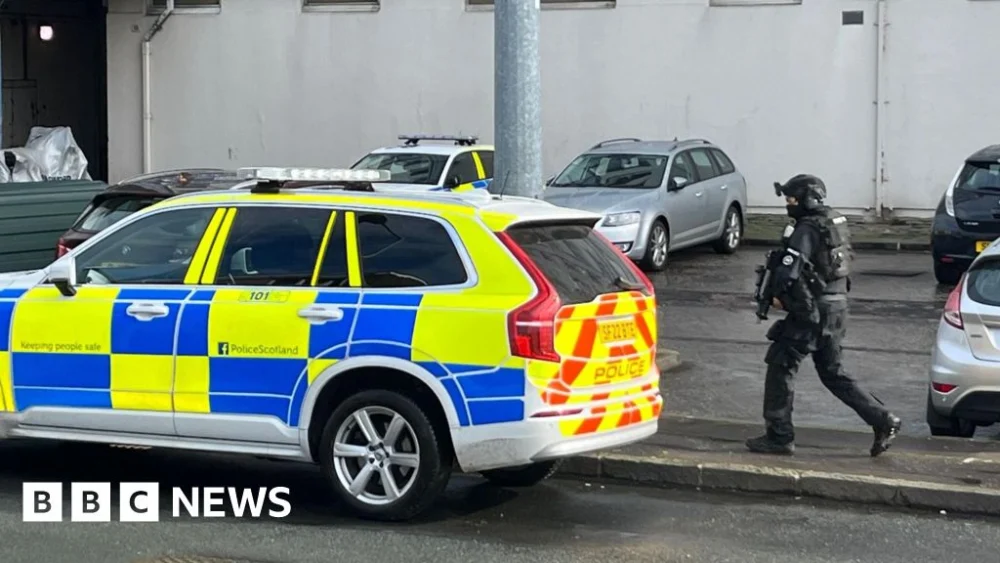
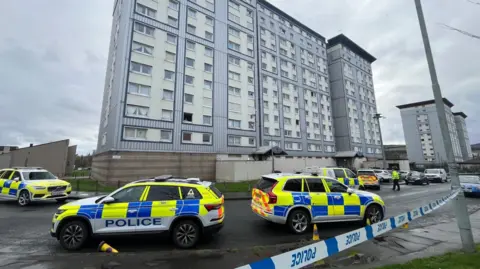
A significant police operation unfolded in Edinburgh’s Calders district on Monday morning after reports of a man brandishing a knife led to two individuals sustaining injuries requiring hospitalisation.
The tranquility of the Calders residential area was abruptly shattered shortly after 8:25 AM when initial calls to emergency services indicated the presence of an individual openly displaying a bladed weapon. This alarming development triggered a swift and comprehensive response from Police Scotland, with specialist firearms units immediately dispatched to the scene, reflecting the heightened threat assessment associated with such reports. The incident, which led to two people being transported to the Royal Infirmary of Edinburgh for medical attention, has prompted extensive police activity, though authorities have moved to reassure the public that there is no perceived wider risk to community safety and that the event is not being investigated as a terror-related incident.
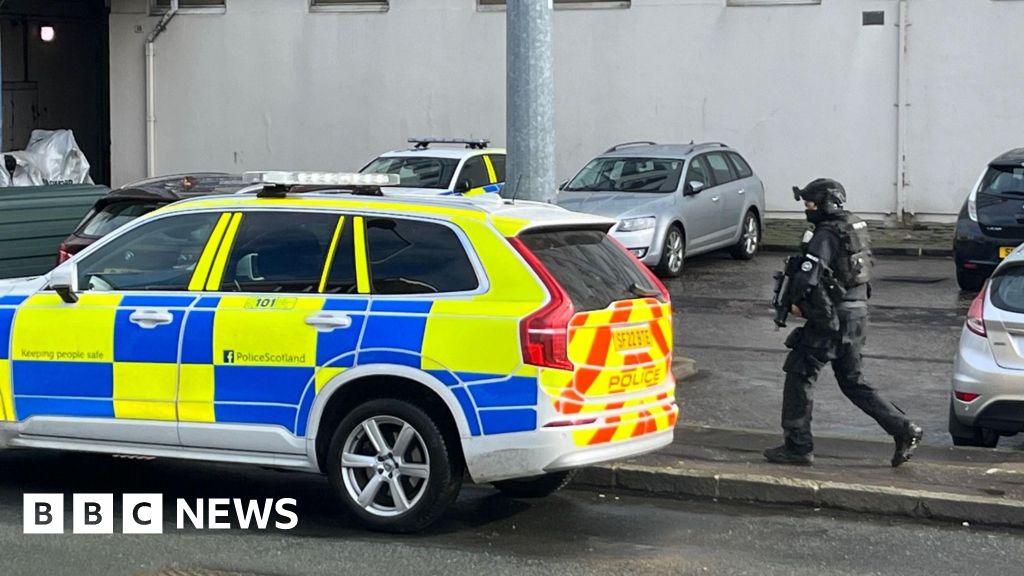
The deployment of armed officers in a civilian area underscores the severity with which law enforcement agencies address threats involving weapons, particularly bladed articles, which can inflict significant harm. Police Scotland’s policy dictates that specialist units, trained in de-escalation and critical incident management, are mobilised when there is a credible threat to life or serious injury from an armed individual. Their presence is not merely about potential use of force but also about providing a visible deterrent, containing a volatile situation, and ensuring the safety of both the public and responding officers.
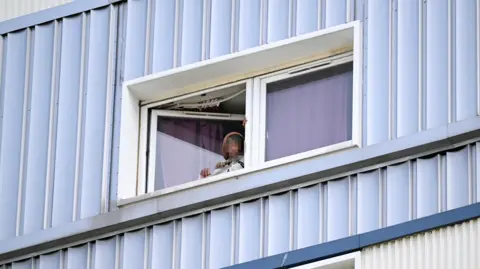
As the situation developed, eyewitness accounts began to paint a more detailed picture. Reports circulated of the individual in question being observed at the window of a flat located on the eleventh floor of a multi-storey residential block. From this elevated vantage point, the individual reportedly interacted with a growing crowd below, prompting law enforcement to expand their established cordon, moving members of the public further back to ensure their safety and maintain a secure perimeter around the affected building. The visibility of the alleged perpetrator within the high-rise structure also meant that residents of other flats within the same building were seen observing the unfolding drama from their own windows, highlighting the immediate impact on the local community.
The digital age, with its ubiquitous connectivity, played a role in disseminating information and imagery related to the incident. Footage purporting to show a man walking in the vicinity while holding two substantial knives, alongside images of a damaged commercial establishment, rapidly circulated across various social media platforms. While such visual evidence can offer immediate insights, it also presents challenges for law enforcement in managing public perception, preventing the spread of misinformation, and ensuring that official channels remain the authoritative source of updates. The damage to a local shop further indicated a potential sequence of events prior to the full police containment, suggesting a period of disruption before the arrival of specialist units.
Local residents were directly affected by the incident’s unfolding. William Ramsay, a resident of the area, conveyed to reporters his belief that the armed individual had gained entry into the stairwell of his own building. He further recounted observations of the alleged perpetrator having "smashed the local shop" and "possibly stabbed two people," albeit acknowledging these details as unconfirmed at the time. His account, which also mentioned the presence of "armed police, dogs been here for about two hours," provided a ground-level perspective of the intensity and duration of the initial police operation. Such direct witness testimonies are critical for investigators in piecing together a comprehensive timeline and understanding the dynamic nature of the events.
Beyond the immediate police response, the incident triggered a broader coordinated effort from various public services. The City of Edinburgh Council, prioritising the safety of its citizens, confirmed the implementation of lockdown procedures across all schools and council buildings within the Calders area. This measure, a standard protocol in serious incidents, aimed to secure vulnerable populations and minimise potential exposure to any residual threat. Concurrently, Lothian Buses announced diversions for its number 20 service, disrupting public transport routes but contributing to the establishment of a secure zone. The Scottish Ambulance Service demonstrated its readiness and capacity by deploying a substantial contingent of resources, including three ambulances, three paramedic response units, and a specialised operations response team, underscoring the potential for multiple casualties and the need for advanced medical support at the scene. This multi-agency coordination is paramount in managing large-scale incidents, ensuring that all aspects – from public safety to medical aid – are addressed efficiently.
Chief Inspector Scott Kennedy, in a brief statement, affirmed the ongoing nature of the operation, noting that "specialist resources, including firearms officers, are in attendance at a property nearby and inquiries are ongoing." This statement, while concise, highlighted the continued active investigation and the strategic deployment of highly trained personnel, indicating that the situation, while contained, was still under active management and investigation. The term "inquiries are ongoing" suggests a complex process of evidence gathering, witness interviewing, and forensic analysis that would follow the initial response.
The context of knife crime in Scotland provides a crucial backdrop for understanding the significance of this incident. While Scotland has seen fluctuations in violent crime rates over the past decades, the issue of bladed weapon offences remains a persistent concern for law enforcement and public health officials. Initiatives such as the Scottish Violence Reduction Unit (VRU), established in 2005, have pioneered a public health approach to tackling violence, aiming to address the root causes rather than solely focusing on enforcement. Factors contributing to knife crime can be complex, often intersecting with socio-economic deprivation, mental health challenges, substance abuse, and perceptions of safety within communities. Although specific motives or circumstances of the Calders incident are subject to ongoing investigation, such events invariably prompt broader discussions about community safety, mental health provision, and the effectiveness of preventative strategies.
The implications of such an incident extend beyond the immediate physical injuries. The psychological impact on direct victims, eyewitnesses, and the broader community can be profound and long-lasting. Residents of the Calders, particularly those in the affected multi-storey block, may experience heightened anxiety or a sense of vulnerability following such a dramatic event. Children attending schools under lockdown may carry memories of the disruption and fear. For law enforcement, managing the aftermath involves not only securing justice but also engaging with the community to rebuild trust and provide reassurance. Public communication becomes critical in mitigating fear and dispelling rumours, ensuring that accurate information is disseminated through official channels.
Looking ahead, the investigation will meticulously reconstruct the events of Monday morning. This process will involve a detailed forensic examination of the scene, including the damaged shop and any areas where the individual was sighted. All available CCTV footage, both public and private, will be reviewed, and witness statements will be systematically collected and corroborated. The individual involved, once apprehended and processed, will face potential charges commensurate with the alleged actions, which could range from assault and possession of a bladed weapon to more serious offences depending on the nature of the injuries and the full scope of the disturbance. The judicial process will then follow, ensuring due process and accountability.
For the Royal Infirmary of Edinburgh, the arrival of two injured individuals necessitates immediate and expert medical care. The hospital’s emergency department and surgical teams are accustomed to handling trauma cases, and their swift response is integral to patient recovery. The severity of the injuries, while not disclosed, will determine the course of treatment and the length of recovery, highlighting the critical role of the healthcare system in the aftermath of violent incidents.
In conclusion, the events in Edinburgh’s Calders area represent a serious breach of public order that required a substantial and coordinated emergency response. While two individuals have been injured and taken to hospital, the swift actions of Police Scotland, including the deployment of specialist firearms officers, alongside the coordinated efforts of the Scottish Ambulance Service and the City of Edinburgh Council, appear to have contained the immediate threat and prevented further harm. The ongoing investigation will aim to bring clarity to the circumstances of the incident and ensure that justice is served, while the community will begin the process of understanding and recovering from the disruption caused by this alarming Monday morning event. The incident serves as a stark reminder of the challenges faced by urban communities in managing violent crime and the dedication of emergency services in responding to such critical situations.



 Aura Kasih


 Ridwan Kamil