Aura Kasih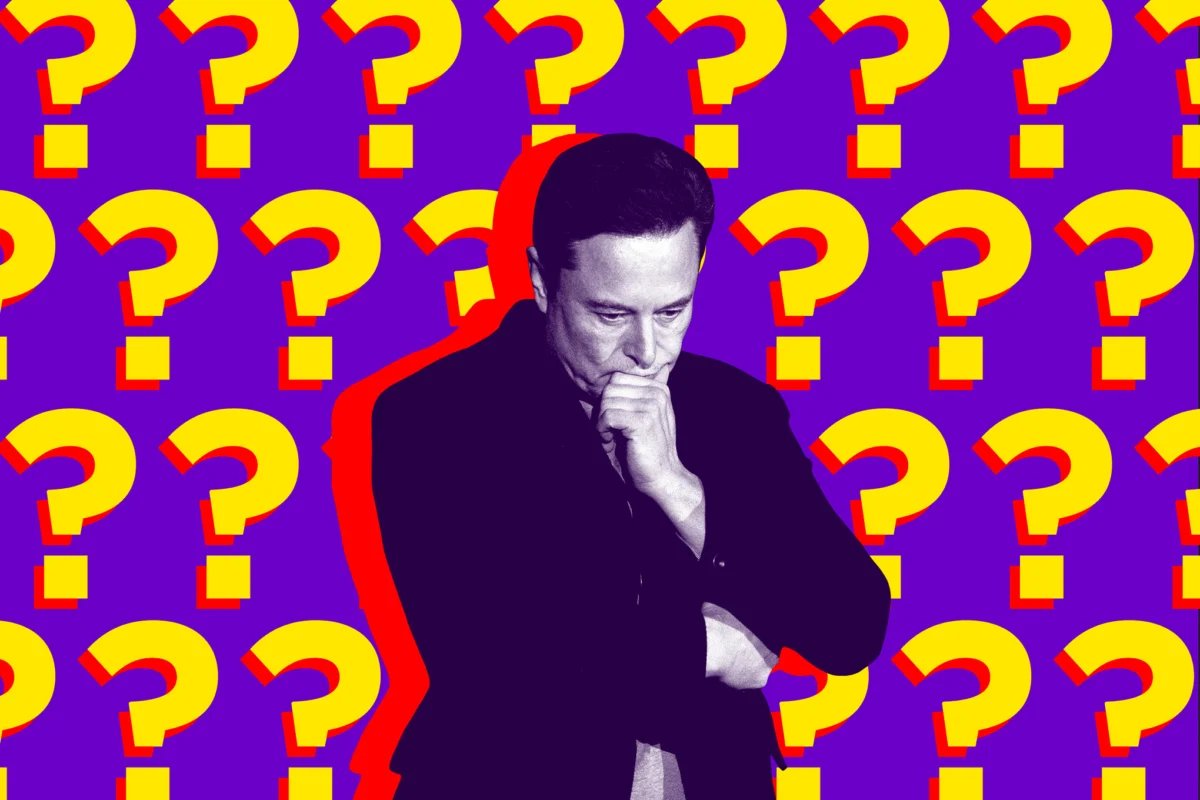
Billionaire entrepreneur Elon Musk has unveiled a groundbreaking initiative to establish a colossal chip fabrication facility, dubbed "Terafab," in Austin, Texas, a venture poised to be jointly operated by Tesla and SpaceX, with the ultimate aim of achieving large-scale chip production for a diverse array of his burgeoning enterprises, including cutting-edge robotics, artificial intelligence, and ambitious space-based data infrastructure.
The burgeoning demand for sophisticated semiconductors, particularly driven by the exponential growth of the artificial intelligence sector, has become a focal point of concern for industry leaders worldwide, including Musk. The current global chip industry, while advanced, is facing unprecedented pressure to scale its output to meet these insatiable needs. However, the undertaking of constructing a semiconductor fabrication plant, commonly referred to as a "fab," is an endeavor of immense complexity, demanding billions of dollars in capital investment, a protracted development timeline spanning many years, and the procurement of highly specialized, state-of-the-art equipment. Adding another layer of scrutiny to Musk’s announcement is his admitted lack of direct experience in semiconductor manufacturing and a historical pattern of setting highly ambitious goals and timelines that have sometimes proven challenging to meet.
Musk articulated the strategic imperative behind the Terafab project, stating that the decision to proceed was a necessity dictated by the sheer volume of chips required for his companies’ future advancements. He outlined a vision where this facility would eventually be capable of producing chips sufficient to power computing capabilities equivalent to 200 gigawatts annually on Earth, with an even more staggering capacity of one terawatt for applications in space. While specific details regarding the projected computing power output were provided, a definitive timeline for when the Terafab would achieve these ambitious targets, or even when construction would commence, remains unstated.
This strategic move by Musk into the highly capital-intensive and technically demanding realm of semiconductor manufacturing signals a significant escalation in his efforts to achieve vertical integration across his diverse technological empires. Tesla, already a major consumer of advanced chips for its electric vehicles and autonomous driving systems, stands to benefit immensely from a dedicated, in-house chip production capability. This would grant Tesla greater control over its supply chain, reduce reliance on external foundries, and potentially accelerate the development of next-generation automotive technologies. The prospect of custom-designed chips tailored specifically for Tesla’s unique operational requirements, from AI processing for Autopilot to power management systems, becomes a tangible reality with the Terafab.
SpaceX’s involvement underscores the critical role of advanced computing in its ambitious space exploration and communication endeavors. The company’s Starlink satellite internet constellation, for instance, requires vast quantities of high-performance chips for its satellites and ground infrastructure. Furthermore, Musk’s long-term vision of establishing space-based data centers, capable of providing robust and secure computing power beyond Earth’s atmosphere, necessitates a self-sufficient and scalable chip manufacturing solution. The Terafab could become the linchpin for realizing these futuristic concepts, enabling the development of specialized chips optimized for the unique environmental conditions and computational demands of space.

The broader implications of Musk’s foray into chip manufacturing extend beyond his immediate companies. The semiconductor industry is a cornerstone of the global economy, underpinning virtually every modern technology. A new, large-scale fab entering the market, particularly one driven by such a prominent and forward-thinking entrepreneur, could introduce new dynamics and potentially challenge existing market structures. However, the barriers to entry are formidable. The design and manufacturing of leading-edge semiconductors involve intricate processes, requiring decades of accumulated knowledge, specialized engineering talent, and access to extremely pure materials and advanced lithography equipment. Companies like TSMC (Taiwan Semiconductor Manufacturing Company), Samsung, and Intel have spent generations perfecting these capabilities.
The technical challenges are immense. Chip fabrication involves hundreds of precise steps, from photolithography to etching and doping, performed in ultra-cleanroom environments. Even minor contaminants can render an entire batch of chips unusable. Achieving yield rates that make production economically viable is a continuous process of refinement and innovation. Moreover, the capital expenditure for a state-of-the-art fab can easily run into tens of billions of dollars, with ongoing operational costs for maintenance, research and development, and skilled labor also being substantial.
Musk’s announcement, while ambitious, prompts questions about the technological roadmap and the specific types of chips the Terafab will focus on. Will it aim to produce general-purpose processors, or will it specialize in application-specific integrated circuits (ASICs) for AI, neural networks, or other niche applications? The latter might be a more attainable initial goal, leveraging the immediate needs of Tesla and SpaceX. The sheer scale of "200 gigawatts per year of computing power on Earth" and "a terawatt in space" suggests a focus on high-density, power-efficient chips that can handle massive parallel processing, indicative of AI workloads.
The Austin, Texas location is a strategic choice. Texas, and Austin in particular, has become a burgeoning hub for technology and advanced manufacturing, attracting significant investment and talent. The state offers a favorable business climate and a growing ecosystem of related industries, which could be advantageous for attracting the necessary workforce and supply chain partners. However, securing the highly specialized talent pool required for semiconductor manufacturing will be a critical challenge, as competition for experienced engineers and technicians is already fierce globally.
The historical context of Musk’s ventures often involves ambitious pronouncements followed by a relentless pursuit of their realization. While he has a track record of overcoming seemingly insurmountable obstacles, the semiconductor industry presents a unique set of challenges that demand a deep understanding of intricate scientific and engineering principles. His success will likely depend on his ability to attract and retain world-class talent in semiconductor design and manufacturing, and to foster a culture of meticulous execution and continuous improvement within the Terafab operations.
The potential impact of a successful Terafab initiative could be far-reaching. It could reduce the reliance of his companies on external chip suppliers, thereby mitigating supply chain risks and potentially lowering costs. It could also accelerate innovation by allowing for the rapid iteration and customization of chip designs to meet the specific needs of emerging technologies. On a broader scale, if successful, it could signal a shift in the global semiconductor landscape, with new players emerging to meet the growing demand for advanced computing power. However, the path from announcement to full-scale production is long and fraught with technical, financial, and operational hurdles. The world will be watching closely to see how Elon Musk’s ambitious Terafab vision unfolds in the heart of Texas. The endeavor represents a significant bet on the future of computing and a bold statement about the potential for in-house semiconductor manufacturing to drive technological progress.



 Ridwan Kamil
 Lisa Mariana