Aura Kasih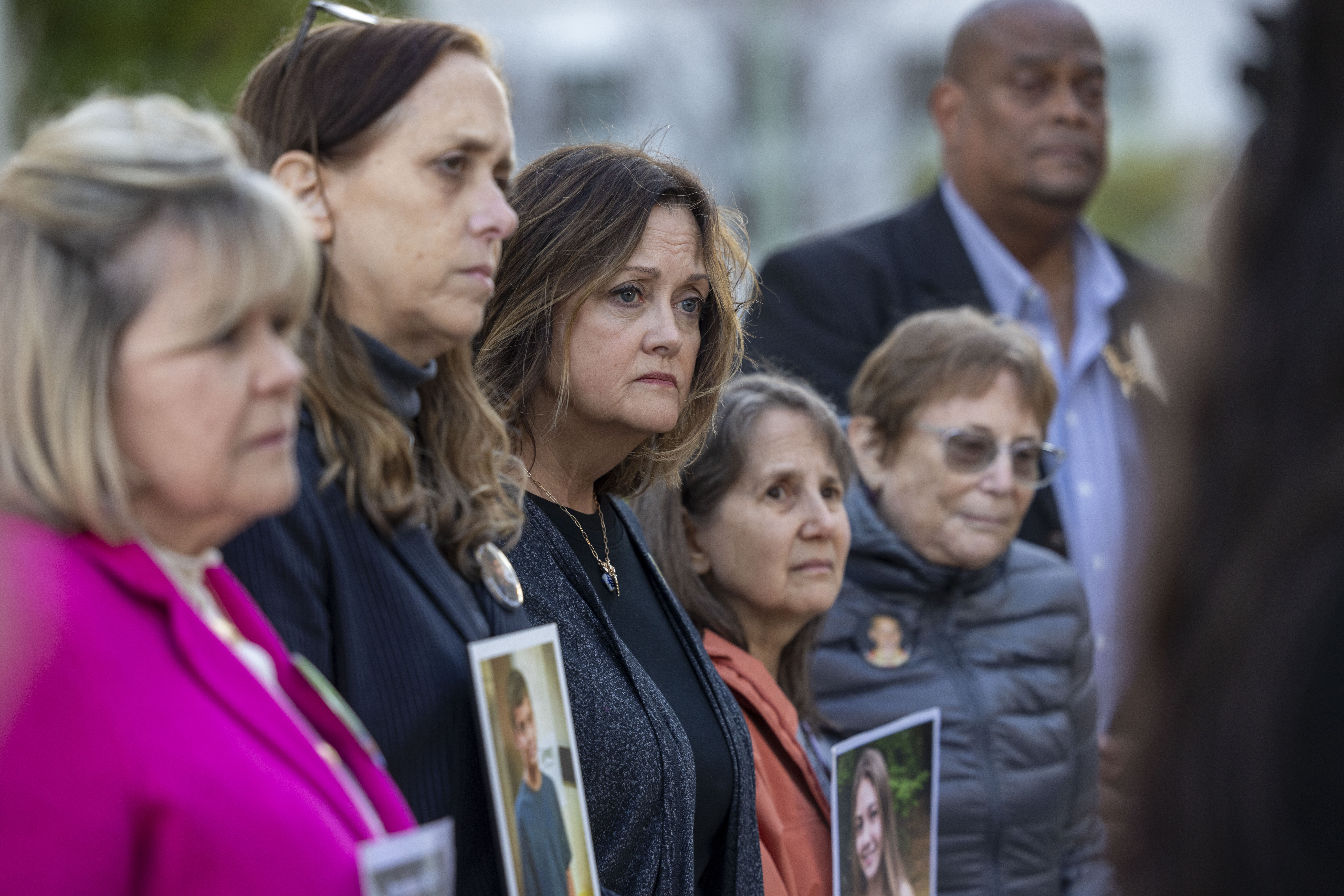
In a Los Angeles courtroom, a seismic collision of personal tragedy and corporate power unfolded as a group of parents, united by devastating loss, faced Mark Zuckerberg, the architect of the digital world they hold responsible for their children’s deaths. This landmark trial, centering on the allegedly addictive design of social media platforms like Instagram and YouTube, represents a critical juncture in the ongoing debate over the accountability of technology giants for the profound societal impacts of their products. The case is not just about monetary damages; it probes the very foundations of how social media companies operate and profit, with potentially far-reaching implications for the digital landscape and the well-being of its youngest users.
The atmosphere outside the courtroom was thick with a palpable tension, a stark contrast to the sterile formality within. Approximately a dozen parents, clutching precious paper tickets that represented their slim chance of witnessing this pivotal moment, stood in the hushed hallway. Their gazes were fixed, not on the imposing courthouse doors, but on a gray tote bag held by a court staffer. This unassuming bag, through a random lottery, would determine who among them would secure one of the fifteen public seats to observe the proceedings. Adorning their lapels and outerwear were delicate butterfly clips, poignant symbols of the children they had lost – children whose lives, they believe, were irrevocably altered, and ultimately ended, by their immersion in the online realm. These parents are at the forefront of a growing movement demanding accountability from social media corporations, arguing that the platforms’ meticulously crafted engagement loops contribute to devastating outcomes, including suicide, dangerous challenges, and fatal overdoses.
Among these determined advocates were mothers like Mary Rodee and Lori Schott, whose personal journeys of grief have been channeled into a relentless pursuit of justice. They, along with a growing contingent of like-minded parents, have converged in Los Angeles to witness the conclusion of arguments in a case that could set a profound legal precedent. While this specific trial focuses on the alleged addictive architecture of Instagram and YouTube, the stories that brought these parents to this courthouse are far more varied and universally tragic. Their children succumbed to suicide, perished in dangerous online challenges, or succumbed to accidental overdoses, all of which these parents attribute, in significant part, to the pervasive influence and design of social media platforms. The ripple effect of these losses is evident in the numerous lawsuits already filed against these companies, with many more scheduled for trial later this year, underscoring the widespread nature of this crisis.
The ritual of the ticket lottery became a focal point of emotional release for the waiting parents. As court staff drew numbers, moments of pure, unadulterated jubilation would erupt. A gasp of disbelief, a spontaneous dance down the hallway, or a collective cheer – each reaction was a testament to the immense significance of securing a seat in that courtroom. These were not mere spectators; they were a community forged in shared sorrow, their presence a silent but powerful protest. The court’s gentle reminders to temper their excitement only underscored the depth of their pent-up emotions, a poignant juxtaposition to the controlled legal proceedings inside.
Then, with an almost theatrical abruptness, Mark Zuckerberg appeared. His presence, heralded by a phalanx of security personnel, was that of a detached observer, a "floating head" as one witness described him, his expression neutral and his focus unwavering as he navigated the hallway. A palpable hush fell over the crowd as the realization dawned on them who had just passed. Within moments, he had vanished around a corner, en route to the courtroom, and the subdued chatter resumed, now tinged with the palpable energy of his brief, yet impactful, passage.
Mary Rodee, whose son Riley Basford died by suicide at the age of 15 after, she alleges, being targeted for sextortion on Facebook, vividly recalled spotting Zuckerberg, her attention drawn to his distinctive shock of curly reddish hair. This seemingly innocuous detail ignited a powerful, visceral reaction. "One thing that pisses me off about him is the curly hair," Rodee confessed, her voice laced with a raw intensity. "Riley’s curly hair was so fricking cute. And then I want to shave his curly hair because he doesn’t fricking deserve it." This deeply personal outburst encapsulates the profound emotional toll these parents carry, their grief manifesting in unexpected and often heartbreaking ways when confronted with the perceived architects of their suffering.

The core of the current legal battle lies with K.G.M., a now 20-year-old woman identified only by her initials, who has testified about her harrowing experience with the allegedly addictive design of Instagram and YouTube. She described a relentless cycle of "all day long" social media use that, she contends, contributed significantly to the development of suicidal ideation and severe body image issues. Her testimony paints a disturbing picture of how these platforms, designed for maximum engagement, can ensnare young minds, leading to profound psychological distress.
Meta and Google, the parent companies of Instagram and YouTube respectively, are vigorously defending themselves against these accusations. Their legal strategy hinges on the argument that their products are not negligently designed to foster addiction and that external factors, rather than the platforms themselves, were the primary drivers of Kaley’s mental health struggles. They assert that their platforms offer a valuable outlet and that their business models are inherently aligned with providing positive user experiences. This defense, however, is being scrutinized by a jury tasked with determining whether the companies can be held liable for the harms alleged. Snap and TikTok, initially defendants, have settled their cases prior to trial, leaving Meta and Google to bear the brunt of this precedent-setting litigation. This case is designated as one of several "bellwether" trials, intended to gauge jury sentiment and establish legal frameworks that will likely influence the resolution of thousands of similar lawsuits. The stakes are immense, encompassing not only substantial financial penalties but also the potential disruption of long-established business models.
As jury deliberations loom, the legal ramifications of this case are multifaceted. The jury must determine whether Meta and Google were negligent in their product designs and if this negligence was a proximate cause of Kaley’s mental health deterioration. A verdict in Kaley’s favor would not only provide her with monetary compensation but, more significantly, could serve as a powerful catalyst for systemic change. Matthew Bergman, the founding attorney of the Social Media Victims Law Center, who represents Kaley, articulates the broader objective: to make it so financially burdensome for these companies to continue operating with dangerously designed products that they will be compelled to prioritize safety, effectively "internalizing the cost of safety." This strategic aim highlights the lawsuit’s potential to reshape industry practices by making the cost of harm prohibitively high.
Beyond the courtroom, parent advocates like Rodee and Schott are engaged in a parallel battle for public opinion. They understand that a legal victory, while desirable, is not guaranteed. Regardless of the jury’s decision, their mission is to amplify awareness and exert public pressure. Throughout the trial, they have recounted their children’s stories to journalists and even to the lead plaintiff attorney, Mark Lanier, as he entered and exited the building. "We need the awareness. We need public pressure on our politicians to say, can we try and save all of these American children?" implored Annie McGrath, whose son Griffin, or "Bubba," died at 13 after attempting a choking challenge, allegedly learned from a YouTube video. Their activism serves as a poignant reminder of the human cost behind the legal arguments, a plea for a societal reckoning with the pervasive influence of digital platforms.
The success of Kaley’s case hinges on persuading a jury that social media platforms can indeed be held liable for their design features, even when dealing with user-generated content that is typically protected under Section 230 of the Communications Decency Act. This legal shield has historically protected online platforms from liability for third-party content, creating a significant hurdle for plaintiffs. However, a ruling in Kaley’s favor could pave the way for settlements in over 1,500 similar cases, many brought by the parents present in the courtroom. Yet, this outcome is far from certain. Numerous suits alleging the design of "defective" products by social media companies have been dismissed pre-trial due to Section 230 protections. Nevertheless, there have been exceptions; in 2021, the Ninth Circuit Court of Appeals ruled that Snap could be sued for its speed filters, which were alleged to have encouraged reckless driving, even though the content was user-generated. This precedent offers a glimmer of hope that Section 230 may not be an insurmountable barrier in all circumstances.
Meta and YouTube have unequivocally denied the allegations leveled against them. A spokesperson for Meta, Andy Stone, stated, "We strongly disagree with these allegations and are confident the evidence will show our longstanding commitment to supporting young people." The company has launched a dedicated website detailing its efforts in teen safety, a move aimed at countering the broad spectrum of allegations across numerous cases. Similarly, YouTube spokesperson José Castañeda emphasized, "Providing young people with a safer, healthier experience has always been core to our work." These statements, however, stand in stark contrast to the lived experiences of the parents present, whose grief and conviction fuel their demand for accountability.
Many parents expressed a fervent desire to witness Mark Zuckerberg face direct questioning. While Zuckerberg has testified before Congress on multiple occasions, those hearings were characterized by rapid-fire questions from lawmakers, often with little opportunity for in-depth engagement. Brandy Roberts, whose daughter Englyn died by suicide at 14 after allegedly emulating content she saw on Instagram, articulated a crucial distinction: "Now you’re in front of a jury, not congressmen and women who are also lining their pockets with money from Big Tech. We know that the jurors cannot be paid off." This sentiment highlights a profound distrust of the political process and a belief that a jury of peers, uninfluenced by corporate lobbying, offers a more equitable forum for seeking justice.

The personal toll of these losses is immeasurable, and nothing Zuckerberg could say would ever bring back their children. However, these parents are driven by a powerful conviction: to ensure that their children’s deaths are not in vain. Their presence in Los Angeles, braving the unseasonably cold and rainy weather, is a testament to their unwavering commitment to compelling social media platforms to implement robust safeguards and to educating other parents about the insidious dangers that lurk online. The trial has created a rare opportunity to pry open the digital black boxes of these tech giants, revealing internal documents and communications that offer a glimpse into the decisions that shape the user experience. Documents revealed during Zuckerberg’s testimony, for instance, showed Meta’s decision to lift a temporary ban on certain third-party Instagram filters that could alter users’ appearances, a move that raised concerns among some executives about its potential to exacerbate body dysmorphia among teenage girls. Brandy Roberts lamented, "We were one of the families who were on top of things. We had passwords to phones, we monitored the usage and had no knowledge of things that are coming out in the internal documents in court." This revelation underscores the inadequacy of parental oversight when confronted with the sophisticated, often hidden, design choices made by tech companies.
For many of these mothers, the very fact that this trial is taking place represents a profound, albeit bittersweet, victory. Amy Neville, whose son Alexander died at 14 from fentanyl poisoning allegedly facilitated by Snapchat, expressed the overwhelming nature of this moment: "It’s such a surreal thing to think that we are at this point, we’ve been fighting for this for so long. To have this moment that we were told could never happen, it’s a little bit overwhelming to stop and think about." This sentiment of surreal accomplishment, tempered by the enduring pain of loss, encapsulates the complex emotional landscape these parents navigate. Mary Rodee aptly described the situation as "oxymoronic," a sentiment that resonates with the duality of their experience: "justice and injustice, all at the same time." She continued, "Riley’s never coming back. And what do I really think can happen to this guy? So it’s just continuing to remember that this is a huge step. These documents in front of a jury is what they laughed in our face about when our kids died."
Regardless of whether they secured a coveted seat inside the courtroom, the parent advocates actively sought to maximize their impact by raising public awareness. Before the lottery system was implemented, some parents endured overnight vigils in the rain, playing cards and sharing stories to secure a spot to witness the testimony of Instagram head Adam Mosseri. The preceding week saw them participating in impactful demonstrations, including the unveiling of a memorial composed of oversized smartphone replicas bearing their children’s images, and inscribing the names of children allegedly harmed by Snapchat onto the street outside the company’s Los Angeles office. Brandy Roberts recalled a moment of silence at one of these events that profoundly resonated: "It hits you in your gut, when you realize that standing in front of the courthouse, the doors are finally open, but your child is not there to see that we are getting somewhere." This poignant reflection encapsulates the enduring tragedy of their situation – progress is being made, but the ultimate beneficiaries of this progress are no longer present to witness it.
A profound sense of solidarity and shared understanding permeates this community of grieving parents. Informal agreements often dictated who would prioritize securing a courtroom seat, based on factors such as whether their own legal cases were being heard in the same jurisdiction or if their children had experienced harm specifically on Meta’s platforms. "It’s just like now everybody’s kid is my kid, especially in my grief besties," Rodee shared, her voice warm with affection for her fellow advocates. "That’s another oxymoron, right? We’d all give up all these friends to have our kid back." This statement powerfully illustrates the deep bonds formed through shared trauma and the collective desire to protect other families from similar fates.
A minor, yet palpable, sense of satisfaction was derived by some parents from observing Zuckerberg navigate the public entrance’s metal detectors, an experience he shared with everyone else. Many of these parents had witnessed Zuckerberg’s previous testimony before the Senate in 2024. During that hearing, prompted by Senator Josh Hawley, he turned to offer an apology to the parents, each holding photographs of their lost children. Several parents later described that moment as performative and insincere.
The experience of seeing him in court was both familiar and strikingly different. "I’m sure it was a new million-dollar suit, but he looked exactly the same," Rodee observed. McGrath, however, noted his stature: "He’s short." Deb Schmill, whose daughter Becca died at 18 from fentanyl poisoning, allegedly facilitated by social media, "desperately wanted" to attend the proceedings on the day Zuckerberg testified, but her ticket was not drawn. "I was so disappointed. I don’t cry that often. I was almost in tears that I wasn’t going to get in," she confided outside the courthouse that morning. Yet, even without a seat inside, she found the proximity to the CEO deeply unsettling, a stark contrast to her experience during his congressional testimony. "Hopefully I’ll never have to be that close to him again," she expressed. "It’s just a weird thing to be seeing the person who purposely made decisions that impacted your child like this, and all these children like this."
The parents endured the discomfort and emotional strain of being present at the trial to ensure Zuckerberg was aware of their unwavering opposition. "I wanted him to look at me," stated Schott, whose daughter Annalee died by suicide at 18 after struggling with body image issues, which she believes were exacerbated by a constant barrage of social media content. "Usually, I’m just the one who cries, but I wanted him to look at me and to look at Mary and just know that parents are here. I hope to hell they said, ‘Oh shit, the parents are here.’" This desire for direct acknowledgment speaks to the deep-seated need for their pain to be recognized by those they hold accountable.

For some, the most challenging aspect was not being present at the trial. "I couldn’t be here last week and I was not in good shape at home. You can ask my daughter. I was stomping around saying, ‘I need to be there,’" McGrath recounted during the second week of the trial. McGrath shared a daily reminder that pops up on her phone, prompting her to report choking game videos to YouTube. She estimates spending ten minutes daily finding and reporting approximately 50 such videos, expressing a disheartening sentiment: "I don’t even think anyone ever looks at them." This ongoing, seemingly futile effort highlights the relentless nature of their struggle to mitigate the harms they perceive.
Brandy and Toney Roberts, parents from a small town in Louisiana, attended the trial to draw attention to the specific harms they believe their daughter Englyn was exposed to on social media. "Being from a small town in Louisiana, we don’t want our daughter forgotten," Brandy stated. "Getting her face out there and letting the world know that it doesn’t discriminate… It doesn’t discriminate on age, it doesn’t discriminate for religion. It’s harming all of our kids. So just to put faces to actual names and for the big CEOs of these Big Tech companies to see that our children existed and they matter to us." Their presence is a powerful assertion of their children’s humanity and a demand that these tech leaders acknowledge the real-world consequences of their business decisions.
The day before Zuckerberg’s testimony, Mark Lanier, the lead plaintiff attorney and a pastor, moved through a circle of mothers, holding their hands and inquiring about their children and their experiences. Throughout the week, parents shared poignant details about their lost loved ones: Becca, according to her mother, "gave the best hugs out of anyone in the world"; Schott’s Annalee was "a little rural country girl that was never any trouble and loved community service and living on the farm"; Riley, Rodee recalled, would playfully scare her or blast music in the car, dancing and singing. Lanier, with his pastoral background, offered words of comfort and a fervent prayer: "And Lord, make our team valiant to fight for you, and to fight for justice, and to fight for the hearts and souls of so many kids who are cast off in the interest of profit." This spiritual dimension of the legal battle underscores the profound moral and ethical stakes involved.
Court was dismissed early on the day of Zuckerberg’s testimony due to a juror’s hospitalization, a development that heightened concerns among attorneys about a potential "run on the jury" – an increase in requests to be excused from service – especially after the appearance of the trial’s most high-profile witness. This delay, coupled with an earlier concussion sustained by Meta’s lead attorney, Paul Schmidt, and a courthouse relocation due to water damage, had already disrupted the original schedule, leading to the non-appearance of YouTube CEO Neal Mohan.
On the day Zuckerberg testified, the courtroom was packed, a stark contrast to the significantly smaller capacity had Snap and TikTok remained as defendants. Lanier’s examination style, described as "sermon-like," captivated the jury, his charismatic demeanor a striking counterpoint to Zuckerberg’s more matter-of-fact delivery. Lanier adeptly recapped Zuckerberg’s testimony, highlighting an alleged discrepancy: while Zuckerberg claimed Meta had ceased setting goals to increase user time on its platforms, the company still established milestones to boost product usage as recently as 2022. Zuckerberg countered, accusing Lanier of "mischaracterizing" his testimony, clarifying that "milestones" served as a "gut check" for senior leadership, while employees were assigned "goals" that no longer included increasing time spent.
Lanier’s courtroom strategy was meticulously crafted to engage the jury. When questioning friendly witnesses, he incorporated personal details about their hobbies, such as former Meta advertising executive Brian Boland’s beekeeping and expert witness John Chandler’s world championship in Ultimate Frisbee. He employed an overhead projector, reminiscent of elementary school classrooms, to display exhibits and hand-drawn diagrams, such as a sketch of a road illustrating Boland’s testimony about the "Zuckerberg Mandate." This approach aimed to simplify complex information for a lay audience, ensuring their sustained attention.
In their defense, Meta and Google argued that external factors contributed to Kaley’s struggles and that "social media addiction" is not a recognized clinical diagnosis. Instagram head Adam Mosseri testified that using the app for 16 hours a day constituted "problematic use," distinguishing it from clinical addiction. YouTube’s VP of engineering, Cristos Goodrow, testified that prolonged scrolling would signal a failure in their recommendation systems, suggesting it was not in their business interest for users to scroll endlessly. The defense also sought to discredit the notion of a causal link between their services and Kaley’s mental health issues, presenting witnesses who testified about her offline challenges and claiming she spent only an average of 30 minutes daily on YouTube.

While social media addiction is not formally classified as a clinical diagnosis by organizations like the American Psychiatric Association, they acknowledge that "problematic and compulsive use of social media" can be addressed through cognitive behavioral therapy. The impact of social media on mental well-being is complex, with some research suggesting moderate use can have positive outcomes. However, the legal strategy in these cases often centers on proving a degree of harm akin to addiction to establish causation. Parents at the courthouse described the alarming extent to which their children were engrossed in their phones and the difficulty in detecting the content they were exposed to. Schott recalled locking her daughter’s phone away, while Arnold recounted her daughter, Coco, fighting for her phone, "as if, if she did not have this in her hand, she would not fall asleep," before her death from fentanyl poisoning.
Acknowledging the role of parental responsibility, parents like Schott emphasized that they had taken extensive measures, yet the pervasive nature of social media proved overwhelming. "Everybody says, ‘Well, it’s the parent’s responsibility.’ I’m not arguing that," Schott stated. "Of course it is, but I did everything in my power. But playing Whac-a-Mole with the phone and her hunger to be on those social media platforms were just beyond anything I’ve ever seen." They advocate for other parents to educate themselves and their children about the risks. McGrath cautioned, "Parents think, ‘My kid would never do that.’ For Griffin, ‘My kid would never choke himself.’ Oh yeah, they would… The prefrontal cortex isn’t developed until they’re 25. That’s impulse control and rational thinking of, ‘I could actually die,’ that doesn’t enter their head."
The jury’s task is not necessarily to establish a formal clinical diagnosis of addiction. To prevail, Kaley’s legal team must demonstrate that the platforms caused significant harm and that Meta and Google acted negligently by failing to prevent it or warn users of the potential risks. "Addiction is one type of danger," noted Neama Rahmani, a personal injury attorney, adding that proving causation for other forms of mental harm is considerably more challenging. Jess Nall, an attorney uninvolved in the cases, commented that while a formal finding of clinical addiction is not legally required, the plaintiffs’ central theory arguably hinges on proving something closely resembling it.
Meta’s camera-equipped Ray-Ban glasses briefly posed a challenge to the integrity of the legal process. After Zuckerberg’s entourage was observed wearing them, Judge Carolyn Kuhl prohibited their use and ordered the deletion of any recordings. This incident, coupled with the removal of attorney Mark Bergman from a steering committee for allegedly recording an interview inside the courthouse, underscored the court’s strict policies on electronics and recording.
Throughout his testimony, Zuckerberg maintained a detached demeanor, making no direct acknowledgment of the grieving parents present. He appeared to deliberately avoid eye contact on his way into and out of the courtroom, exiting the witness stand unceremoniously. While a few parents believed they had caught his gaze, they remained confident that their collective presence had made an impact. The CEO’s testimony marked only the beginning of a protracted legal battle. This trial alone spanned five weeks, with further testimony from Kaley herself and other witnesses. Regardless of the verdict, the court is poised to proceed with the next case in the series of bellwether trials.
The enduring grief that compels these parents to repeatedly recount their stories is a burden they carry daily. Toney Roberts articulated their motivation: "we live it every day anyway. So if it’s going to help another family to not go through the situation, another child to not go through the situation, we’re hoping together that we can bond and bring awareness, as we have done across the entire world." Their collective voice, amplified by the courtroom drama, serves as a potent reminder of the human cost of unchecked technological ambition and a persistent call for accountability in the digital age.




 Lisa Mariana
 Ridwan Kamil