Lisa Mariana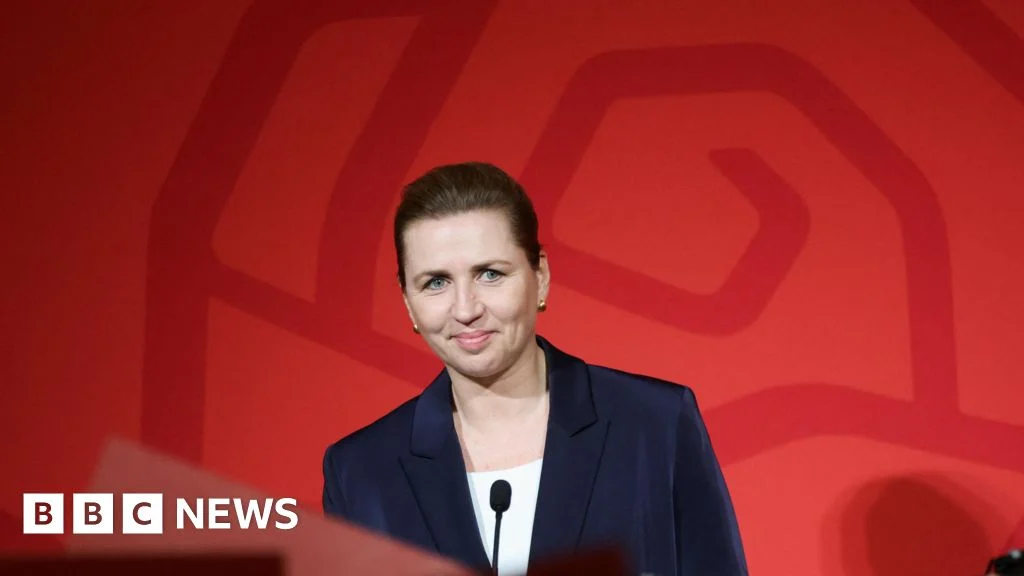
Following a tightly contested parliamentary election, Denmark’s political landscape is gripped by uncertainty as the ruling Social Democrats, despite securing the largest share of the vote, failed to achieve a legislative majority, signaling a period of complex coalition formation and intense negotiation. The outcome, which saw Prime Minister Mette Frederiksen’s party record its most modest electoral performance in over a century, has plunged the nation into a familiar yet uniquely challenging post-election period, where the balance of power now rests precariously with a nascent centrist party.
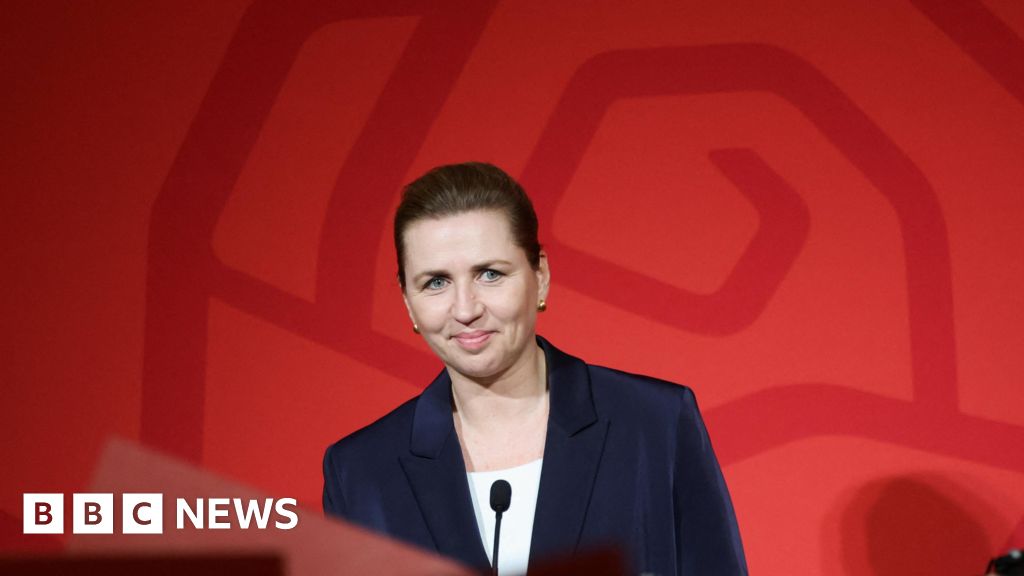
The general election on Tuesday concluded with the Social Democrats, who have helmed the government since 2019, emerging as the largest single party, capturing 21.9% of the national vote. This translated into 38 seats within the 179-member Folketing, Denmark’s parliament. While this position undeniably solidifies their standing as the preeminent political force, it represents a significant decline from their previous showings and falls well short of the 90 seats required to govern independently. The results underscore a fragmented electorate and a growing desire for political diversity, moving away from the dominance once enjoyed by the traditional major parties. The applause and cheers that greeted Prime Minister Frederiksen at the Social Democratic election gathering in Christiansborg, the parliamentary building, were tinged with an undercurrent of acknowledgement regarding the party’s reduced mandate. Addressing her supporters, Frederiksen candidly admitted, "I’m sorry that we did not get more votes. I had also hoped for a better result." However, she quickly pivoted to emphasize the party’s enduring appeal, stating, "But there is nothing today that can make me sad that the Social Democrats have once again become the Danes’ absolute favourite political party." Her words reflected both the electoral setback and a determination to retain leadership amidst the looming political complexities.
Denmark’s political tradition is characterized by multi-party systems and the necessity of coalition governments, a reality that now sets the stage for protracted discussions. With twelve distinct political entities vying for power on the ballot, the recent election was exceptionally close, leaving no single bloc with a clear path to majority rule. The "red bloc," comprising left-leaning parties, managed to secure a combined 84 seats, giving them a narrow numerical advantage over the "blue bloc" of right-wing parties, which collectively garnered 77 seats. Crucially, both traditional blocs fell short of the 90-seat threshold, creating an unprecedented power vacuum and signaling that the formation of the next government will require navigating beyond conventional alliances. The current arithmetic necessitates cross-bloc cooperation or the inclusion of a significant third force to forge a stable administration.
In this finely balanced political landscape, all attention has converged on the Moderates, a relatively new centrist party led by former Prime Minister Lars Løkke Rasmussen. Having secured a pivotal 14 seats, the Moderates have effectively assumed the role of kingmakers, holding the decisive leverage required by either the left or the right to form a viable majority. Rasmussen, a seasoned political figure with extensive experience at the helm, founded the Moderates with an explicit aim to transcend the entrenched left-right divide, advocating for pragmatic solutions and a government built on broad consensus. His stated preference for forming a government "across the centre" signals a potential paradigm shift in Danish politics, challenging the long-standing bloc-based system. Surrounded by jubilant supporters on election night, Rasmussen reiterated his party’s unique position, declaring, "We’re standing in the middle. We’re ready." This declaration implies a readiness to engage with both the red and blue blocs, but on terms that align with the Moderates’ centrist agenda, potentially demanding significant policy concessions from any prospective coalition partners.
The prospect of a grand coalition, or even a more limited cross-bloc alliance, presents significant ideological and strategic hurdles. Troels Lund Poulsen, the leader of the Liberals, the largest party within the blue bloc, swiftly rejected the notion of re-entering government with the Social Democrats. He explicitly called upon Rasmussen to align with the right, asserting that "It is possible to get a new direction in Denmark." This stance highlights the deep-seated divisions and historical rivalries that often complicate attempts at broad cooperation between Denmark’s established political forces. The Liberals’ position reflects a desire to capitalize on the Social Democrats’ weakened state and to push for a more conservative policy agenda, particularly on economic and fiscal matters. However, Rasmussen’s independent trajectory and the Moderates’ centrist platform suggest that a simple absorption into the blue bloc is unlikely without substantial policy compromises.
Political analysts are already dissecting the myriad of potential coalition scenarios. Christine Cordsen, a prominent political correspondent for DR, Denmark’s public broadcaster, has posited that the most probable outcome involves a center-left government. This configuration would likely include the Social Democrats, elements of the Red-Greens (a socialist and environmentalist alliance), the Moderates, and the Danish Social Liberal Party. Such an alliance, while numerically viable, would require intricate negotiations to reconcile diverse policy priorities, particularly on economic management, social welfare reforms, and environmental regulations. The Red-Greens and Social Liberals typically advocate for more progressive social policies and robust climate action, which might align with parts of the Social Democrats’ agenda but could clash with the Moderates’ more fiscally conservative and reform-oriented stance. Crafting a cohesive platform that satisfies these disparate elements will be the ultimate test of political dexterity.
For Prime Minister Frederiksen, the election outcome represents a bruising experience, despite her party’s first-place finish. After nearly seven years at the helm, her popularity, while still significant, has shown signs of waning. This is particularly notable given widespread public acknowledgment of her effective leadership through a series of international and domestic crises. Her decision to call an early election, months ahead of schedule, was a calculated gamble. It was widely believed that her strong handling of former US President Donald Trump’s repeated demands to acquire Greenland, a semi-autonomous Danish territory, would translate into a bolstered mandate. Frederiksen, at 48, had leveraged this geopolitical stand-off, which drew international headlines and solidified her image as a steadfast defender of national interests, to rally support. Indeed, Rasmussen himself played a notable role in navigating aspects of this diplomatic challenge, engaging with US Vice President JD Vance and Secretary of State Marco Rubio. His viral fist-bump with US officials underscored the high-stakes nature of these discussions. However, the election results suggest that while her handling of foreign affairs was appreciated, it ultimately failed to outweigh the immediate domestic concerns that dominated the campaign trail.
The core issues that resonated most deeply with the Danish electorate were largely internal. The pervasive impact of the rising cost of living, the overall state of the national economy, and concerns regarding the future of Denmark’s robust welfare system took precedence. Voters grappled with inflation, energy prices, and the sustainability of public services, driving the discourse away from geopolitical grandstanding. Furthermore, environmental issues gained significant traction, particularly the high levels of pesticides found in drinking water, largely attributed to intensive pig farming practices, and the broader climate footprint of the agricultural sector. These concerns highlighted a growing public demand for more stringent environmental regulations and sustainable development policies. The inability of the Social Democrats to fully address or sufficiently reassure voters on these pressing domestic matters ultimately contributed to their weaker electoral performance, underscoring a fundamental truth in democratic politics: local issues often trump international narratives at the ballot box.
The impending negotiations, which could span several days or even weeks, will be a testament to the resilience and flexibility of Denmark’s political system. The task of forging a stable coalition requires not only numerical majorities but also a shared vision for the country’s future. Any new government will immediately face the formidable challenges of economic stabilization, accelerating climate action, and reforming the welfare state to meet evolving demographic and social needs. The outcome will shape Denmark’s trajectory in a volatile global environment, impacting everything from social policy to international diplomacy. The intricate dance of coalition formation, where every seat and every party holds significant sway, now defines the Danish political landscape, promising a period of intense political maneuvering and compromise before a new chapter of governance can begin.



 Aura Kasih
 Ayu Aulia