Lisa Mariana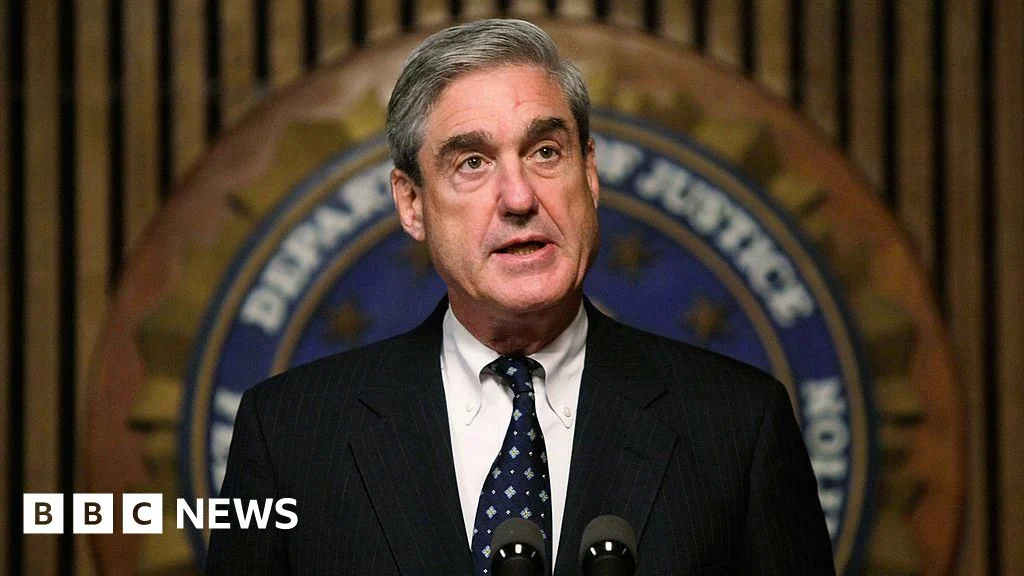
Robert Swan Mueller III, the distinguished former Director of the Federal Bureau of Investigation and the independent Special Counsel who meticulously investigated Russian interference in the 2016 United States presidential election, has passed away at the age of 81. His passing marks the end of a remarkable career characterized by unwavering dedication to public service, often navigating the most challenging and politically charged landscapes in American governance.
The precise cause of his demise was not immediately disclosed. A statement released by his family to the Associated Press on Friday night conveyed their profound sorrow, requesting privacy during this period of bereavement. "It is with deep sadness that we share the news of Bob’s passing," the family communicated. He is survived by his devoted wife of nearly six decades, Ann Cabell Standish, their two daughters, and three grandchildren, leaving behind a legacy of both professional achievement and personal commitment.
Mueller’s life was a testament to a deeply ingrained sense of duty, forged early in his formative years. Born in New York City in 1944, he grew up in a family that valued public contribution. His academic journey led him to Princeton University, where he earned a degree in politics in 1966. However, it was his subsequent decision to join the United States Marine Corps that profoundly shaped his character and future trajectory. Deployed to Vietnam in 1968, Lieutenant Mueller led a rifle platoon, demonstrating exceptional courage under fire. He was wounded twice during his tour of duty, earning the Bronze Star with Combat "V" for valor and the Purple Heart, commendations that underscore his profound commitment and personal sacrifice. This intense military experience instilled in him a discipline, resilience, and ethical fortitude that would define his lengthy career in public service.
Upon returning from Vietnam, Mueller transitioned from military combat to legal scholarship, enrolling in the University of Virginia School of Law, from which he graduated in 1973. His legal career began in private practice, but his innate calling to serve quickly drew him to the public sector. He spent several years as an Assistant U.S. Attorney, first in San Francisco and then in Boston, where he honed his prosecutorial skills, focusing on complex financial fraud and public corruption cases. His meticulous approach and unwavering adherence to legal principles earned him a reputation for integrity and effectiveness within the Department of Justice.
Mueller’s ascent within the federal legal system continued, leading to various high-profile appointments. He served as the Assistant Attorney General for the Criminal Division, overseeing federal prosecutions nationwide, and later as the Acting Deputy Attorney General. In these roles, he was instrumental in shaping national law enforcement policy, tackling organized crime, and enhancing inter-agency cooperation. His deep understanding of criminal justice and his non-partisan reputation made him a compelling choice for the directorship of the FBI.
In August 2001, just days before the cataclysmic events of September 11th, Robert Mueller was unanimously confirmed by the Senate as the seventh Director of the Federal Bureau of Investigation. His tenure began amidst an unprecedented national crisis that irrevocably altered the agency’s mission. Under his leadership, the FBI underwent a monumental transformation, shifting its primary focus from reactive crime-fighting to proactive intelligence gathering and counterterrorism. He spearheaded a comprehensive restructuring, dismantling outdated bureaucratic silos and integrating intelligence analysis more deeply into the agency’s operations. This involved significant investment in technology, intelligence training, and a fundamental reorientation of its personnel towards preventing future attacks rather than solely investigating past ones. Mueller’s calm resolve and steady hand during this turbulent period were critical in rebuilding national security infrastructure and restoring public confidence in federal law enforcement. He remained at the helm for an extraordinary twelve years, serving under both Republican President George W. Bush and Democratic President Barack Obama, a testament to his bipartisan respect and the vital continuity he provided to a critical national security institution. His extended term, granted by special congressional waiver, made him the longest-serving FBI Director since J. Edgar Hoover, cementing his legacy as a pivotal figure in the agency’s modern history.
After retiring from the FBI in 2013, Mueller largely stepped away from the public eye, taking on advisory roles and returning to private practice with the law firm WilmerHale. However, the tumultuous political climate of 2017 brought him back into the national spotlight. The abrupt dismissal of FBI Director James Comey by President Donald Trump amidst an ongoing investigation into Russian interference in the 2016 election plunged Washington into a constitutional crisis. Public and congressional pressure mounted for an independent inquiry, leading Deputy Attorney General Rod Rosenstein to appoint Mueller as Special Counsel on May 17, 2017.
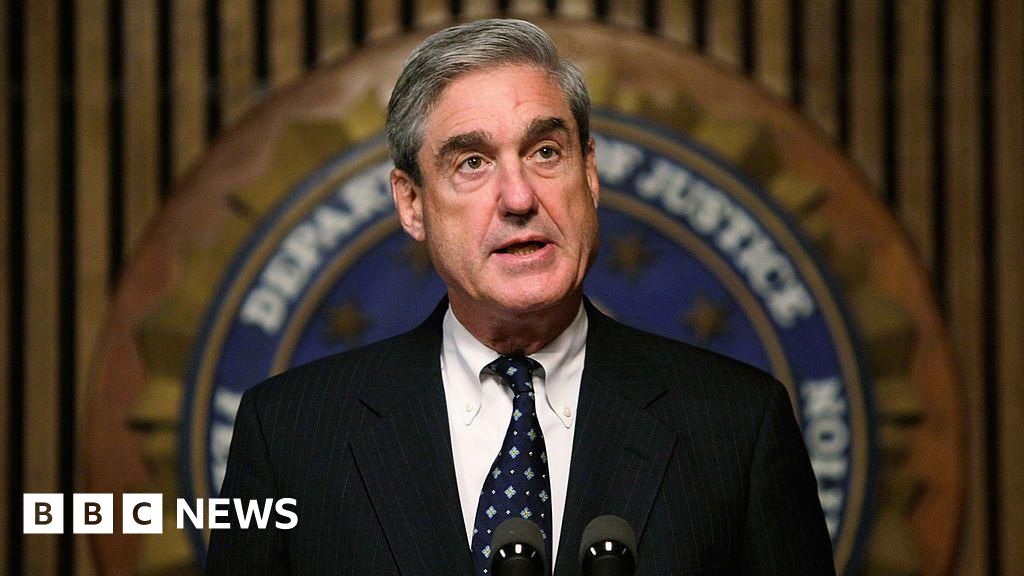
The mandate of the Special Counsel was expansive: to investigate Russian government efforts to interfere in the 2016 presidential election, including any links or coordination between the Russian government and individuals associated with the Trump campaign, and any matters that arose directly from the investigation. This assignment thrust Mueller into the center of an intensely partisan maelstrom, making him one of the most scrutinized figures in modern American political history.
Mueller assembled a highly experienced team of prosecutors, FBI agents, and forensic experts, proceeding with a methodical and rigorous investigation that spanned nearly two years. His office issued numerous indictments and secured several plea agreements, targeting both Russian operatives and key figures within the Trump campaign and administration. High-profile individuals such as former National Security Advisor Michael Flynn and former campaign chairman Paul Manafort faced charges related to their conduct during and after the 2016 election cycle, with some charges stemming from financial crimes and false statements to federal investigators. The meticulous parsing of court filings became a daily ritual for news organizations and the public, each development carrying the potential to reshape the political landscape.
Throughout the investigation, Mueller maintained a stoic and largely silent public posture, allowing his team’s actions and legal documents to speak for themselves. This disciplined approach was widely interpreted as an effort to insulate the investigation from political interference and to reinforce its independence. His final report, officially titled "Report On The Investigation Into Russian Interference In The 2016 Presidential Election," was delivered to Attorney General William Barr in March 2019. The 448-page document presented a comprehensive account of Russian interference, concluding that the Russian government had engaged in a "sweeping and systemic fashion" to influence the election. However, Volume I of the report ultimately stated that the investigation "did not establish that members of the Trump campaign conspired or coordinated with the Russian government in its election interference activities."
Volume II of the report addressed the question of obstruction of justice, meticulously detailing instances where President Trump took actions that could be construed as impeding the investigation. Crucially, the report stated: "while this report does not conclude that the President committed a crime, it also does not exonerate him." This nuanced phrasing immediately became a point of intense contention, with supporters of the President claiming full exoneration, while critics argued it laid out ample evidence for potential obstruction that Congress should further pursue. The Special Counsel’s decision not to make a definitive prosecutorial judgment on obstruction was rooted in long-standing Department of Justice policy that a sitting president cannot be indicted, a legal position that Mueller adhered to scrupulously.
The release of the Mueller Report ignited a firestorm of political debate, deepening the partisan divisions within the country. President Trump consistently denounced the investigation as a "witch hunt" and a "hoax," vehemently denying any wrongdoing and accusing Mueller of bias. His reaction to Mueller’s death, expressed on Truth Social, reiterated this animosity: "I’m glad he’s dead. He can no longer hurt innocent people!" This stark condemnation stood in sharp contrast to the outpouring of tributes from across the political spectrum that recognized Mueller’s long and distinguished career.
Former President Barack Obama lauded Mueller as "one of the finest directors in the history of the FBI," commending his "relentless commitment to the rule of law and his unwavering belief in our bedrock values." James Comey, Mueller’s successor at the FBI whose firing ultimately precipitated the Special Counsel investigation, described him as "a great American… one I was lucky enough to learn from and stand beside." A spokesman for WilmerHale, his former law firm, honored him as an "extraordinary leader and public servant and a person of the greatest integrity." These accolades underscored a professional reputation built on impartiality, diligence, and a profound sense of duty that transcended political affiliations for much of his career.
Mueller’s final public interview in February 2021 with MSNBC provided a rare glimpse into his motivations. When asked why he undertook such a politically fraught assignment as the Russia investigation, he responded with characteristic understatement and humility: "I found that I’ve gotten tremendous enjoyment out of public service. And I find it hard to turn down a challenging assignment." This statement encapsulated the essence of a man who consistently answered the call to serve, irrespective of the personal or political cost.
The legacy of Robert Mueller is multifaceted. As FBI Director, he engineered the transformation of a venerable law enforcement agency into a modern intelligence and counterterrorism force, a monumental achievement in the wake of 9/11. As Special Counsel, he navigated one of the most politically volatile investigations in American history with a steadfast commitment to legal process and factual accuracy, producing a report that, while not universally accepted, remains a foundational document for understanding the challenges to American democracy in the 21st century. His career exemplifies a lifelong devotion to the principles of justice, integrity, and the rule of law, serving as a powerful reminder of the importance of an independent and impartial federal service, even when confronted by intense political pressure. Robert Mueller III will be remembered as a quiet patriot whose actions spoke louder than words, leaving an indelible mark on the institutions he served and the nation he protected.



 Ridwan Kamil
 Aura Kasih