Lisa Mariana
A profound political upheaval is gripping the corridors of power, as widespread indignation stemming from revelations surrounding former Labour peer Peter Mandelson converges into a deepening crisis of confidence for Prime Minister Keir Starmer, threatening to destabilize his administration and ignite a premature leadership contest within the ruling party. The ongoing controversy, fuelled by disclosures regarding Mandelson’s conduct, has transcended mere scandal to become a potent catalyst for long-simmering discontent among Members of Parliament and senior party figures, casting an ominous shadow over the government’s future trajectory.
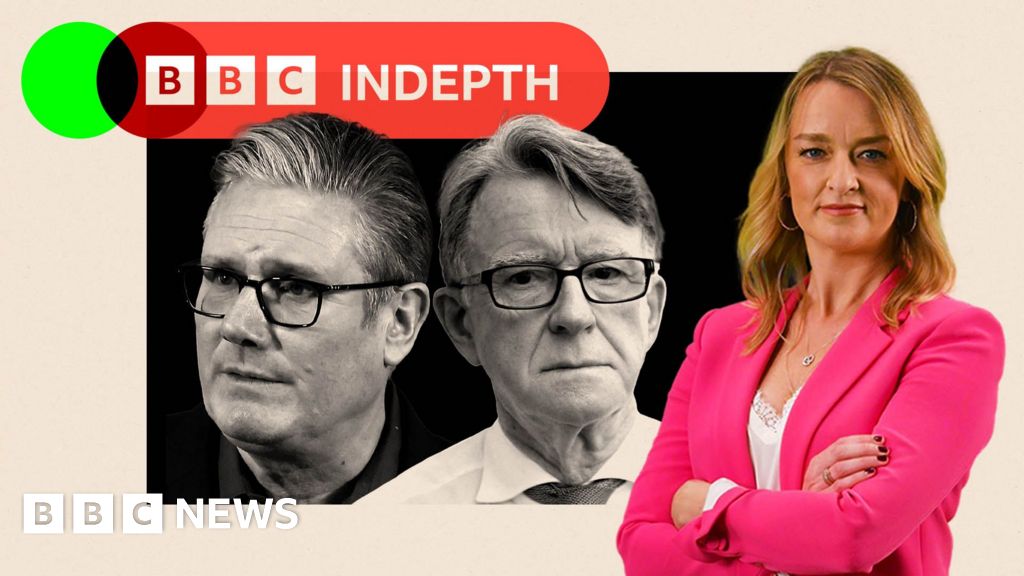
The latest disclosures concerning Peter Mandelson have sent shockwaves through the Labour Party, provoking a visceral reaction of anger and dismay. What began as a furore over Mandelson’s alleged activities has rapidly escalated into a comprehensive indictment of the Prime Minister’s judgment. While Mandelson’s personal actions are not directly attributable to Starmer, the decision to integrate such a figure into the government’s orbit, even in an advisory capacity, has proven to be a grievous misstep. Each subsequent revelation, particularly those hinting at impropriety or questionable associations, amplifies the perception of a colossal error in judgment, leading many to question the initial wisdom behind his inclusion. The anger, initially directed at Mandelson, has now inextricably linked itself to Starmer, who is seen as bearing ultimate responsibility for the consequential fallout.
For Keir Starmer, the current maelstrom is more than just a passing tempest; it represents a critical juncture where accumulated frustrations within his party have found a powerful focal point. This week’s indignation, though ostensibly about Mandelson, serves as both a proxy and a potent instigator for months of underlying unhappiness concerning the direction and effectiveness of the government. The discontent, once confined to a predictable cadre of critics, has now permeated broader segments of the party, extending its reach to previously loyal factions. This widespread disillusionment is dramatically eroding the authority of the Prime Minister, making his previous pledge to remain at the helm for the foreseeable future seem increasingly untenable.

Conversations with a diverse array of political stakeholders—including backbench MPs, serving ministers, and significant party donors—reveal a pervasive and growing sentiment that Starmer’s tenure as Prime Minister may be drawing to an unwelcome close. A recurring and weary conclusion emerging from these discussions is the belief that Starmer’s departure, whether in the short or medium term, appears inevitable. One highly influential individual, who has historically been a staunch supporter of the Prime Minister, articulated a significant shift in perspective, stating, "Up until this point, I would not have advocated for such a change, but I now see no alternative. I cannot fathom how his authority can possibly withstand this." This sentiment is echoed by a usually unwavering minister, who confided, "I genuinely don’t believe anyone expects him to still be Prime Minister by 2027."
The current predicament has cast the government into a state of acute internal frustration, not merely because of Mandelson’s contentious behaviour – which has been met with profound feelings of betrayal and incredulity by his former colleagues – but because it adheres to a deeply troubling pattern that has become all too familiar within Starmer’s administration. As one government insider observed, "The perennial challenge lies in our agonizingly slow progress towards the correct policy stance. By the time we arrive there, we receive absolutely no recognition, as it invariably appears that we have been compelled into action." This pattern of delayed, reactive decision-making undermines the government’s ability to project strong, decisive leadership.
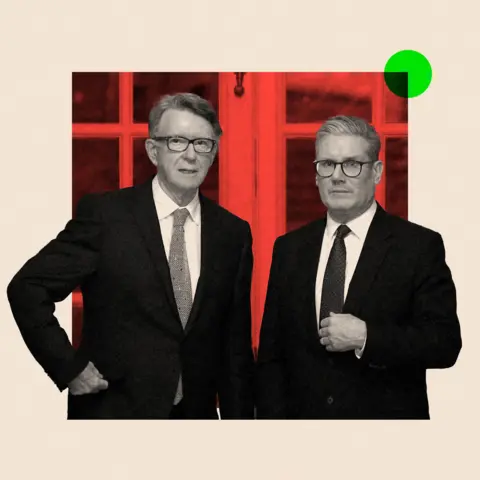
The Prime Minister’s current conviction that the initial appointment of Mandelson was a mistake is widely acknowledged. Indeed, many within the Labour Party harboured reservations about the decision from the outset. However, Starmer only moved to dismiss Mandelson in September, a considerable delay that occurred only after a gradual accumulation of damaging information and an unbearable increase in political pressure. This delayed response is characteristic of a broader governmental tendency. Similarly, the administration’s commitment to publish communications between Mandelson and his former colleagues was not a proactive measure. Instead, it was secured only under intense pressure from the opposition benches and the very real prospect of a rebellion among its own MPs, who made it unequivocally clear that they would not support any effort to obstruct such transparency. This parliamentary confrontation consumed a significant portion of a recent Wednesday, despite the fact that some Labour ministers had already mooted the idea of publishing these documents as early as the preceding Tuesday evening, even suggesting that a body like the Intelligence Committee could oversee the process.
While Starmer’s government allies express hope that the forthcoming documents, potentially numbering in the hundreds of thousands, will ultimately vindicate the Prime Minister by demonstrating Mandelson’s alleged misrepresentations, the manner of their release itself highlights a fundamental flaw. As another government source critically noted, "This will be Starmerism encapsulated – an extraordinarily arduous path to complete exoneration." This observation underscores a pervasive frustration within the government that a significant portion of its time and energy is expended on rectifying its own initial positions and perceived errors. Whether it concerns the present Mandelson fiasco, the policy adjustments surrounding the winter fuel allowance, or the decision to lift the cap on benefits for larger families, the consistent narrative is one of slow, reactive policy shifts rather than proactive, confident governance. The political cost of such a trajectory is substantial, as opinion polls consistently indicate that voters rarely credit politicians for belatedly correcting their own mistakes. The electoral proposition, "Vote for me, I’ll eventually get it right," is universally acknowledged as a profoundly unconvincing platform.
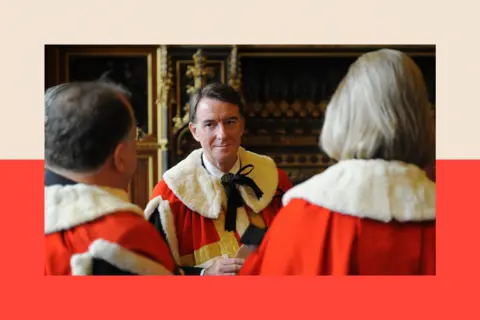
Despite the profound internal unrest, Starmer’s immediate position enjoys a fragile protection derived from a curious absence of overtly ambitious challengers. The current political landscape is described by one minister as "peculiarly stalled, existing in a state of suspension." Wes Streeting, the incumbent Health Secretary, has long been recognised for his prime ministerial aspirations. However, his current situation is complicated not only by his historical association with Mandelson, which renders this particular moment politically awkward, but also by the strategic understanding that the initial challenger in a leadership contest rarely emerges victorious. Had Streeting intended to make an immediate move, it is widely believed he would have already initiated such a challenge.
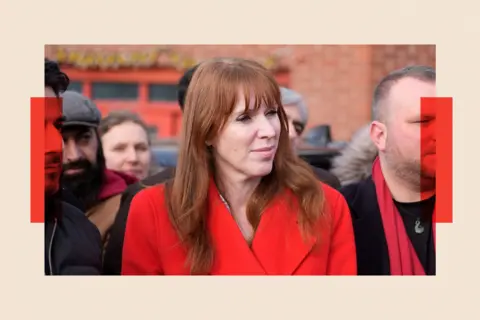
Another prominent figure often considered a potential successor is Angela Rayner, the former Deputy Prime Minister. Rayner played a significant role in advocating for the publication of communications related to Mandelson. However, her path to leadership is currently obstructed by an ongoing, complex investigation into her tax affairs concerning the purchase of an £800,000 property in Hove, where she is alleged to have failed to pay the appropriate amount of tax. Until this investigation reaches a definitive conclusion, her ability to launch a credible leadership bid remains severely constrained. Consequently, in the absence of an unforeseen contender emerging to seize the initiative, a leadership change at the apex of the party appears unlikely to be driven by the current crop of aspiring leaders. This reality, while offering a measure of comfort to Starmer’s allies, underscores a leadership sustained not by its intrinsic strength, but by the weaknesses and strategic calculations of potential rivals.
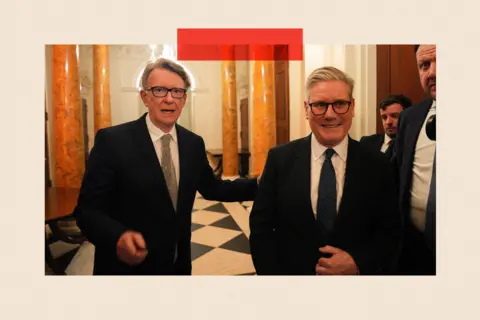
Beyond the intricate dance of leadership politics, a more profound sense of disillusionment permeates both the parliamentary ranks and the wider public, deeply sickened by the unfolding revelations. The echoes of the Jeffrey Epstein scandal and Mandelson’s apparent proximity to its orbit have appalled Labour politicians across generational divides—from long-standing allies who have supported him since the 1980s to younger MPs who have benefited from his mentorship. There is also a discernible sense of vindication among those who have long harboured reservations about his influence, as one minister succinctly put it, "I’ve always disliked him, and he’s always disliked me."
Many MPs now hope that this crisis might catalyse a fundamental re-evaluation of political culture, questioning "a system that tacitly accepts the corrupting influence of power." The profound suffering endured by Epstein’s victims serves as a stark moral backdrop to the political machinations, emphasizing the gravity of the ethical breaches. The deep unease within the party is palpable, with a cabinet minister drawing chilling parallels: "It feels like the nascent stages of the expenses scandal, or the financial crash—no one can predict its eventual conclusion, or whose career it might irrevocably damage next."
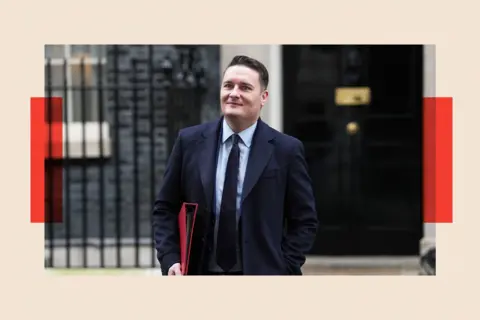
This pervasive uncertainty has exacerbated the prevailing sense of doom within Labour’s ranks regarding Keir Starmer’s prospects. The party is effectively caught in a state of paralysis, as an MP lamented, "We are utterly distraught that we cannot advance any agenda or resolve any issues because of this entire situation—everything is being held hostage by individuals contemplating a potential leadership contest." This frustration is keenly felt among ministers; a recent Tuesday saw the government successfully vote to abolish the limit on benefits for larger families—a significant, expensive policy shift that took months of internal persuasion to secure and brought considerable cheer to the backbenches. Yet, by the very next day, any sense of accomplishment had completely dissipated, overshadowed by the burgeoning Mandelson crisis.
The profound risk to the nation, which elected Labour with a substantial majority less than two years prior, is that the Prime Minister’s perilous predicament has rendered the governing party dangerously distracted. Unable to decisively reverse course, yet equally incapable of forging boldly ahead, the administration finds itself trapped in a political quagmire due to the severe jeopardy facing its leader. As a senior official candidly articulated, "The government is demonstrably unable to govern with clear direction—this is a monumental issue, and something will inevitably have to give."
While the rapid pace of political change in the 2020s makes definitive predictions unwise, and the possibility of a dramatic turnaround for the Prime Minister cannot be entirely discounted—as one exasperated cabinet ally expressed, "people simply desperately want us to rectify this situation"—the complexities introduced by the Mandelson controversy have made any such repair exponentially more arduous. Back in January, Keir Starmer confidently vowed to remain in his post until 2027 and staked his judgment on the general election of 2029. However, as the seismic shockwaves from this latest scandal reverberate, the sobering truth is that a significant segment of his own party has already rendered its verdict, concluding that he may not be the leader capable of guiding them to that distant horizon.

 Ridwan Kamil
 Aura Kasih
 Ayu Aulia