Ridwan Kamil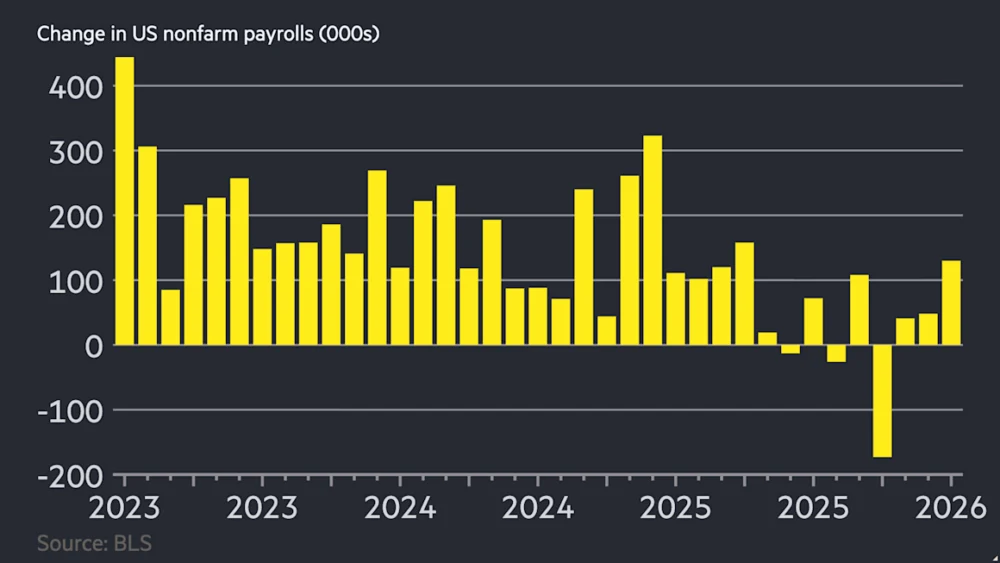
The American economy demonstrated remarkable resilience and expansion in January, as evidenced by a substantial job creation figure that significantly surpassed prevailing forecasts, signaling continued strength in the nation’s labor market.
The latest figures from the Bureau of Labor Statistics reveal that the United States added an impressive 130,000 jobs during the month of January, a testament to the dynamic and adaptive nature of the American economic engine. This figure represents a considerable uptick from the more conservative estimates that many economists had anticipated, suggesting that underlying economic momentum remains robust despite a complex global and domestic environment. The unexpected strength in job growth provides a positive indicator for consumer spending, business investment, and overall economic stability.
Deep Dive into January’s Employment Landscape
The January jobs report paints a picture of a labor market that is not only growing but also diversifying its sources of expansion. While the headline figure of 130,000 new positions is a significant headline, a closer examination of the sectoral breakdown reveals deeper trends. Key sectors contributing to this robust growth include healthcare and social assistance, professional and business services, and leisure and hospitality. These industries have consistently been areas of strong demand, reflecting both demographic shifts and evolving consumer preferences.
The healthcare sector, in particular, continues to be a bedrock of job creation, driven by an aging population and advancements in medical technology. The demand for nurses, physicians, and support staff remains exceptionally high, underscoring the sector’s critical role in the national economy. Similarly, professional and business services, encompassing fields such as consulting, accounting, and legal services, have seen sustained growth, indicating a healthy demand for specialized expertise among businesses looking to navigate an increasingly complex operational landscape. The leisure and hospitality sector’s contribution, while sometimes subject to seasonal fluctuations, also points to a resilient consumer base willing to spend on experiences and entertainment.
However, it is important to note that not all sectors experienced uniform growth. Some manufacturing sub-sectors and certain areas within wholesale trade may have seen more modest gains or even slight contractions, reflecting ongoing adjustments to global supply chains, technological automation, and shifts in international trade dynamics. These nuances highlight the heterogeneous nature of economic expansion and the importance of analyzing granular data to understand the full scope of labor market conditions.
Underlying Drivers of Job Creation
Several interconnected factors are likely contributing to the sustained strength observed in the January jobs report. A primary driver continues to be robust consumer demand. Despite persistent inflationary pressures in certain goods and services, household spending has remained a key pillar of economic activity. This resilience can be attributed to a combination of factors, including a relatively healthy labor market itself, which supports wage growth and disposable income, and the continued accumulation of savings by some segments of the population during prior periods.
Furthermore, business investment, while potentially subject to cyclical fluctuations, appears to be on an upward trajectory in many key areas. Companies are investing in new technologies, expanding their operational capacities, and seeking to enhance productivity, all of which necessitate the hiring of skilled and unskilled labor. The ongoing digital transformation across industries, for instance, is creating a sustained demand for workers with expertise in areas such as data analytics, cybersecurity, and software development.
Government policies, including infrastructure initiatives and targeted economic stimulus measures, may also be playing a supporting role in bolstering job creation. Investments in public works projects, for example, can stimulate demand for labor in construction and related industries. While the direct impact of specific policies can be debated, their cumulative effect in creating a more favorable environment for business expansion and job growth cannot be entirely discounted.
Implications for Economic Policy and Outlook
The robust January job growth has significant implications for economic policy, particularly concerning monetary policy. The Federal Reserve, which has been actively managing inflation through interest rate adjustments, will closely scrutinize these employment figures as it calibrates its future policy decisions. Strong job creation, coupled with sustained wage growth, can contribute to inflationary pressures. Therefore, the Federal Reserve may interpret this data as a signal that further tightening of monetary policy might be necessary, or at least that current policy stances need to be maintained for a longer duration to ensure inflation is brought fully under control.
Conversely, the strength of the labor market also provides a buffer against potential economic slowdowns. A healthy job market can absorb some of the shocks from external economic headwinds, such as geopolitical instability or global supply chain disruptions. It also provides a foundation for continued consumer spending, which is a critical component of overall economic growth.
The outlook for the U.S. economy, therefore, appears cautiously optimistic, with the labor market serving as a key indicator of underlying strength. While challenges remain, including the persistent fight against inflation and the potential for global economic slowdowns, the ability of the U.S. economy to generate substantial job growth in January suggests a capacity for resilience and continued expansion.
Expert Analysis and Future Projections
Economists will be keenly observing upcoming labor market data to ascertain whether the January surge represents a sustained trend or a temporary acceleration. Key metrics to monitor will include the average hourly earnings, which provide insights into wage inflation, and the labor force participation rate, which indicates the proportion of the working-age population that is either employed or actively seeking employment. A rising participation rate would suggest that the economy is not only creating jobs but also drawing in new workers, further signaling robust demand.
The interplay between inflation and employment will continue to be a central theme in economic discourse. If wage growth continues to outpace productivity gains significantly, it could exert upward pressure on prices, complicating the Federal Reserve’s inflation-fighting efforts. However, if productivity growth remains strong, it can help to offset the inflationary impact of rising wages, allowing for a more sustainable economic expansion.
The current environment suggests a period of careful navigation for policymakers. The Federal Reserve faces the delicate task of balancing the need to control inflation with the imperative to avoid triggering an unnecessary recession. The continued strength of the labor market provides them with some flexibility, allowing them to maintain a data-dependent approach to policy decisions.
Looking ahead, the U.S. economy is likely to continue experiencing a period of dynamic growth, albeit with the potential for some moderation in the pace of job creation as the labor market matures. Sectors that are experiencing technological innovation and demographic shifts are expected to remain strong sources of employment. The ability of businesses to adapt to evolving consumer demands and to navigate global economic uncertainties will be crucial in sustaining this positive trajectory.
The January jobs report serves as a powerful reminder of the underlying dynamism and resilience of the U.S. economy. While challenges and uncertainties persist, the robust performance of the labor market provides a solid foundation for continued economic growth and stability in the months and years ahead. The ability of the nation’s workforce to adapt and innovate, coupled with sound economic policy, will be instrumental in navigating the complexities of the global economic landscape and ensuring sustained prosperity.




 Aura Kasih
 Lisa Mariana