Ayu Aulia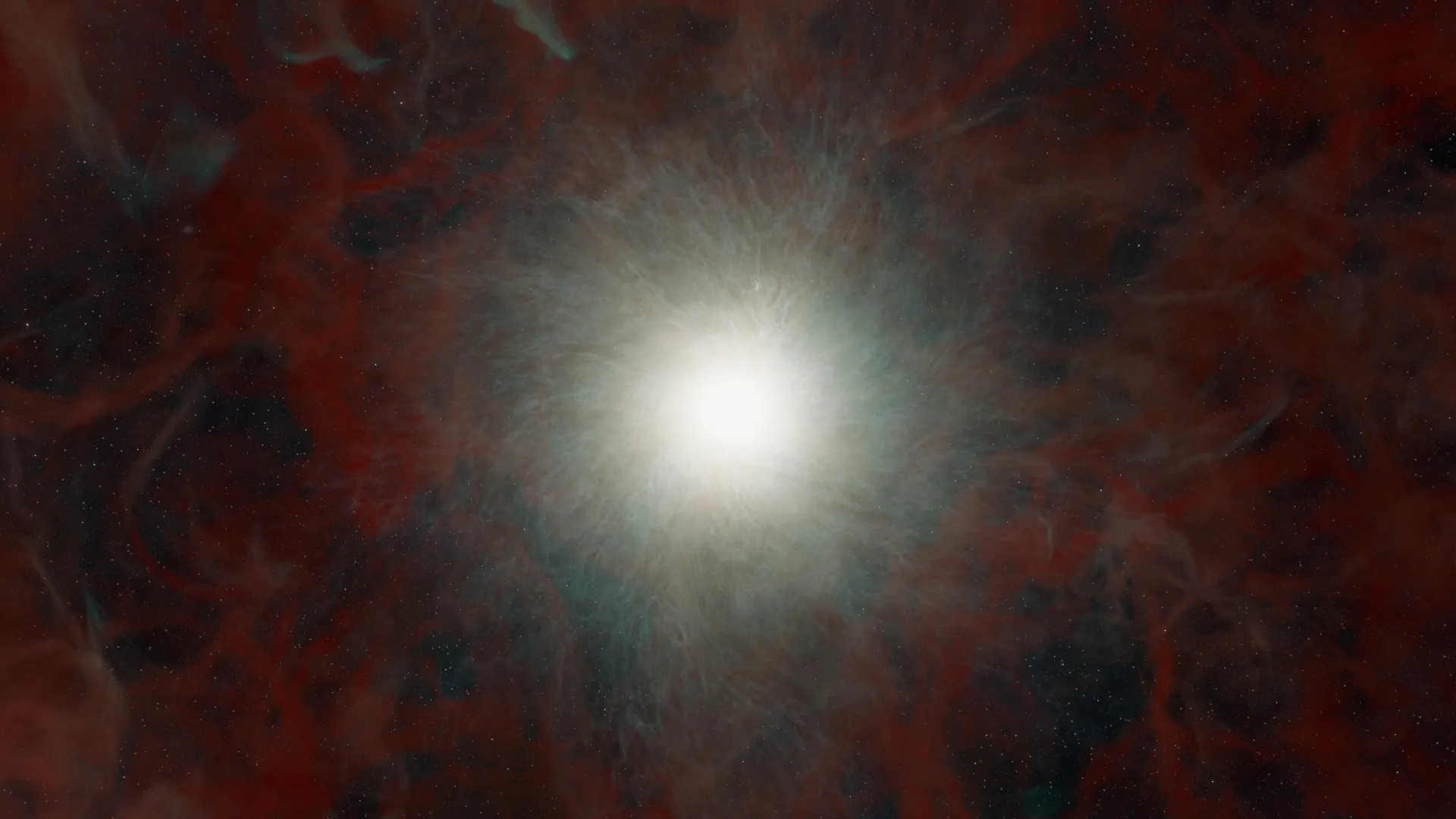
In a groundbreaking astronomical achievement, scientists have meticulously chronicled the direct transformation of a colossal, dying star into a black hole, a rare cosmic event that transpired without the expected violent supernova explosion. This unprecedented observation provides the most comprehensive dataset ever compiled for such a stellar metamorphosis, furnishing researchers with an exceptionally detailed perspective on the formation mechanisms of stellar-mass black holes.
For decades, the final stages of a massive star’s life have been a subject of intense astrophysical inquiry. Stars exceeding approximately eight to ten times the mass of our Sun are destined for dramatic ends, typically culminating in a spectacular supernova. However, theoretical models have long posited an alternative pathway: a "failed supernova," where the star’s core implodes directly into a black hole, largely bypassing the outward explosion. The recent direct observation of this phenomenon not only validates these complex theoretical frameworks but also offers critical empirical data to refine our understanding of these enigmatic gravitational behemoths.
The Observational Breakthrough: A Decade of Data Synthesis
The scientific endeavor behind this discovery involved an intricate synthesis of observational data spanning nearly two decades. Researchers meticulously combined contemporary telescopic observations with an extensive archive of historical data, allowing them to trace the star’s evolution with unparalleled precision. This longitudinal approach enabled a comprehensive evaluation and refinement of long-standing hypotheses regarding the ultimate fate of the universe’s most massive stars. Rather than erupting in a brilliant, energy-releasing supernova, the core of the observed star succumbed to its immense gravitational pull, initiating the formation of a black hole. Concurrently, the star’s volatile outer envelopes were gradually expelled outwards, a process significantly influenced by internal stellar dynamics.
Published in a recent edition of Science, these findings have garnered considerable attention within the astrophysics community. They represent a unique opportunity to witness the genesis of a stellar black hole, providing invaluable insights into a process previously largely confined to theoretical conjecture. Crucially, these results are expected to illuminate the underlying mechanisms that dictate whether a massive star concludes its existence with a dramatic, luminous explosion or a more subdued, gravitational collapse.
Kishalay De, an associate research scientist at the Simons Foundation’s Flatiron Institute and the lead author of this pivotal study, emphasizes the foundational nature of this discovery. "This foundational discovery represents merely the initial phase of a protracted observational and theoretical endeavor," De remarked. The lingering infrared emission from the dusty debris encircling the nascent black hole is anticipated to remain detectable for many decades, observable by advanced instruments such as the James Webb Space Telescope. This enduring signature positions the event as a potential benchmark for unraveling the intricate processes governing the formation of stellar black holes across the cosmos.
The Enigmatic Disappearance of M31-2014-DS1
The star at the center of this remarkable observation, designated M31-2014-DS1, resides approximately 2.5 million light-years distant within the Andromeda Galaxy, our nearest large galactic neighbor. De and his collaborators undertook an exhaustive analysis of data acquired between 2005 and 2023, utilizing observations from NASA’s NEOWISE mission alongside contributions from various ground-based and space-borne observatories. Their investigations revealed a distinct sequence of events: M31-2014-DS1 commenced an inexplicable brightening in infrared wavelengths around 2014. Subsequently, in 2016, its luminosity experienced a precipitous decline, diminishing sharply over a period of less than one year.
By 2022 and 2023, the star had all but vanished in the visible and near-infrared spectrum, its brightness plummeting to a mere one ten-thousandth of its former intensity in those bands. What persists is now discernible exclusively in mid-infrared light, where it continues to emit at approximately one-tenth of its original brilliance. The dramatic nature of this transformation underscores its significance. De highlighted the profound impact of such an occurrence: "This star was once among the most luminous objects within the Andromeda Galaxy, and now it has effectively disappeared from view. One might imagine the global consternation if a star like Betelgeuse were to suddenly vanish; a similar scale of celestial transformation unfolded with this star in the Andromeda Galaxy."
When juxtaposing these detailed observations with established theoretical predictions for stellar collapse, the research team concluded that such an extreme and rapid reduction in luminosity provides compelling evidence for the direct collapse of the star’s core and the subsequent formation of a black hole. This signature, particularly the infrared excess followed by the visible light extinction, is a hallmark of the processes at play.
The Mechanics of Stellar Demise: Why Some Stars Fail to Explode
The fundamental mechanism driving a star’s luminosity and stability is nuclear fusion within its core, where hydrogen is transmuted into helium, generating an outward pressure that precisely counteracts the immense inward force of gravity. In the most massive stars, those at least ten times the mass of our Sun, this delicate hydrostatic equilibrium inevitably collapses as their nuclear fuel reserves dwindle. With the cessation of significant fusion, gravitational forces overwhelm the dwindling outward pressure, leading to an catastrophic inward collapse of the stellar core, which typically forms an ultra-dense neutron star.
In a majority of these core-collapse scenarios, the prodigious outpouring of neutrinos released during the collapse phase generates a potent shock wave. This shock wave propagates outwards, tearing the star apart in what is observed as a Type II supernova – a transient but extraordinarily luminous event. However, if the energy imparted by this shock wave is insufficient to eject the surrounding stellar material, a substantial portion of the star’s outer layers can fall back onto the nascent neutron star. Theoretical models, continuously refined over decades, have consistently predicted that this "fallback" accretion can lead to the further compression of the neutron star, ultimately pushing it beyond its stability limit (the Tolman-Oppenheimer-Volkoff limit) and causing it to collapse further into a black hole.
"While the existence of black holes has been confirmed for nearly five decades," De reflected, "our comprehension of precisely which stellar progenitors transform into black holes and the specific mechanisms by which they do so remains in its nascent stages." This observation marks a significant step towards addressing that fundamental gap in astrophysical knowledge.
The Crucial Role of Convection in Shaping Black Hole Birth
The exhaustive study of M31-2014-DS1 has also provided critical insights that enabled researchers to re-evaluate a similar, previously puzzling object: NGC 6946-BH1, identified approximately a decade prior. A comparative re-analysis of both cases revealed a crucial, previously overlooked ingredient in understanding the fate of a star’s outer layers following a failed supernova: the process of convection.
Convection, a ubiquitous phenomenon in stellar interiors, arises from significant temperature differentials within a star. The core is characterized by extreme temperatures, whereas the outer layers are considerably cooler. This thermal gradient drives the circulation of stellar gas, forming convective currents that transport heat from hotter, deeper regions to cooler, shallower ones.
When a star’s core undergoes gravitational collapse, the outer gas remains in motion due to these ongoing convective churning processes. According to sophisticated models developed at the Flatiron Institute, this inherent motion plays a critical role in preventing the bulk of the outer material from plunging directly into the newly forming black hole. Instead, some of the inner stellar layers enter into an orbital dance around the black hole, while the outermost layers are propelled outwards into the surrounding space.
As this expelled material travels away from the collapsed core, it gradually cools. At lower temperatures, atoms and molecules within the gas combine to form microscopic dust grains. This dust effectively obscures visible light emanating from the hotter gas closer to the black hole. Subsequently, the dust absorbs energy from the surrounding environment and re-emits it efficiently in infrared wavelengths. The observable consequence of this process is a persistent, reddish infrared glow that can endure for many decades after the original luminous star has effectively vanished from visible detection.
Co-author and Flatiron Research Fellow Andrea Antoni, who developed the theoretical framework for these convection models, underscored their explanatory power. Drawing upon the novel observations, Antoni explained, "The accretion rate – the speed at which material falls into the black hole – is considerably slower than what would occur if the star imploded directly. This convectively driven material possesses angular momentum, causing it to circularize and form a diffuse disk around the black hole. Consequently, instead of falling in over a period of months or a year, the infall process extends over decades. This prolonged accretion results in a brighter, more sustained source of emission than would otherwise be the case, accounting for the extended delay in the dimming of the progenitor star."
Analogous to water spiraling down a drain rather than falling straight through, the stellar gas continues to orbit the newly formed black hole as gravitational forces gradually draw it inward. This protracted infall mechanism implies that the entire star does not collapse instantaneously. Even after the core rapidly gives way, a significant portion of the surrounding material falls back slowly over many decades. Researchers estimate that only approximately one percent of the star’s original outer envelope ultimately accretes onto the black hole, generating the faint but persistent infrared light observed today.
Building a Comprehensive Picture of Black Hole Formation
The rigorous analysis of M31-2014-DS1 provided the impetus for the research team to re-examine the previously anomalous case of NGC 6946-BH1. The new study presents compelling evidence that both stars followed remarkably similar evolutionary pathways to black hole formation. What was once considered an isolated and peculiar event now appears to be a representative example of a broader category of "failed supernovae" that quietly give rise to stellar black holes.
De noted that M31-2014-DS1 initially appeared as an "oddball" in the catalog of stellar phenomena, but it now stands as one of several crucial examples, including NGC 6946-BH1, that collectively paint a more complete picture. "It is through the accumulation of these individual, luminous discoveries that we gradually assemble a comprehensive understanding of such profound astrophysical processes," De affirmed.
This research significantly advances our understanding of stellar death, particularly for massive stars, by providing direct observational evidence for a previously theoretical pathway to black hole formation. It also highlights the power of combining long-term observational campaigns with sophisticated theoretical modeling to unravel the universe’s most complex mysteries. Future observations, especially with advanced infrared telescopes, will continue to monitor these sites, providing an enduring natural laboratory for studying the birth and early evolution of stellar black holes. The implications extend to refining models of stellar populations, gravitational wave events, and the overall cosmic evolution of massive objects.




 Aura Kasih
 Lisa Mariana