Ayu Aulia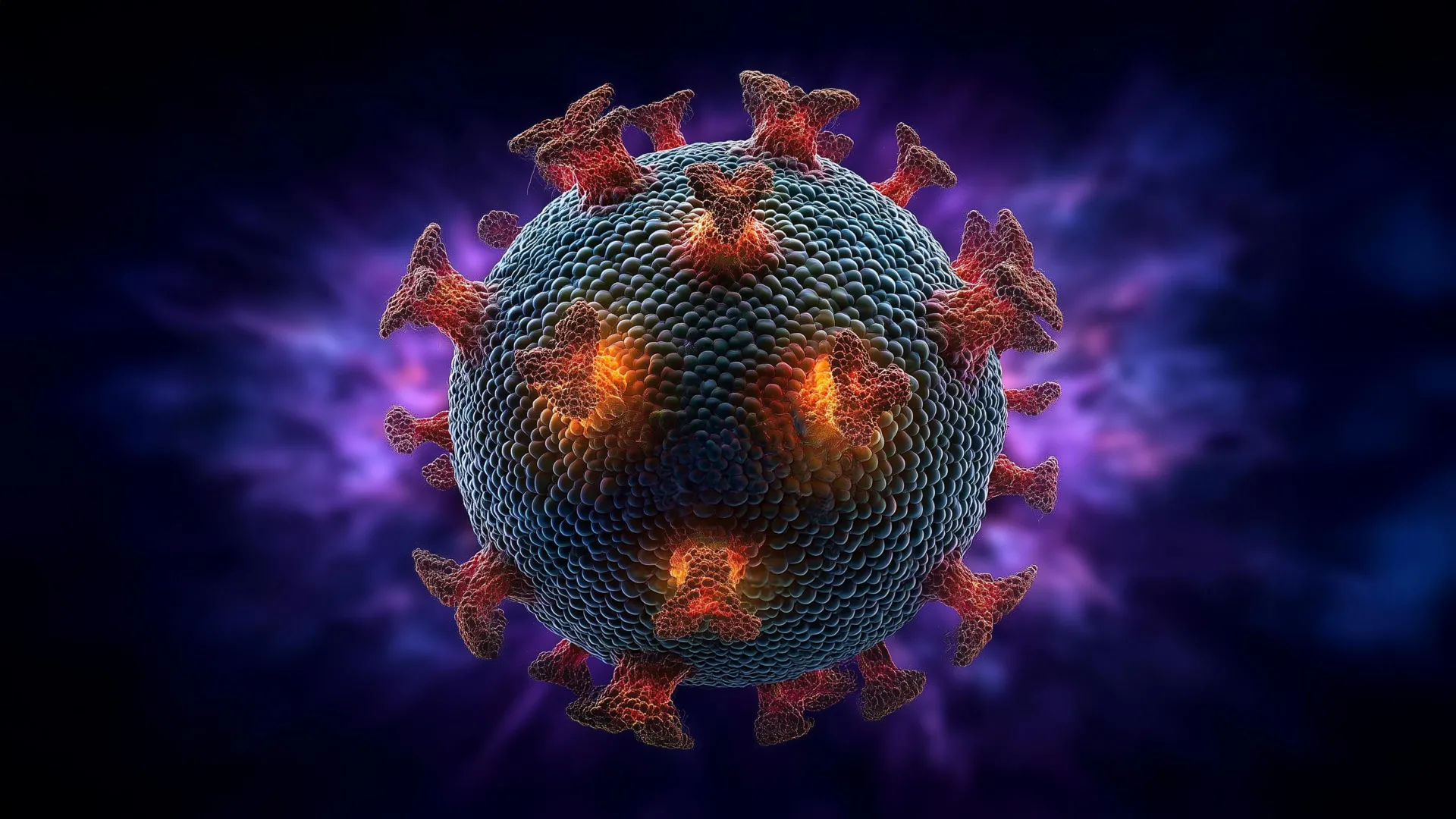
The fundamental narrative of life’s emergence on Earth is undergoing a profound re-evaluation, particularly with the escalating insights into the ancient and intricate world of viruses. For millennia, these enigmatic entities, mere packets of genetic material incapable of independent replication, have occupied a shadowy realm at the periphery of biological classification. Yet, a growing body of evidence, bolstered by the recent discovery of a novel giant virus, increasingly suggests that these microscopic agents may not be mere parasites but rather pivotal architects in the very construction of complex cellular life.
For decades, the precise role of viruses in the grand evolutionary tapestry has been a subject of intense scientific inquiry. Their origins, their evolutionary trajectories, and their placement within the conventional "tree of life" have presented enduring puzzles. Central to this quest is the work of Professor Masaharu Takemura from the Tokyo University of Science, Japan, who, alongside Dr. Philip Bell of Macquarie University, Australia, independently posited a revolutionary hypothesis in 2001: the cell nuclear virus origin theory, or viral eukaryogenesis. This groundbreaking concept proposes that the defining feature of all complex life – the membrane-bound nucleus of eukaryotic cells – may have a viral genesis.
The viral eukaryogenesis hypothesis posits a scenario where a large DNA virus, akin to modern-day poxviruses, infected an ancestral archaeon, a single-celled microorganism representing an ancient branch of life. Rather than initiating a destructive lytic cycle, the virus is theorized to have established a stable, symbiotic relationship within the host’s cytoplasm. Over vast evolutionary timescales, this viral entity would have progressively assimilated crucial genes from its host, gradually transforming into the sophisticated organelle we now recognize as the eukaryotic nucleus. If validated, this theory fundamentally shifts our understanding, elevating viruses from simple pathogens to indispensable catalysts in the rise of all multicellular organisms and complex biological systems.
Giant Viruses: Empirical Pillars for a Paradigm Shift
Substantial empirical support for the viral eukaryogenesis hypothesis materialized in 2003 with the groundbreaking discovery of giant DNA viruses. These colossal viral particles, boasting genomes vastly larger and more complex than typical viruses, presented an entirely new dimension to virology. A hallmark of these giant viruses is their capacity to construct intricate "virus factories" within their infected host cells. These factories, often enveloped by membranes, serve as dedicated sites for viral DNA replication and assembly. The striking resemblance of these membrane-bound viral factories to rudimentary cell nuclei provided a compelling, tangible link that significantly strengthened the proposed evolutionary connection between viruses and the genesis of complex cellular structures.
Since this initial revelation, the scientific community has identified an expanding array of these enigmatic giant DNA viruses. Notable among these are members of the Mamonoviridae family, which are known to infect various amoebae, such as acanthamoeba. Closely related is the clandestinovirus, another giant virus that targets vermamoeba, a different lineage of single-celled amoeboid organisms. Each new discovery in this field contributes critical data points to the intricate mosaic of viral evolution and their potential deep-seated influence on cellular biology.
Ushikuvirus: A New Facet in the Viral Narrative
In a significant new study published in the Journal of Virology, Professor Takemura and his collaborators at the National Institute of Natural Sciences (NINS), Japan, have unveiled another compelling giant DNA virus that infects amoebae. Named Ushikuvirus, after Lake Ushiku in Japan where it was first isolated, this discovery further enriches the evidence supporting the nuclear virus origin hypothesis. The research team, comprising Master’s degree students Jiwan Bae and Narumi Hantori from TUS, alongside Dr. Raymond Burton-Smith and Professor Kazuyoshi Murata from NINS, meticulously characterized this novel entity.
Professor Takemura articulates the profound significance of these discoveries: "Giant viruses can be said to be a treasure trove whose world has yet to be fully understood. One of the future possibilities of this research is to provide humanity with a new view that connects the world of living organisms with the world of viruses." This sentiment underscores the transformative potential of giant virus research to redefine the very boundaries between what is considered "alive" and what is merely a biological agent.
Structural Divergence and Replication Strategies
Despite their widespread presence in natural environments, the isolation and characterization of giant viruses remain challenging due to their remarkable diversity. Each new discovery thus offers unique insights. Ushikuvirus, like clandestinovirus, infects vermamoeba and exhibits structural affinities with the Mamonoviridae family, particularly Medusavirus. Medusavirus is distinguished by its characteristic icosahedral capsid adorned with numerous short, surface-protruding spikes.
However, Ushikuvirus simultaneously displays critical distinguishing features. Its infection triggers a unique cytopathic effect, causing infected vermamoeba cells to swell to an unusually large size. Structurally, its capsid surface is embellished with multiple spike structures, each capped with distinctive, elaborate formations, some even featuring filament-like extensions previously unobserved in medusaviruses. These intricate morphological details hint at specialized host interactions or unique functional roles.
A particularly crucial distinction lies in Ushikuvirus’s replication strategy. While Medusaviruses and clandestinovirus perform their reproductive cycles within an intact host nucleus, Ushikuvirus adopts a contrasting approach. During its replication process, it actively dismantles the nuclear membrane of its host cell to facilitate the production of new viral particles. This divergent behavior offers invaluable clues to the evolutionary adaptations of giant viruses. It suggests a potential evolutionary continuum or different adaptive strategies within the giant virus lineage – bridging the behavior of Mamonoviridae family viruses that utilize an intact nucleus as a viral factory with other giant viruses, such as Pandoravirus, which are known to completely disrupt the nuclear membrane. Scientists hypothesize that these variations in replication strategy likely reflect distinct co-evolutionary adaptations to different host environments over eons.
Refining the Blueprint of Eukaryotic Evolution
The meticulous examination of these structural and functional variations across giant virus families is furnishing researchers with unprecedented insights into the diversification of these colossal entities and, critically, how their intricate interactions with host cells may have profoundly influenced the trajectory of complex eukaryotic life. The differences in replication strategies, from utilizing an intact nucleus to its complete dissolution, offer a spectrum of possibilities that could represent evolutionary steps or alternative pathways in the ancient relationship between viruses and cells.
Professor Takemura emphasizes the broader implications of these findings: "The discovery of a new Mamonoviridae-related virus, ‘ushikuvirus,’ which has a different host, is expected to increase knowledge and stimulate discussion regarding the evolution and phylogeny of the Mamonoviridae family. As a result, it is believed that we will be able to get closer to the mysteries of the evolution of eukaryotic organisms and the mysteries of giant viruses." This ongoing exploration is not merely about classifying new viruses; it is about reconstructing the deep evolutionary past of all life forms.
Beyond Fundamental Science: Potential Healthcare Applications
The significance of discovering amoeba-infecting giant viruses extends beyond the realm of fundamental evolutionary biology to encompass potential practical applications in healthcare. Certain species of Acanthamoeba, for instance, are known to cause severe human diseases, including a devastating form of amoebic encephalitis, a life-threatening brain infection. A more profound understanding of the mechanisms by which giant viruses infect, replicate within, and ultimately destroy amoebae could pave the way for novel therapeutic strategies. This knowledge could be instrumental in developing new antiviral agents or even using engineered viruses as biological tools to prevent or treat these challenging parasitic infections. The intricate dance between virus and amoeba might hold the key to combating future microbial threats.
The Enduring Quest for Origins
Professor Masaharu Takemura, a distinguished Professor in the Department of Mathematics and Science Education at the Graduate School of Science, Tokyo University of Science, continues to lead this charge. His extensive research portfolio, spanning over 120 scientific papers and garnering more than 2,500 citations, is dedicated to giant virus biology, viral eukaryogenesis, and the crucial dissemination of virus education. His overarching ambition is to illuminate the intricate evolutionary pathways of both giant viruses and eukaryotic organisms, concurrently developing educational resources that enhance public virus literacy.
The ongoing research, supported by grants such as JSPS/KAKENHI grant number 20H03078 and the Joint Research of the Exploratory Research Center on Life and Living Systems (ExCELLS), represents a frontier of biological discovery. Each newly identified giant virus, with its unique characteristics and replication strategies, adds another crucial layer to our understanding of life’s fundamental architecture. These colossal viral entities, once overlooked or underestimated, are increasingly recognized as central players in the most profound evolutionary transitions, compelling a re-evaluation of the origins of complex life itself and underscoring the dynamic, interwoven nature of all biological existence. The journey into the "treasure trove" of giant viruses promises to continually reshape our perception of life on Earth, revealing an ancestry far more viral than previously imagined.




 Aura Kasih
 Lisa Mariana


 Ridwan Kamil