Aura Kasih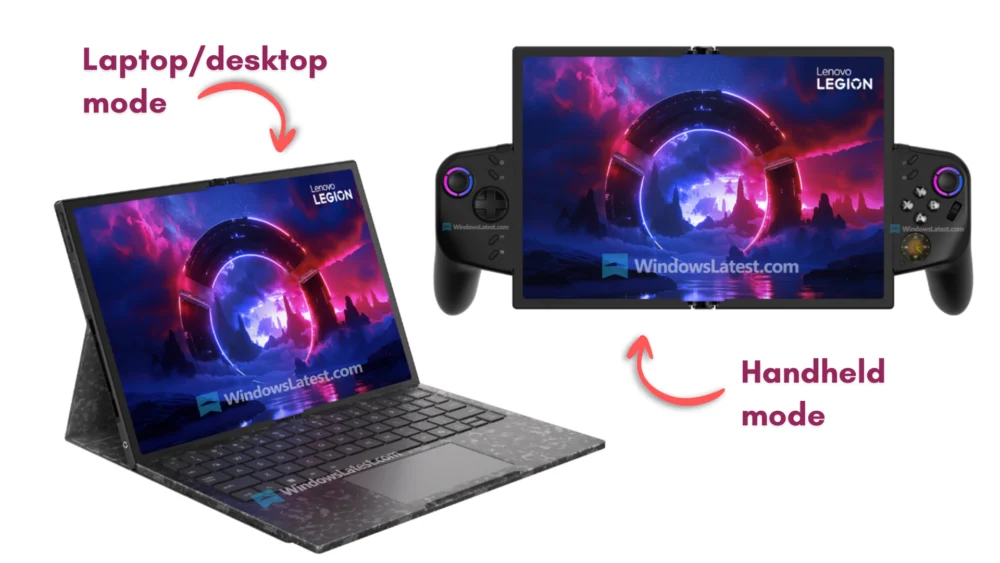
Lenovo is reportedly on the cusp of redefining portable computing with a groundbreaking foldable device, codenamed the Legion Go Fold, that masterfully blends the immersive experience of a dedicated gaming handheld with the robust functionality of a full-fledged Windows laptop. This innovative concept, if realized, promises to shatter conventional device categories by offering unparalleled versatility through its dynamic display and adaptable form factors.
The technological landscape is perpetually shaped by companies daring to challenge existing paradigms, and Lenovo’s reported foray into foldable computing with the Legion Go Fold exemplifies this spirit of innovation. Whispers from the tech industry suggest that Lenovo is preparing to unveil a concept device at the upcoming Mobile World Congress (MWC) in Barcelona, a platform known for showcasing the bleeding edge of mobile and computing advancements. This highly anticipated device, purportedly codenamed the Legion Go Fold, is not merely an iteration but a bold reimagining of what a personal computing device can be, seamlessly merging high-performance gaming with the comprehensive capabilities of a Windows operating system. The implications of such a device extend far beyond the immediate consumer market, potentially influencing enterprise solutions and creative workflows.
At the heart of the Legion Go Fold’s revolutionary design lies its adaptable display technology. Leaked imagery depicts a device featuring a central hinge that allows its screen to fold, transforming from a compact 7.7-inch handheld display into a more expansive 11.6-inch screen when fully unfolded. This dual-display functionality is a significant departure from single-screen devices and opens up a plethora of usage scenarios. For gamers, the smaller, folded screen would likely offer an ergonomic and immersive handheld experience, reminiscent of dedicated gaming consoles. Upon unfolding, the larger 11.6-inch display provides a more expansive canvas for gaming, content consumption, or productivity tasks that benefit from increased screen real estate. The adoption of POLED technology for the display is also noteworthy, suggesting a commitment to vibrant colors, deep blacks, and potentially a higher refresh rate, crucial elements for both gaming and visual media.

The versatility of the Legion Go Fold is further amplified by its modular controller system and its ability to seamlessly transition between different modes. The leaked visuals indicate that detachable controllers can be affixed to the device in various configurations, catering to diverse user preferences and applications. When unfolded, these controllers can be attached to either side of the larger screen, facilitating a traditional handheld gaming setup. Alternatively, the device can be configured into a laptop-like form factor by attaching a keyboard accessory, transforming it into a portable workstation capable of running full Windows applications. This multi-modal approach acknowledges that users interact with their devices differently depending on the task at hand, and the Legion Go Fold appears designed to accommodate this fluidity.
A particularly intriguing aspect of the controller design is the potential for an integrated "FPS Mode." This innovative feature, reminiscent of functionalities seen in Lenovo’s previous Legion Go iterations and discussions surrounding the next-generation Nintendo Switch, suggests that the right-side controller can be utilized as a vertical mouse. This offers a more precise and intuitive control scheme for first-person shooter games, a genre where traditional gamepad controls can sometimes feel limiting. Furthermore, the right-side controller is rumored to incorporate a secondary display. This embedded screen could serve a dual purpose: providing real-time performance metrics, system status, and customization options for gamers, while also functioning as a touchpad for navigation and productivity tasks when the device is in laptop mode. This integration of secondary display technology into a peripheral is a sophisticated design choice that enhances both usability and aesthetic appeal.
Under the hood, the rumored specifications of the Legion Go Fold paint a picture of a powerful portable machine. The inclusion of an Intel Core Ultra 7 258V CPU suggests a focus on delivering robust processing power, capable of handling demanding games and complex applications. Coupled with a substantial 32GB of RAM, the device should offer smooth multitasking and efficient performance across a wide range of tasks. The reported 48 Whr battery capacity, while subject to real-world optimization, indicates an effort to balance power with endurance, a critical factor for any portable device. These specifications, if accurate, position the Legion Go Fold as a genuine contender in the premium portable computing space, capable of competing with established gaming laptops and high-end ultrabooks.
The strategic announcement of the Legion Go Fold as a "concept device" at MWC is a prudent move by Lenovo. Presenting it as a concept allows the company to gauge market reception, gather feedback, and refine the technology without the immediate pressure of mass production and commercial viability. This approach is common for truly disruptive technologies, allowing for iterative development and ensuring that the final product aligns with consumer needs and technological feasibility. While commercial availability is not guaranteed, the very existence of such a concept signals Lenovo’s commitment to pushing the boundaries of portable computing and exploring new avenues for user interaction.

The implications of the Legion Go Fold extend beyond the realm of personal entertainment. In the professional sphere, a device that can seamlessly transition from a portable gaming rig to a fully functional Windows laptop could appeal to a wide range of professionals. Designers, developers, and mobile sales teams could benefit from a single device that consolidates their computing needs, eliminating the need to carry multiple gadgets. The foldable nature could also offer new possibilities for collaborative work, allowing for shared viewing and interaction on a larger, more dynamic screen. The potential for intuitive input methods, such as the FPS mode repurposed for productivity applications, further broadens its appeal.
The development of foldable technology has seen significant advancements in recent years, primarily within the smartphone market. However, applying this technology to larger form factors like laptops and gaming devices presents unique engineering challenges. These include ensuring the durability of the hinge mechanism over countless folds, optimizing thermal management for high-performance components within a compact and flexible chassis, and developing software that intelligently adapts to the various screen configurations. Lenovo’s track record with its Legion gaming brand, known for its robust performance and thoughtful design, suggests they are well-equipped to tackle these challenges.
Looking ahead, the Legion Go Fold, even as a concept, represents a significant step towards a future where devices are not confined to single, rigid forms. The trend towards hybrid devices and multi-functional computing is undeniable, and Lenovo’s potential offering could accelerate this movement. The success of such a device would likely spur further innovation in foldable screen technology, battery life, and modular design across the entire tech industry. It also raises questions about the future of traditional laptop form factors and the potential for a more fluid and adaptable computing experience. The convergence of gaming and productivity in a single, transformable device could fundamentally alter how we perceive and utilize our personal technology. The Legion Go Fold, if it transitions from concept to reality, could very well be a harbinger of this exciting new era.




 Lisa Mariana
 Ayu Aulia