Lisa Mariana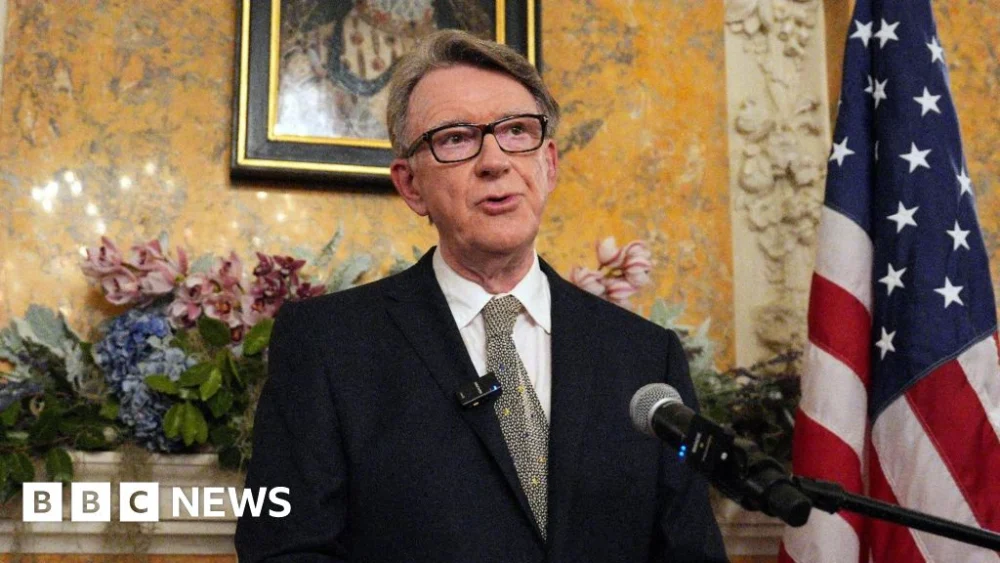
The recent appointment and subsequent removal of Lord Mandelson as the United Kingdom’s ambassador to the United States has ignited significant parliamentary and public debate, focusing intensely on the robustness of the vetting processes employed for such high-level diplomatic roles, particularly concerning an individual’s past associations and potential reputational liabilities. This intricate case, involving a figure of considerable political stature, underscores the critical importance of comprehensive background checks and transparent disclosure mechanisms in safeguarding national interests and maintaining public confidence in governmental appointments.
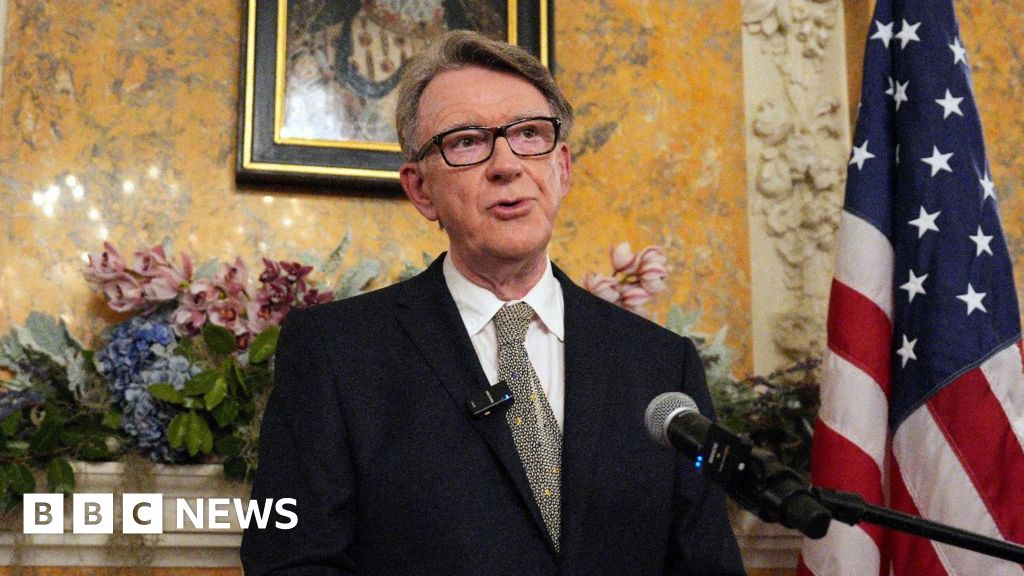
Lord Mandelson, a prominent and historically influential figure within British politics, was designated as the UK’s chief diplomatic representative in Washington in December 2024. However, his tenure was abruptly curtailed in September of the following year amidst revelations regarding his sustained contact with the convicted sex offender Jeffrey Epstein, even after Epstein’s 2008 conviction for soliciting sex from a minor. This development has precipitated a demand for the full disclosure of all documentation pertaining to Mandelson’s vetting, with Prime Minister Sir Keir Starmer acknowledging that the initial assessment included discussions about this controversial relationship. The Prime Minister, however, has subsequently alleged that Lord Mandelson provided misleading accounts regarding the nature and extent of his association with Epstein during these vetting stages. Conversely, sources close to Mandelson contend that his responses to all inquiries were accurate and comprehensive at the time. This divergence in narratives highlights a fundamental challenge in high-stakes appointments: ensuring complete and truthful disclosure from candidates and adequate verification by vetting authorities.
The process undertaken for Lord Mandelson’s appointment was structured into two primary phases: an initial due diligence review, followed by a more intensive security clearance. Understanding the intricacies of these stages is crucial to evaluating the effectiveness and potential shortcomings of the system.
Initial Reputational and Conflict-of-Interest Assessment
The first stage, often referred to as due diligence, was conducted by a specialized team within the Cabinet Office, acting on behalf of Downing Street. This reflects the Prime Minister’s ultimate responsibility for ambassadorial appointments, particularly to a nation as strategically vital as the United States. The primary objective of this preliminary assessment is to proactively identify any potential reputational risks, conflicts of interest, or other factors that could compromise the integrity or effectiveness of the appointee. This includes evaluating whether a candidate’s past actions, affiliations, or financial dealings might present vulnerabilities or generate adverse public perception.
Sir Chris Wormald, the most senior civil servant in the UK, has previously elucidated to parliamentary committees that this initial check relied predominantly on publicly available information. This typically encompasses extensive media reports, public records, and other open-source intelligence. In Lord Mandelson’s specific case, it was a matter of public record that he had maintained contact with Jeffrey Epstein subsequent to Epstein’s 2008 conviction. For instance, reports by the Financial Times in 2023 indicated that Mandelson had reportedly stayed at Epstein’s Manhattan residence in 2009, even while Epstein was incarcerated. Such information, being in the public domain, should theoretically have been readily accessible and flagged during this initial assessment.
Beyond public information, Sir Chris confirmed that the only non-public data incorporated into this phase were records detailing a meeting Lord Mandelson had facilitated between Epstein and former Prime Minister Sir Tony Blair. These records have since been released by the National Archives, further illustrating the iterative nature of information disclosure and its potential to alter the perception of past events. Lord Mandelson’s comprehensive file reportedly detailed his extensive career trajectory, encompassing both governmental and non-governmental roles, alongside his various professional and financial relationships. Within this compilation, his previous association with Epstein was explicitly identified as a potential reputational risk. This was categorized alongside other historical controversies, notably his two prior resignations from ministerial positions during the previous Labour administration. The acknowledgement of these risks indicates that the information was indeed identified; the critical question then becomes how these risks were evaluated and ultimately mitigated.
Focused Inquiries and Candidate Responses
Following the review of the initial due diligence file, sources within Number 10 confirmed that Sir Keir Starmer requested Lord Mandelson to provide direct answers to three specific questions. These inquiries, conveyed via email by the Prime Minister’s chief of staff, Morgan McSweeney, were designed to address the most salient concerns arising from the preliminary assessment. The questions focused on: (1) the rationale for continuing contact with Epstein after his criminal conviction; (2) clarification regarding reports of his stay at an Epstein property during the financier’s imprisonment; and (3) any association with a charity established by Epstein’s associate, Ghislaine Maxwell, which had received Epstein’s financial backing.
At the juncture of these inquiries, Mandelson’s explanations were evidently deemed satisfactory, paving the way for his progression to the subsequent stage of security vetting. The perceived sufficiency of these answers at the time is now a central point of contention, especially in light of subsequent revelations. The mounting pressure from parliamentary bodies and the public for the release of these specific questions and Lord Mandelson’s corresponding answers is a direct consequence of the desire for greater transparency and accountability in the vetting process. Such disclosure would enable a more informed assessment of whether the initial responses adequately addressed the gravity of the concerns or if critical details were inadvertently overlooked or intentionally obscured.
Comprehensive Security Clearance: Developed Vetting (DV)
The second, and arguably more stringent, phase of the vetting process is the security clearance, specifically Developed Vetting (DV). This is the highest level of security clearance in the United Kingdom, mandated for individuals requiring access to the most sensitive government information, including highly classified intelligence and national security secrets. The Foreign, Commonwealth & Development Office (FCDO) explicitly states that all ambassadors, given the critical nature of their roles and their exposure to classified material, are required to undergo this rigorous process.
Developed Vetting is administered by United Kingdom Security Vetting (UKSV), a specialized agency operating under the Cabinet Office. The overarching purpose of DV is multifaceted: to ascertain that individuals holding positions of immense trust are not susceptible to coercion, blackmail, bribery, or undue influence, and that they possess the necessary integrity and discretion to handle sensitive national information responsibly. This process is designed to identify any vulnerabilities that could be exploited by hostile foreign actors or compromise national security.
The DV process is exceptionally intrusive and comprehensive. Applicants are required to complete extensive questionnaires detailing various aspects of their personal lives, including their financial history, internet usage patterns, medical conditions, and all email addresses held. Beyond these self-declarations, UKSV conducts a battery of independent checks. These include thorough examinations of credit history to identify financial vulnerabilities, as well as comprehensive criminal record checks.
A critical component of Developed Vetting is an in-depth interview conducted by a specially trained vetting officer. This interview goes beyond factual verification, delving into more personal and potentially sensitive areas of a candidate’s life. Topics covered can include an individual’s health status, their friendships and broader social circles, family relationships, and even their sexual history. The objective is to identify any areas of an individual’s life that might make them susceptible to compromise or that could indicate a lack of judgment or discretion.

Upon completion of all checks and interviews, UKSV makes the ultimate determination regarding the award of security clearance. This determination can include the imposition of specific mitigations, such as restricting access to certain categories of information, if minor risks are identified but deemed manageable. Crucially, the detailed outcomes and findings of the security vetting process are maintained within a highly restricted circle, accessible only to the vetting agency and relevant security teams. Government ministers, including the Prime Minister, are typically not privy to the granular details of an individual’s DV file. This separation is intended to ensure the impartiality and integrity of the security vetting process, preventing political interference in national security assessments.
Unforeseen Revelations and Political Fallout
Despite successfully navigating both stages of this extensive vetting process, Lord Mandelson’s tenure as ambassador was short-lived. His dismissal in September 2025, less than a year after his appointment, was prompted by the emergence of new email correspondence that revealed further supportive messages exchanged with Epstein after his guilty plea to sex offenses. The government’s official position was that the full extent and depth of their relationship were not adequately known or understood at the time of Mandelson’s appointment.
This unforeseen turn of events has placed significant pressure on the Prime Minister and the vetting system itself. Critics are now questioning whether the publicly available information prior to the appointment, which clearly indicated an ongoing relationship with a convicted sex offender, should have raised more profound alarm bells and triggered a more rigorous inquiry. The current scrutiny focuses not just on Lord Mandelson’s disclosures, but also on the efficacy of the due diligence process and the subsequent evaluation of risks by the Cabinet Office and Number 10.
The Mandelson case serves as a poignant illustration of the inherent challenges in vetting high-profile individuals for sensitive diplomatic roles. It highlights the tension between reliance on self-disclosure, the limitations of public record checks, and the imperative for comprehensive, robust, and forward-looking risk assessments. The political ramifications are substantial, with the Prime Minister facing demands for increased transparency and potentially a review of the procedures for appointing senior officials. This incident is likely to prompt a re-evaluation of how reputational risks, particularly those linked to morally reprehensible figures, are assessed and weighed against a candidate’s perceived merits and experience. Ultimately, the episode underscores the need for continuous refinement of vetting protocols to safeguard the integrity of government appointments and uphold public trust in the UK’s diplomatic representation on the global stage.




 Aura Kasih

 Ridwan Kamil