Ayu Aulia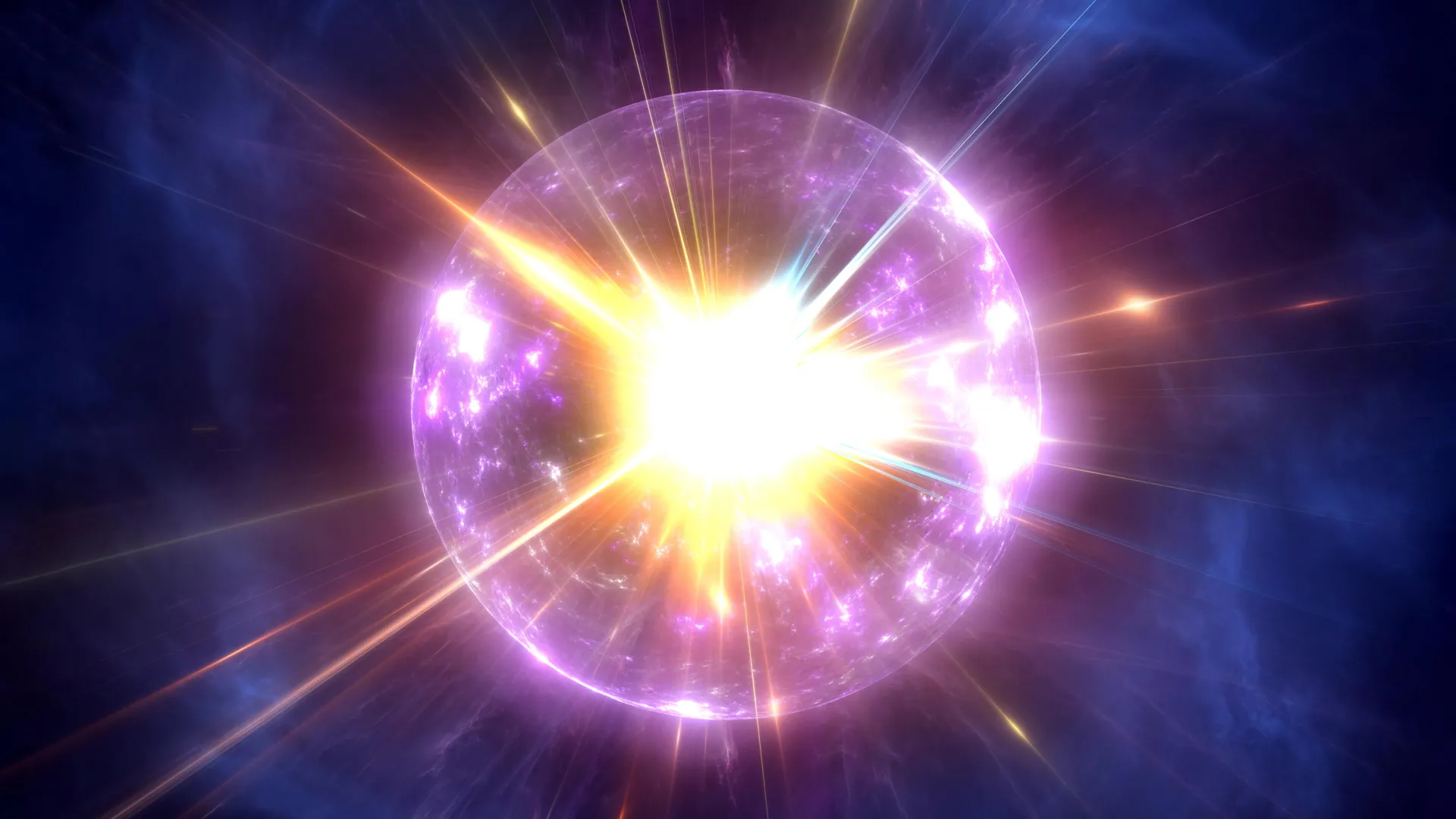
For decades, the prevailing scientific consensus regarding the ultimate fate of the cosmos has largely leaned towards an unending expansion, gradually fading into a cold, dark void known as the "Big Freeze." However, groundbreaking research emanating from Cornell University, spearheaded by a distinguished physicist, now presents a compelling alternative: a universe destined for a "Big Crunch." This revised cosmological model, informed by recently released data from prominent dark energy observatories, posits that the universe may be approaching its mid-point, with approximately 11 billion years of continued expansion remaining before an inevitable reversal towards contraction, culminating in a singular point of extreme density.
The Evolving Narrative of Cosmic Destiny
The concept of a universe with a definitive end is not entirely novel, yet the precise mechanism and timeline proposed by this new study offer a significant departure from established paradigms. At the heart of this updated perspective lies a reinterpretation of the "cosmological constant," a foundational element in modern cosmological models first introduced by Albert Einstein over a century ago. Professor Henry Tye, a Horace White Professor of Physics Emeritus at Cornell’s College of Arts and Sciences, along with his collaborators, has revisited this constant, proposing a critical adjustment that shifts its perceived value from positive to negative. This subtle yet profound alteration carries immense implications for the universe’s trajectory.
Historically, a positive cosmological constant has been associated with an accelerating expansion, driven by dark energy, leading to an eternal, ever-thinning cosmos. Conversely, a negative cosmological constant implies an eventual deceleration, followed by a gravitational reversal. "For the last two decades, the scientific community predominantly held that the cosmological constant was positive, predicting an infinitely expanding universe," Tye remarked. "However, the emerging data now suggest a negative value, pointing towards a ‘Big Crunch’ as the universe’s ultimate conclusion." This research, titled "The Lifespan of our Universe," has been formally published in the esteemed Journal of Cosmology and Astroparticle Physics, signaling a potential paradigm shift in cosmic eschatology.
From Infinite Expansion to Finite Collapse
Our universe, currently estimated at 13.8 billion years old, is undeniably still undergoing expansion. Standard cosmological frameworks typically delineate two primary long-term outcomes for this expansion: either it continues indefinitely, or it eventually ceases, reverses, and contracts. The determining factor largely hinges on the nature and magnitude of the cosmological constant, which represents the energy density of empty space.
If this constant maintains a positive value, the repulsive force of dark energy would perpetually overcome gravity, ensuring that galaxies continue to drift apart, eventually beyond each other’s observable horizons, leading to a state of ultimate thermodynamic equilibrium and isolation—the "Big Freeze." Conversely, a negative cosmological constant would signify that the gravitational attraction of matter and dark energy’s influence would eventually overcome its expansive force. The universe would reach a maximal size, a cosmic apogee, before succumbing to its own gravity, pulling all matter and energy back together. This is the scenario championed by Professor Tye’s updated model.
Such a reversal would initiate a phase of cosmic contraction, with galaxies drawing closer, space itself shrinking, and the density of matter and energy progressively increasing. This process would culminate in a "Big Crunch," a catastrophic event where the entire observable universe collapses back into an infinitesimally small, infinitely dense singularity, mirroring the Big Bang in reverse. Based on Tye’s intricate calculations, this dramatic denouement is projected to occur approximately 20 billion years from now, placing the universe’s total estimated lifespan at roughly 33 billion years. This timeline positions humanity at a mere fraction of the cosmic journey, nearing the halfway point of its existence.
The Pivotal Role of Dark Energy Observatories
The critical empirical foundation for these revised calculations stems from newly released data from two globally significant observatories: the Dark Energy Survey (DES), situated in Chile, and the Dark Energy Spectroscopic Instrument (DESI), located in Arizona. Professor Tye highlighted the striking concordance between the findings from these two independent projects, despite their disparate geographical locations and observational methodologies. This agreement lends considerable weight to the veracity of the underlying data.
Both DES and DESI are dedicated to unraveling the mysteries of dark energy, the enigmatic force believed to constitute approximately 68% of the total mass and energy content of the universe. Its pervasive influence is thought to be responsible for the observed accelerated expansion of the cosmos. A primary objective of these surveys is to determine whether dark energy is a simple, immutable property inherent to the fabric of spacetime, as represented by Einstein’s original cosmological constant. However, the latest findings suggest a more intricate reality. The universe’s dynamics do not appear to be governed solely by a static cosmological constant; additional, more complex factors may be modulating dark energy’s behavior over cosmic timescales.
To account for these nuanced observations, Tye and his team have introduced a theoretical construct: a hypothetical particle possessing an exceedingly low mass. In the nascent stages of cosmic evolution, this particle would have mimicked the behavior of a conventional cosmological constant. Yet, as the universe matured, its effects would have subtly but significantly evolved, leading to a shift in its overall influence. This theoretical adjustment, which aligns robustly with the most recent observational data, effectively pushes the underlying, fundamental cosmological constant into negative territory.
"While the idea of a universe collapsing if the cosmological constant is negative has been discussed before, what our model provides is a concrete timeline and a detailed mechanism for this collapse," Tye explained, emphasizing the novelty of their specific predictions. This level of detail moves beyond mere theoretical speculation, offering a quantifiable framework for the universe’s ultimate fate.
Implications of a Negative Cosmological Constant
The conceptual shift from a positive to a negative cosmological constant has profound implications for our understanding of cosmic physics. A negative constant implies that the vacuum energy of space, rather than exerting a constant repulsive force, might eventually exert an attractive one, or at least a less repulsive one that allows gravity to dominate. The hypothetical particle introduced by Tye’s team acts as a dynamic field, often referred to as "quintessence" in broader cosmological discussions, but with a specific characteristic that allows the effective cosmological constant to change sign over time.
This dynamic nature suggests that the universe’s expansion, which is currently accelerating, will not only slow down but eventually reverse. The "turnaround point" approximately 11 billion years from now marks the peak expansion. Following this, the universe would begin to contract, accelerating inward. As space shrinks, galaxies would rush towards each other, eventually merging and overlapping. The cosmic microwave background radiation, currently a faint echo of the Big Bang, would blueshift, becoming hotter and more energetic. Temperatures across the universe would rise dramatically, and the very fabric of spacetime would compress, leading to conditions reminiscent of the early universe, but in reverse. The ultimate Big Crunch would represent a singularity of immense density and temperature, effectively erasing all structures, from galaxies to fundamental particles, into an undifferentiated cosmic soup.
Future Observational Verification and the Pursuit of Cosmic Truths
The scientific community recognizes that such a significant theoretical revision requires rigorous empirical scrutiny. Fortunately, a wealth of observational data is on the horizon, promising to either corroborate or challenge Tye’s intriguing hypothesis. Hundreds of researchers globally are meticulously mapping millions of galaxies, precisely measuring the vast distances between them. These endeavors aim to refine our understanding of dark energy’s properties with unprecedented accuracy.
DESI, for instance, is slated to continue its data collection for at least another year, providing an even richer dataset. Beyond DESI, several other ambitious projects are either operational or in advanced stages of preparation. These include the Zwicky Transient Facility in San Diego, designed to detect transient astronomical events; the European Space Agency’s Euclid space telescope, which will create a 3D map of the universe to probe dark energy and dark matter; NASA’s recently launched SPHEREx mission, tasked with surveying the sky in near-infrared light; and the highly anticipated Vera C. Rubin Observatory (named in honor of astronomer Vera Rubin, M.S. ’51), which will undertake a decade-long survey of the southern night sky. The cumulative data from these sophisticated instruments will provide crucial tests for Tye’s model, allowing cosmologists to discern whether the universe’s fate truly leans towards a Big Crunch.
Understanding the Cosmic Narrative: Beginnings and Endings
For Professor Tye, the ability to even contemplate and calculate the universe’s total lifespan in measurable terms represents a profound scientific achievement. Identifying both the genesis and the eventual conclusion of the cosmos provides an overarching narrative, enabling cosmologists to construct a more complete and coherent story of cosmic history.
"Just as with any form of life, there is an innate desire to comprehend its genesis and its ultimate conclusion," Tye reflected. "For our universe, the inquiry into its origin led to the understanding of the Big Bang in the 1960s. The subsequent question, ‘Does it have an end?’ has long been met with the popular belief of eternal expansion. The prospect that new data might affirm a definitive end, in the form of a Big Crunch, provides a sense of completeness to our cosmic understanding."
This research, collaboratively undertaken with former Hong Kong University of Science and Technology doctoral students Hoang Nhan Luu and Yu-Cheng Qiu, represents a pivotal moment in cosmology. It underscores the dynamic nature of scientific inquiry, where long-held assumptions are continually challenged and refined by new empirical evidence and innovative theoretical frameworks. The universe, it seems, continues to hold surprises, urging humanity to persist in its relentless quest to comprehend the grandest story of all.


 Lisa Mariana

 Aura Kasih