
 Lisa Mariana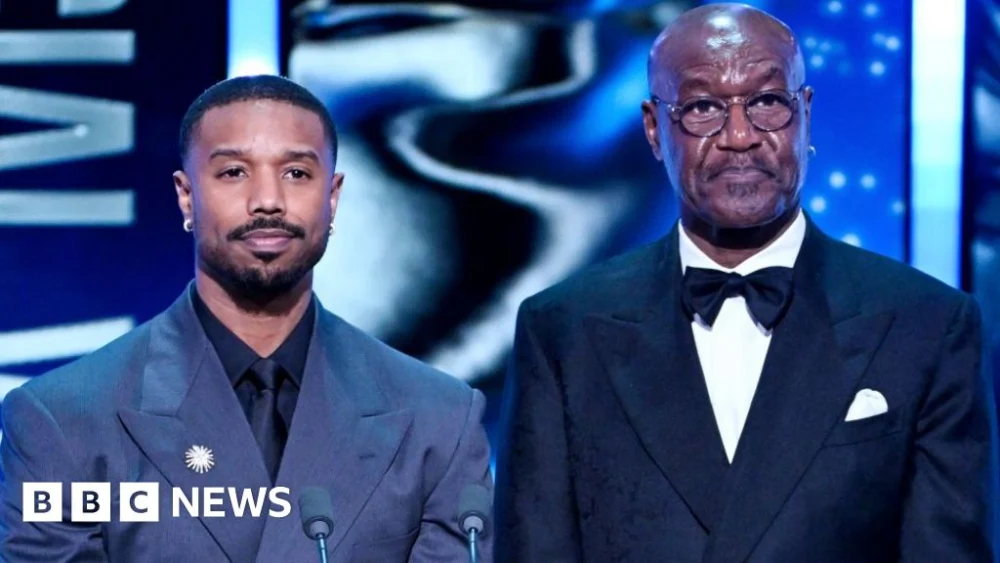
A profound incident at the British Academy Film Awards 2026, involving the broadcast of an unedited racial slur, has precipitated a significant apology from the BBC and initiated a comprehensive re-examination of media content moderation, public service broadcasting responsibilities, and the nuanced portrayal of neurological conditions. The unexpected utterance, emanating from a guest with Tourette’s syndrome, reverberated through the Royal Festival Hall and subsequently across national television, sparking a multifaceted discourse on accountability, empathy, and editorial judgment in high-profile cultural events.
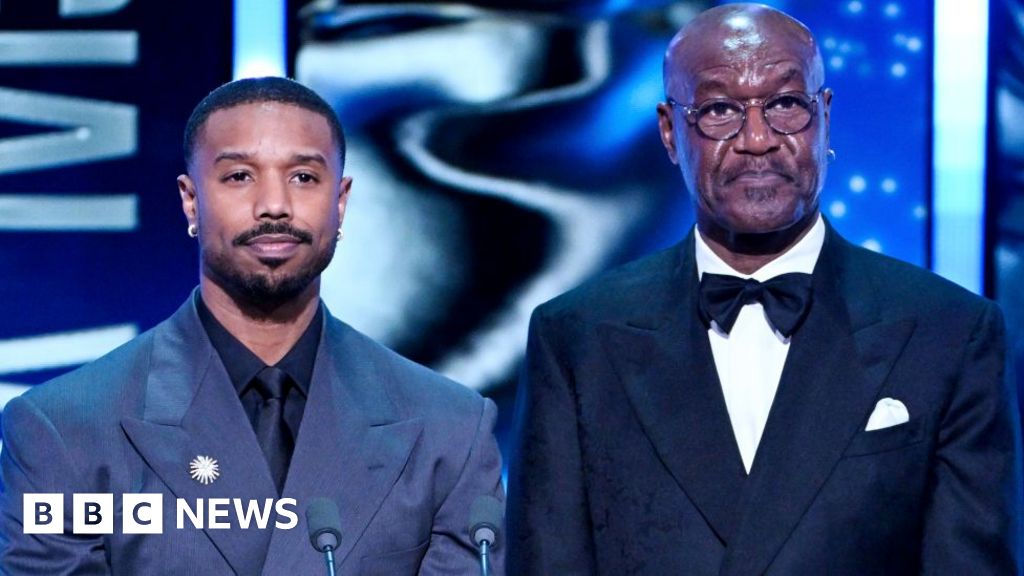
The controversial moment unfolded during the prestigious ceremony held on Sunday, February 22, 2026, as Hollywood luminaries Michael B. Jordan and Delroy Lindo, celebrated stars of the film Sinners, graced the stage to present the inaugural award. Amidst the anticipation, a distinctly audible racial epithet, the N-word, was shouted from the audience. The source of this outburst was identified as John Davidson, a prominent advocate for Tourette’s awareness, whose compelling life narrative served as the inspiration for the critically acclaimed film I Swear. Despite the BAFTA ceremony being broadcast on BBC One with a two-hour delay, the offensive language remained unedited, reaching a vast national audience. The recording of the event persisted on BBC iPlayer throughout Monday morning before being eventually removed, underscoring the initial oversight.
Responding to the burgeoning criticism, a spokesperson for the BBC issued a statement acknowledging the error: "We express our regret that this was not edited out prior to broadcast, and it will now be expunged from the version available on BBC iPlayer." The corporation further contextualised the incident, explaining, "Some viewers may have encountered strong and offensive language during the Bafta Film Awards. This manifestation originated from involuntary verbal tics associated with Tourette syndrome, and as communicated during the ceremony, it was unintentional." However, the BBC refrained from offering additional clarification regarding the specific reasons for the initial failure to edit or censor the remark.
The unedited broadcast quickly drew sharp condemnation from various quarters. Kemi Badenoch, the leader of the Conservative Party, publicly asserted that the BBC had committed "a grave error" by not excising the slur at the time of the delayed transmission. She emphasised the imperative of a thorough explanation, stating, "While an apology is crucial, they must elucidate why it was not bleeped out." This sentiment reflected a broader public expectation for robust editorial control, particularly from a national public service broadcaster mandated to uphold standards of decency and inclusivity.
The impact on the presenters, Michael B. Jordan and Delroy Lindo, was palpable. Lindo later conveyed to Vanity Fair that while they maintained their professionalism, continuing to present the category "as we had to do," he harboured a wish that "someone from Bafta spoke to us afterward." This sentiment highlighted a perceived lack of immediate support or acknowledgement from the organisers to those directly affected by the offensive language.
BAFTA, in its own formal statement, acknowledged the gravity of the situation: "We recognise the harm this has inflicted, commit to addressing what transpired, and extend our apologies to all impacted parties." The organisation reiterated its commitment to the welfare of its attendees, stating it commenced "from a position of inclusion" and had implemented measures to apprise guests of Davidson’s presence and the potential for strong language. The statement elaborated: "Early in the ceremony, a loud tic in the form of a profoundly offensive term was heard by many people in the room. Michael B. Jordan and Delroy Lindo were on stage at the time, and we unreservedly apologise to them, and to all those impacted. We wish to commend Michael and Delroy for their exceptional dignity and professionalism."
John Davidson, the individual at the centre of the controversy, expressed profound regret for the involuntary nature of his tics. A Tourette’s campaigner from Galashiels, Scotland, and an MBE recipient for his advocacy, Davidson’s tics were reportedly audible multiple times throughout the evening. He released a statement asserting, "I am profoundly mortified if anyone perceives my involuntary tics as intentional or imbued with any meaning. My life’s endeavour has been dedicated to supporting and empowering the Tourette’s community and fostering empathy, kindness, and understanding from others, a commitment I shall uphold." He also disclosed his decision to exit the auditorium early, recognising the distress his tics were causing.
Understanding the nature of Tourette’s syndrome is crucial for contextualising the incident. Tourette’s is a complex neurological disorder characterised by sudden, repetitive, involuntary movements and vocalisations, known as tics. A significant, though often misunderstood, aspect of the condition is coprolalia, wherein individuals involuntarily utter socially inappropriate words or phrases, including obscenities or racial slurs. Medical literature and organisations like Tourette’s Action estimate that between 10% and 30% of individuals with Tourette’s experience coprolalia. It is paramount to stress that these utterances are not reflective of the individual’s thoughts, beliefs, or intentions but are rather an uncontrollable neurological symptom.
The challenge for broadcasters in managing delayed live events of this magnitude is considerable. While a two-hour delay typically provides ample opportunity for editorial review and censorship of problematic content, the failure to identify and remove the slur raises questions about the efficiency of the production pipeline and the robustness of content filters. Such oversights highlight the inherent tension between broadcasting authenticity, reflecting the live event as it unfolds, and the imperative to protect audiences from potentially harmful or offensive material. The BBC, as a publicly funded institution, operates under stringent editorial guidelines and regulatory oversight, making such an error particularly impactful on its reputation and public trust.
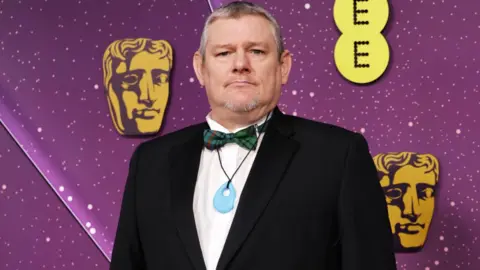
The incident further prompted a wider discussion on media ethics and inclusivity. Host Alan Cumming’s on-air apology during the ceremony, referencing "some strong and offensive language" from an individual with Tourette’s who had "no control over their language," concluded with "We apologise if you were offended." This formulation, particularly the phrase "if you were offended," drew further criticism for appearing to minimise the impact. Hannah Beachler, the production designer for Sinners, shared her dissatisfaction on social media, noting that the situation, while "almost impossible," occurred multiple times, including an instance directed at her personally. She stated, "What made the situation worse was the throwaway apology of ‘if you were offended’ at the end of the show. Of course, we were offended." Similarly, Wendell Pierce, a former co-star of Michael B. Jordan, remarked, "It’s infuriating that the first reaction wasn’t complete and full-throated apologies to Delroy Lindo and Michael B. Jordan. The insult to them takes priority. It doesn’t matter the reasoning for the racist slur." Oscar winner Jamie Foxx also weighed in via Instagram, labelling the slur as "unacceptable."
Conversely, advocates for Tourette’s syndrome emphasised the educational opportunity presented by the unfortunate event. Robert Aramayo, who garnered both the Best Actor award and the Rising Star prize at the BAFTAs for his portrayal of Davidson in I Swear, defended Davidson, stating, "They’re tics, he [Davidson] is ticking, and we have to understand that the way we perceive Tourette’s is a joint responsibility. It’s not shouting obscenities, it’s not being abusive, it’s Tourette’s and they’re tics." Aramayo expressed hope that the incident and the film could lead to "a deeper understanding of Tourette’s syndrome and what tics actually are." Pippa McClounan, communications manager for Tourette’s Action, reinforced this perspective to BBC News, underscoring that while such words are hurtful, "it’s really vital that the public understands a fundamental truth about Tourette’s syndrome, that the tics are involuntary, and they are in no way a reflection of what that person is thinking and their beliefs."
Adding another layer of editorial scrutiny to the BBC’s broadcast, a separate instance of content editing also came to light. A segment of an acceptance speech that included the phrase "Free Palestine" was excised from the televised coverage. Akinola Davies Jr., director of My Father’s Shadow, uttered the remark at the conclusion of his acceptance speech for the prize for Best Debut by a British Writer, Director, or Producer. While Davies Jr. and his brother Wale, the film’s writer, spoke for approximately two-and-a-half minutes on stage, their speeches were condensed to about one minute for broadcast. A BBC spokesperson informed Deadline that "The same happened to other speeches made during the night and all edits were made to ensure the programme was delivered to time." This explanation, attributing the cut to time constraints, contrasted sharply with the failure to edit out the racial slur, prompting questions about editorial priorities and the perceived neutrality of broadcast decisions regarding political statements versus offensive language.
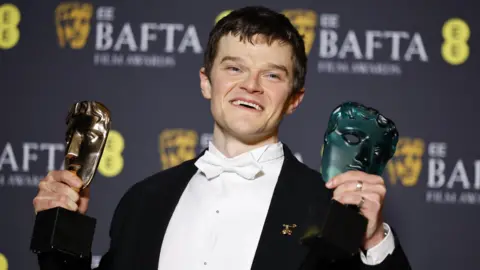
The comprehensive fallout from the 2026 BAFTA Awards underscores the complex challenges faced by major broadcasters and event organisers in the contemporary media landscape. Balancing the imperatives of inclusivity, freedom of expression, audience protection, and efficient production demands a sophisticated and robust set of protocols. This incident serves as a critical case study, prompting not only apologies and rectifications but also a deeper societal reflection on how to navigate the intersection of disability, offensive language, and media responsibility with greater sensitivity and foresight. Moving forward, the BBC, BAFTA, and other media entities will undoubtedly review their editorial guidelines, production processes, and duty of care provisions to prevent similar occurrences and to foster an environment that is both inclusive and respectful for all participants and viewers. The long-term implications will likely extend to revised training for broadcast staff, enhanced technical safeguards, and more transparent communication strategies when unforeseen challenges arise during live or delayed transmissions.


 Aura Kasih
 Ayu Aulia