
 Lisa Mariana
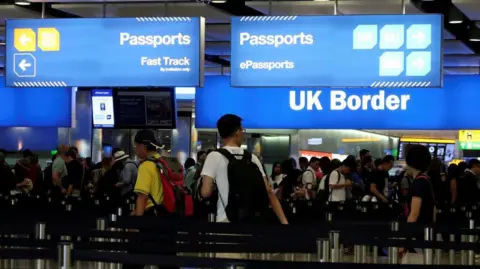
The United Kingdom’s recent overhaul of its immigration framework, spearheaded by the introduction of the Electronic Travel Authorisation (ETA) system, is fundamentally altering entry requirements for a broad spectrum of travelers, including British dual nationals who previously relied on their secondary passports for entry. This significant policy shift, effective from February 25th, mandates that all British citizens, irrespective of any additional nationalities held, must present either a valid British passport or a Certificate of Entitlement to prove their right of abode when entering the UK, sparking considerable concern among those affected.
Historically, British citizens holding dual nationality with countries exempt from UK visa requirements enjoyed the flexibility of entering the United Kingdom using their non-British passport. This long-standing practice facilitated travel for countless individuals who, having acquired British citizenship, saw no immediate necessity to obtain a British passport, particularly if their primary travel document was sufficient for international journeys, including return trips to their UK residence. However, the impending changes mark a decisive departure from this convention, aligning the UK’s border control mechanisms more closely with systems operated by nations such as the United States, Canada, and Australia, which typically require their citizens to enter on their national passport.

The impetus behind these modifications is the government’s overarching strategy to streamline and modernise the UK border. The ETA scheme, a digital permission system, is designed to enhance security and efficiency by pre-screening visitors from visa-exempt countries before their arrival. While dual nationals are explicitly ineligible for an ETA, their inclusion in the broader reform means they are now subject to updated documentary requirements to affirm their British citizenship at the point of entry. This necessitates either possessing a British passport or acquiring a digital Certificate of Entitlement, which is affixed to their foreign passport. The absence of either document could result in denial of travel or entry into the United Kingdom, a stark reality for many who have long considered the UK their undisputed home.
The practical implications of these new rules are multifaceted and, for some, financially burdensome. Obtaining a British passport for an adult currently incurs a fee of approximately £100, while a Certificate of Entitlement is priced significantly higher at £589. Beyond the monetary cost, the application processes for both documents can take several weeks, a timeframe that has caught many unaware, especially those currently traveling abroad or with imminent travel plans. The requirement for these specific documents is not automatically conveyed upon the grant of British citizenship, leading to a situation where long-term residents, some having lived in the UK for decades, suddenly find themselves without the necessary paperwork to re-enter their adopted country.
The lack of widespread, direct communication regarding these changes has emerged as a primary point of contention. Many dual nationals report learning about the updated regulations through informal channels, such as social media or word-of-mouth, rather than official government advisories. This informational gap has triggered a scramble among affected individuals to secure the requisite documentation, often under considerable time pressure and logistical difficulty.

Consider the predicament of Jelena, a British-Latvian dual national who has resided in the UK for 16 years. Having recently become a British citizen, she had postponed applying for a British passport due to existing travel commitments, including a "holiday of a lifetime" across South America. The sudden awareness of the new rules has cast a shadow over her return, potentially stranding her outside the UK unless she can acquire a British passport while abroad – a process fraught with administrative hurdles and significant delays. Her situation underscores the profound personal impact of these changes, describing it as a "betrayal" of her commitment to the country where she has built her life and contributed as a chartered surveyor and taxpayer. The necessity of potentially altering her travel plans, returning to Latvia to apply for a British passport, and working remotely for an unspecified period highlights the unforeseen professional and personal disruptions.
Similarly, Petra Gartzen, a UK-German dual national with four decades of residency in the UK, expressed strong disapproval over the perceived lack of governmental foresight in communicating these critical changes. Discovering the new rules while on an extended stay in Spain, Petra faced the daunting prospect of traveling to Madrid for an appointment to apply for the costly Certificate of Entitlement. Her attempts to apply for a UK passport from abroad were further complicated by requirements for original documents, such as her citizenship certificate, which were stored in her UK home. This scenario illustrates the intricate challenges faced by dual nationals who are away from their primary residence when these regulations take effect, potentially leading to anxiety and uncertainty about their ability to return home and fulfill work obligations.
For some, the new requirements are prompting a re-evaluation of their British citizenship itself. Shaun West, a Swiss dual national and university professor, is contemplating renouncing his British citizenship. He perceives the new rules as discriminatory and views the costs and administrative burden of obtaining a British passport as outweighing its benefits, especially when compared to the proposed £16 ETA fee for temporary visits as a foreign national. His sentiment reflects a broader disillusionment among a segment of dual nationals who feel undervalued by the policy shift.
Advocacy groups, such as the3million, which represents EU citizens in the UK, have amplified these concerns, criticizing the Home Office for insufficient outreach to dual nationals. Monique Hawkins, the group’s head of policy and advocacy, has called for an urgent "pause button" on the implementation and the introduction of a "low-cost, one-off travel authorisation" to mitigate the immediate disruption for those caught unawares. The collective plea underscores the need for greater flexibility and understanding during the transition period.
The Home Office, in response to these criticisms, maintains that public information regarding the documentary requirements for dual nationals has been available since October 2023, with a comprehensive communications campaign for the ETA system launched even earlier. They emphasize that the requirement for British citizens to enter the UK on a British passport or equivalent proof of right of abode is a standard practice adopted by various other developed nations, framing it as a necessary step in modernising and securing the border. The policy does, however, explicitly exempt Irish passport holders due to the unique common travel area arrangements between the UK and Ireland, but affects other EU citizens who also hold British nationality.
According to the 2021 census, dual nationality is a significant demographic feature in the UK, with 1.2% of UK-born residents (approximately 587,600 individuals) and 6.5% of non-UK-born residents (around 648,700 individuals) holding UK-other dual citizenship. This substantial population group highlights the broad reach of these new regulations and the potential for widespread impact if communication and transitional support are not effectively managed.

The ongoing changes to UK passport rules for dual nationals represent a critical juncture in the country’s post-Brexit immigration policy. While the government aims to achieve a more streamlined and secure border, the immediate fallout for thousands of dual citizens underscores the complexities of implementing such reforms. The tension between national security and administrative efficiency on one hand, and the lived experiences and sense of belonging for long-term residents on the other, remains a central challenge as the UK navigates this new landscape. The coming months will reveal the true extent of adaptation required from affected individuals and the capacity of the government to address the legitimate concerns raised by those who feel their established rights of entry have been inadvertently jeopardized.




 Ridwan Kamil
 Aura Kasih


 Ayu Aulia