Lisa Mariana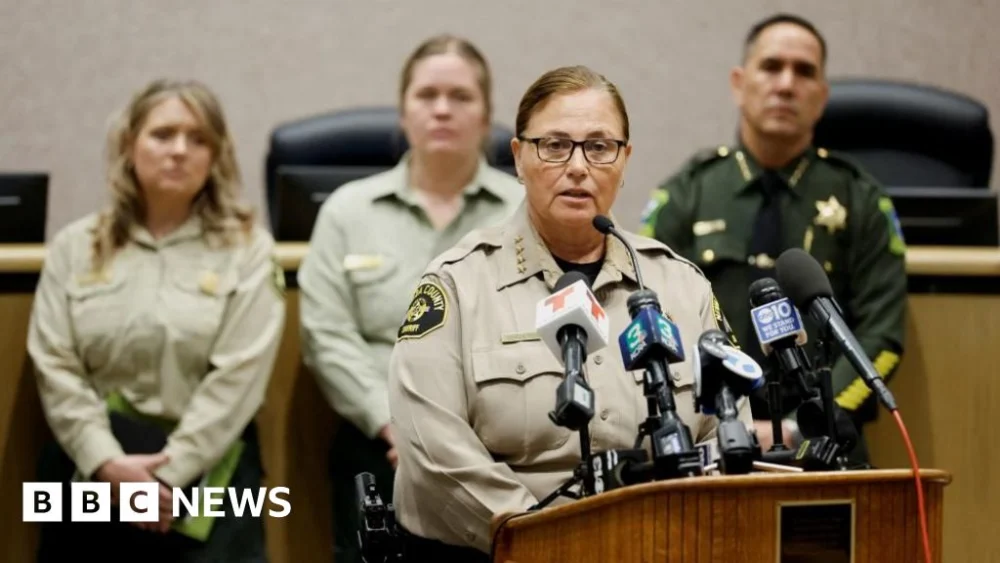
Rescue personnel navigating the formidable winter landscape of California’s Lake Tahoe region have confirmed the grim discovery of eight individuals, part of a group of skiers who vanished following a catastrophic avalanche earlier this week; one additional person from the group remains unaccounted for and is presumed deceased, according to official statements made Wednesday.
The devastating incident unfolded on Tuesday morning, approximately 11:30 AM Pacific Standard Time (19:30 GMT), when a colossal slab of snow, estimated to span an area equivalent to a football field, released its grip and cascaded down the steep slopes of the Castle Peak vicinity. Initially, fifteen skiers were reported missing in the immediate aftermath of the event. Prompt and arduous rescue efforts managed to locate and extricate six individuals, bringing a glimmer of hope amidst the unfolding disaster. However, the subsequent recovery of eight bodies has cast a pall over the region, transforming the operation into a somber recovery mission.
Authorities revealed a profoundly personal dimension to the tragedy, noting that one of the deceased was the spouse of a member actively participating in the search-and-rescue teams. This heartbreaking connection has introduced an acute emotional burden for the dedicated responders, making the continuation of their demanding work exceptionally challenging. Placer County Sheriff Wayne Woo extended his deepest sympathies to the affected families during a Wednesday press conference, underscoring the collective grief permeating the community and emergency services.
The immediate recovery of the deceased remains a significant logistical and safety challenge. Officials described the prevailing environmental conditions as "exceptionally hazardous," with the bodies currently entombed within the substantial snowpack. Since the avalanche struck, an additional three feet (approximately 0.9 meters) of fresh snow has blanketed the area, as confirmed by Tahoe National Forest supervisor Chris Feutrier, who emphatically stated that "the hazard remains high." This continuous accumulation of snow, coupled with inherent instability, necessitates a cautious and deliberate approach to body retrieval. Once conditions permit, the recovered individuals will be transported to the Placer County morgue for identification and further procedures. While families have been notified of the fatalities, the names of the deceased have not yet been publicly released by authorities.
The multi-agency rescue operation represents a testament to inter-organizational cooperation and resilience in the face of extreme adversity. Sheriff Woo detailed a concerted effort involving two distinct teams, comprising approximately 50 crew members, who were compelled to navigate "exceptionally severe weather conditions." The specialized equipment deployed, including snowmobiles, snowcats, and potentially helicopters (when visibility allowed), was critical in reaching the remote and unforgiving terrain. Search teams initially arrived at a staging area approximately two miles (3.2 kilometers) from where the initial survivors had managed to construct makeshift shelters. From that point, responders had to traverse the challenging snow-covered landscape on skis, often through deep drifts and zero-visibility conditions, to reach the stranded group.
Among the six survivors, two sustained injuries necessitating immediate medical attention. Nevada County Sheriff Shannan Moon reported that these individuals were unable to walk due to the nature of their injuries, requiring transportation to a hospital. Fortunately, their injuries were classified as non-life-threatening, offering a small measure of relief in an otherwise tragic narrative. The rescued group consisted of a professional guide and five clients affiliated with Blackbird Mountain guided tours. The broader ski party involved in the incident comprised a total of eleven recreational skiers and four experienced ski guides, indicating a significant organized excursion. The avalanche occurred as the group was concluding a three-day backcountry trip, a common duration for such guided adventures in the Sierra Nevada.
California Governor Gavin Newsom’s office swiftly acknowledged the gravity of the situation, announcing via social media that state authorities were "co-ordinating an all-hands search-and-rescue effort" in close collaboration with local emergency teams. This level of state engagement underscores the scale and complexity of the disaster, requiring significant resource allocation and strategic oversight. The hazardous conditions persisted well into Wednesday, with Sheriff Woo characterizing the environment as "treacherous." He issued an urgent public safety advisory, strongly cautioning individuals against venturing into the backcountry. "Please allow us to focus all of our resources on continuing to recover these bodies for the family and bring them home," he appealed, highlighting the ongoing risks to both the public and rescue personnel.
The technical classification of the avalanche provides crucial insights into its destructive power. The Sierra Avalanche Center rated the event as a D2.5 on a destructive potential scale ranging from D1 to D5. This classification denotes an avalanche of considerable size, typically exceeding half a mile in length, with a deposition depth of approximately 6.5 feet (around 2 meters). A D2.5 avalanche possesses sufficient force to bury, injure, or kill a person and cause significant damage to infrastructure or forested areas. The specific mechanics of such an event often involve a weak layer within the snowpack that collapses under the weight of overlying snow, particularly when subjected to new snowfall, wind loading, or temperature fluctuations.
The meteorological context for this tragedy is rooted in a powerful winter storm system that has been impacting California. The Boreal Mountain Ski Resort, situated in proximity to the accident site, reported an accumulation of over 30 inches (76 centimeters) of snowfall since Tuesday. The resort had already made the prudent decision to cease operations on Tuesday due to dangerously high winds and severely diminished visibility, a testament to the extreme weather prevalent in the region. Beyond the immediate area of the avalanche, the broader storm system has exerted significant disruption, forcing the closure of major transportation arteries, including sections of Interstate 80 and Highway 50, further complicating access for emergency services and travelers alike.
This incident serves as a stark reminder of the inherent dangers associated with backcountry recreation, particularly during periods of intense snowfall and elevated avalanche risk. The Sierra Nevada, renowned for its dramatic landscapes and abundant snow, attracts a dedicated community of skiers and snowboarders. However, the allure of untouched powder must always be balanced against a rigorous understanding of snow science, terrain assessment, and risk management. Guided tours, while employing experienced professionals, are not immune to the unpredictable forces of nature. The comprehensive investigation into this avalanche will likely examine the prevailing snowpack conditions, the specific route chosen by the tour group, and the decision-making processes leading up to the incident. Such analyses are crucial not only for understanding the immediate circumstances of the tragedy but also for informing future safety protocols and educational initiatives within the backcountry community.
The long-term implications for the Lake Tahoe region extend beyond the immediate recovery efforts. The emotional toll on the close-knit community, particularly among those involved in search and rescue and the local guiding industry, will be profound. As the region grapples with this devastating loss, there will undoubtedly be renewed discussions regarding avalanche awareness, advanced training requirements for guides, and public education campaigns aimed at mitigating risks for all who venture into the mountains. The painstaking process of body recovery and the subsequent investigations will continue as the community begins the difficult journey of mourning and reflection, while simultaneously reinforcing its commitment to safety in this majestic yet unforgiving environment.

 Ridwan Kamil
 Aura Kasih
 Ayu Aulia